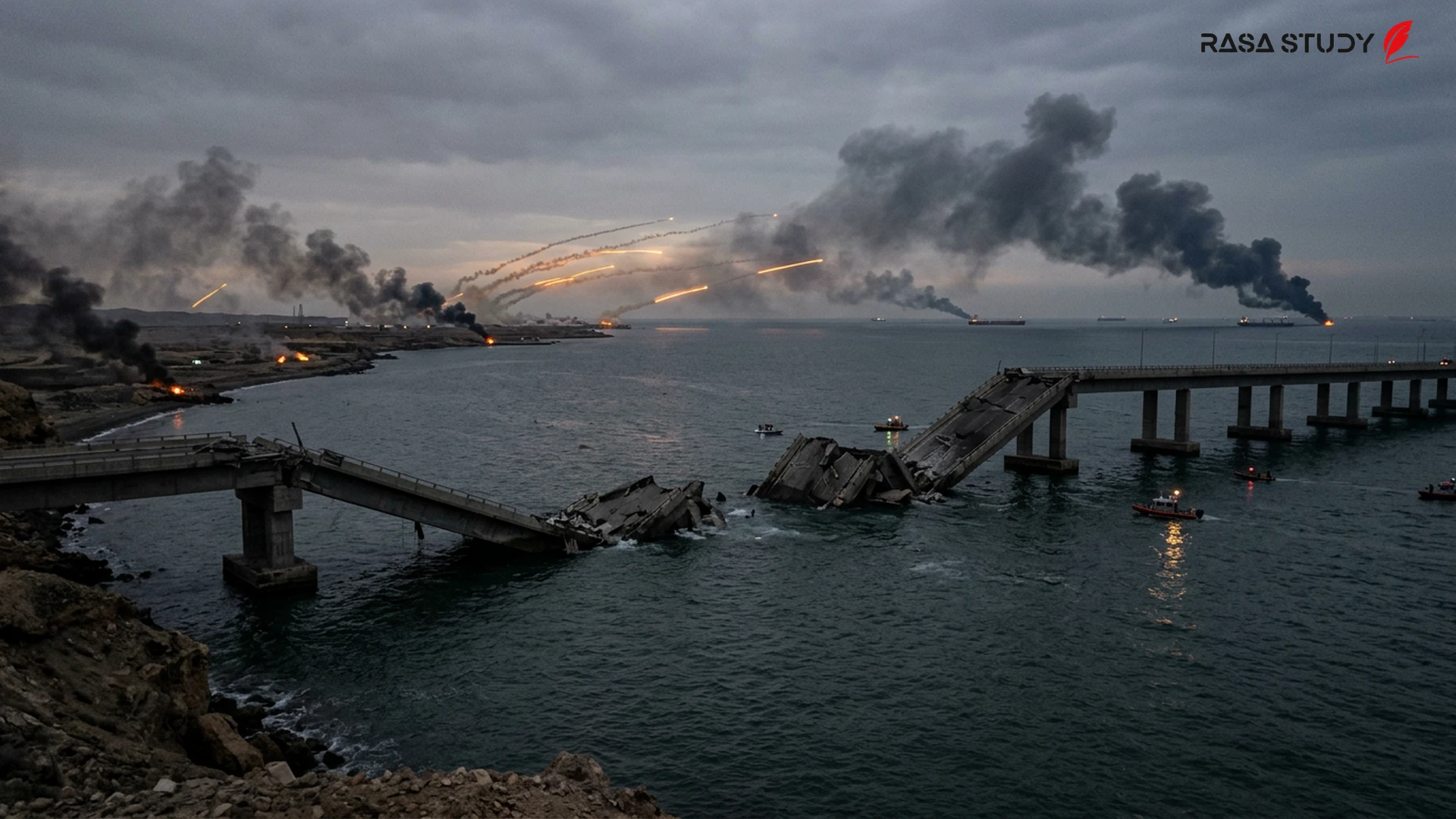
As military tensions between Washington and Tehran enter a sixth consecutive night of heavy airstrikes, prominent analyst Erdal Şimşek reports the beginning of a new phase in regional geopolitics and the possibility of a fundamental realignment of power in the Middle East.
Today, July 17, 2026, the Middle East faces a new and alarming reality. Erdal Şimşek, a writer for the newspaper "Milat," examined in his recent column whether the ongoing conflicts between the United States and Iran are merely a passing tension or a sign of the collapse of the old order and the establishment of a new balance in the region [1]. This analysis is published as the region witnesses the most intense exchange of fire in recent years.
Collapse of the Ceasefire and the Start of a "New Phase" After a short period of a fragile ceasefire achieved in June 2026 through international mediation, all agreements have now reached a deadlock. US President Donald Trump, declaring the end of the period of restraint, ordered the sixth consecutive night of airstrikes against strategic targets on Iranian soil [2]. CENTCOM (United States Central Command) has confirmed that these attacks were carried out with the aim of weakening Iran's naval and defense capabilities in the Persian Gulf to ensure the security of commercial shipping [5].
Geography of the Battle: From Hormozgan to Regional Bases Field reports indicate that civilian infrastructure has not been spared from these conflicts. In Hormozgan province, six key bridges, including the "Gariweh" bridge and bridges on the Bandar Abbas-Khamir axis, have been targeted, leading to serious disruption in the country's southern transit network [5]. In response, Iran has launched a massive wave of missile and drone attacks against US bases in the region, including the "Al-Azraq" base in Jordan and facilities in Kuwait and Bahrain, by executing Operation "Nasr 2" [3]. This level of direct confrontation is the very "new phase" that Şimşek refers to in his analysis.
Redefining the Balance of Power and Energy Security One of the most key parts of Şimşek's analysis is the question regarding the future of the balance of power. With the return of the US naval blockade of the Strait of Hormuz and Iran's threat to completely close this strategic waterway, maritime traffic has decreased by more than 90 percent [4]. This situation has not only sharply increased global oil prices but has also caused countries such as China to suddenly raise their domestic fuel prices [4]. Şimşek believes that Washington seeks to impose a new order through these pressures, but Tehran's resistance shows that neither side is willing to retreat from their fundamental positions [1].
Ultimately, what is observed on the Middle East stage today is beyond a military conflict; it is a battle of wills to determine the rules of the game for the coming decades. Will diplomacy find a way back at the last moment, or will the region move toward an all-out confrontation? The answer to this question will be determined in the coming days on the battlefield.
Military tensions between Iran and the US reached an unprecedented stage in July 2026.
linkSources
- ABD–İran geriliminde yeni aşama: Orta Doğu'da dengeler yeniden mi kuruluyor? — Milat Gazetesi (2026-07-17)
- US completes sixth night of strikes on Iran, CENTCOM says — Gulf News (2026-07-17)
- ایران و آمریکا در تبادل آتش؛ محاصره دریایی و پاسخ موشکی — Donya-e-Eqtesad (2026-07-15)
- Renewed US-Iran tensions reverse normalization in Strait of Hormuz — Anadolu Agency (2026-07-17)
- ششمین شب پیاپی حملات آمریکا به ایران؛ پلهای هرمزگان هدف قرار گرفتند — Iran International (2026-07-17)


