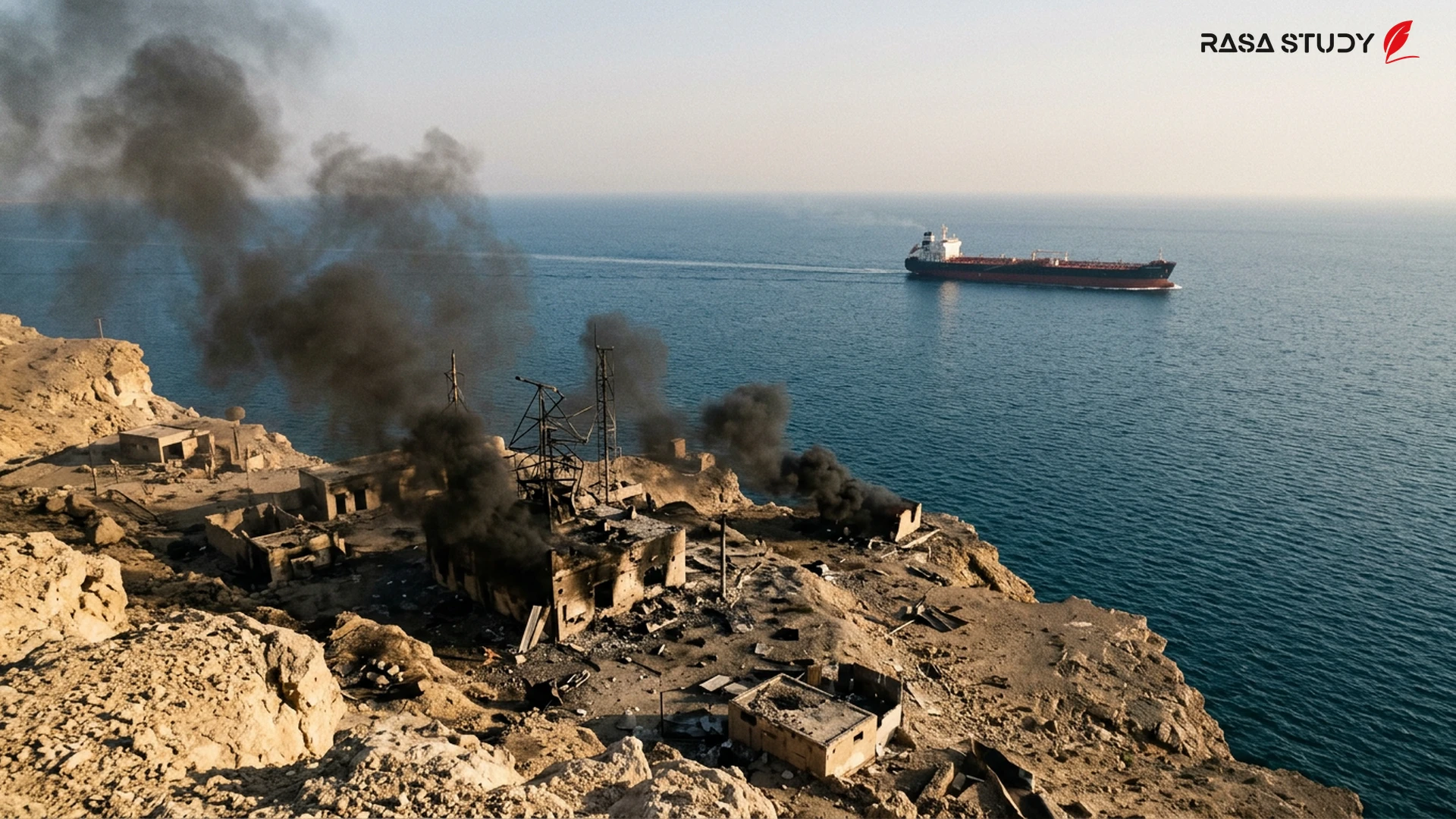
Following extensive US military air strikes on areas in southern Iran, US Central Command (CENTCOM) issued an official statement describing the action as a direct response to a ceasefire violation and a drone attack on a commercial ship.
Details of the CENTCOM Statement and Targets Inside Iran
United States Central Command (CENTCOM), in a statement released today, June 27, 2026, officially claimed responsibility for last night's air strikes on positions in southern Iran. According to the statement, American aircraft targeted several missile warehouses, drone maintenance sites, and coastal radar bases [1]. These strikes were primarily concentrated near the port city of Sirik and Qeshm Island. CENTCOM emphasized that this operation was a "powerful response" to provocative actions by Iranian forces in recent days and was conducted to protect freedom of navigation in one of the world's most vital waterways [3].
The M/V Ever Lovely Incident and the Violation of the Islamabad Memorandum
According to Pentagon officials, the primary spark for this new conflict was a drone attack on June 25 against the Singapore-flagged commercial vessel M/V Ever Lovely. The ship was exiting the Strait of Hormuz near the coast of Oman when it was targeted by four suicide drones [5]. US President Donald Trump, calling the move "foolish," announced that three drones were shot down by US defenses, but one damaged the ship's deck [4]. This incident occurred just one week after the signing of the "Islamabad Memorandum," an agreement intended to end months of war between Iran and the US (known as Operation Epic Fury) and reopen the Strait of Hormuz to global trade [3].
Tehran's Sharp Reaction and Ambiguity Over the Ceasefire's Fate
In a swift reaction, Iran's Ministry of Foreign Affairs called the US strikes a "blatant violation" of national sovereignty and the recent peace memorandum [2]. While some initial reports suggested retaliatory strikes by the Revolutionary Guard (IRGC) on US positions in the region, the official Fars News Agency later denied these claims, stating that statements attributed to the IRGC were incorrect [4]. However, Ebrahim Azizi, chairman of the Iranian Parliament's National Security Commission, accused Trump of failing to adhere to negotiation principles and warned that this US "ceasefire management" would not go unanswered [3].
Critical Situation in the Strait of Hormuz and Global Markets
This exchange of fire is the most serious test for the fragile peace agreement brokered by Pakistan. US Vice President JD Vance, in a clear message to Tehran, stated: "Violence will be met with violence; if you have a dispute regarding the implementation of the memorandum, pick up the phone and call" [5]. Currently, commercial shipping in the Strait of Hormuz continues under heavy CENTCOM security measures, but global energy markets are watching the coming hours with concern to see if this conflict will escalate into a new full-scale war or if the parties will return to the negotiating table [1][2].
US Central Command (CENTCOM) described the strikes on Iranian positions as a response to threats against maritime security in the Strait of Hormuz.
linkSources
- U.S. Military strikes missile and drone sites in Iran — SANA (2026-06-27)
- Iran war day 120: Tehran condemns US strikes, says it violates MoU — Al Jazeera (2026-06-27)
- ABD ordusu İran'a hava saldırıları düzenlediğini duyurdu — Anadolu Agency (2026-06-27)
- ABD ordusundan İran'a düzenlenen saldırıya dair açıklama — CGTN Türk (2026-06-26)
- US says it struck Iran targets after attack on cargo ship — The Guardian (2026-06-26)


