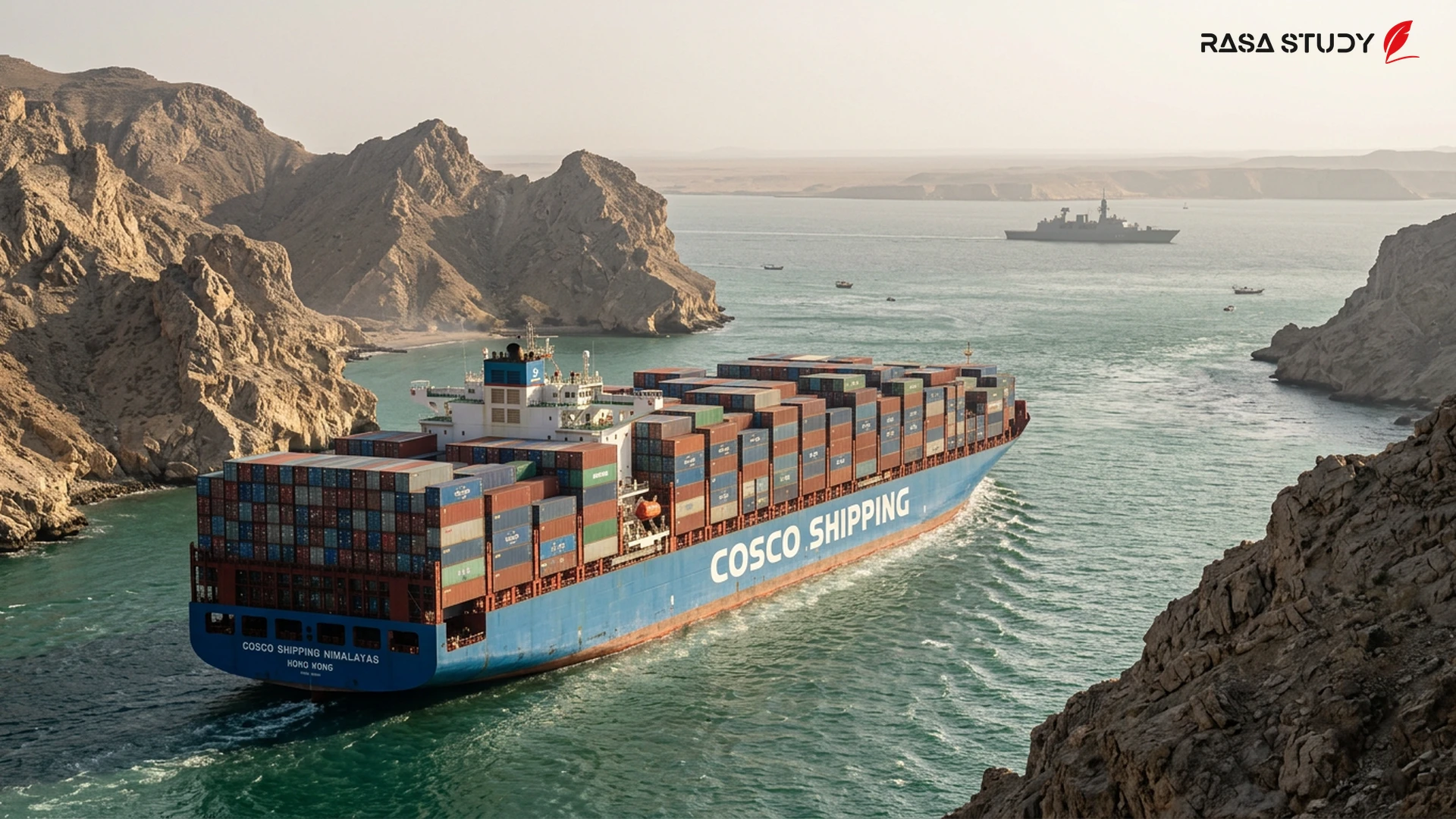
Following the announcement of Iran's plan to collect transit fees in the Strait of Hormuz, US Secretary of State Marco Rubio emphasized on Tuesday, June 24, 2026, that Washington will not accept any tolls or fees for passage through this international waterway.
Marco Rubio's Explicit Opposition to Transit Fees US Secretary of State Marco Rubio took a hardline stance against Tehran's recent proposals during the start of his regional tour to the United Arab Emirates. Upon arrival at Abu Dhabi airport, he stated that the Strait of Hormuz is an international waterway and, under existing laws, no country is permitted to collect tolls or fees for passage through it [1]. Rubio emphasized that Washington would strongly oppose any action that restricts freedom of navigation or imposes additional costs on global trade [2].
Details of Iran's Plan and the Creation of the 'PGSA' This dispute escalated after Iran and Oman issued a joint statement announcing they are studying a system to manage trade routes and service-related costs in the waterway [1]. Reports indicate that Tehran has established a new entity called the 'Persian Gulf Strait Authority' (PGSA). In a letter to shipping companies, this organization stated that all vessels must possess valid insurance policies approved by this body [4]. Although Iran stated these services are currently free, it reserved the right to impose 'insurance premiums' or service fees in the future [5]. Mohammad Bagher Ghalibaf, Iran's senior negotiator, previously stated that the situation in the Strait of Hormuz would never return to pre-war conditions and that managing this route incurs costs that must be paid [2].
Legal Deadlock: UN Convention and the Right of Innocent Passage From the perspective of international law, Iran's move faces serious challenges. According to the 1982 United Nations Convention on the Law of the Sea (UNCLOS), collecting any payment from foreign ships solely for passage through territorial waters is prohibited, unless it is for specific services such as pilotage or navigational aids [5]. The United States and many European countries believe Iran's attempt to simulate the status of the Strait of Hormuz with the Suez or Panama Canals lacks legal merit, as Hormuz is a natural waterway connecting the high seas to an exclusive economic zone [3]. The CEO of Maersk also warned that allowing any country to monetize passage through strategic geographical points would be a dangerous precedent in global shipping [3].
Impact on Peace Negotiations and Global Markets These tensions occur as Iran and the US recently signed the 'Islamabad Memorandum' to end recent conflicts. This agreement opened a 60-day negotiation period to resolve key issues, including the lifting of sanctions and the future of security in the Strait of Hormuz [1]. While US President Donald Trump claimed on social media that Iran assured him no tolls would be collected, official statements from Iranian authorities suggest otherwise [3]. The continuation of these disputes could threaten the fragile stability of energy markets, especially as maritime traffic in the region has not yet returned to pre-conflict levels [2].
The Strait of Hormuz, as a hub for global energy transport, is once again witnessing a diplomatic confrontation between Iran and the US over the right of free passage.
linkSources
- US Secretary of State Marco Rubio says Washington would not accept Iranian tolls or fees on the Strait of Hormuz — Times of Israel (2026-06-24)
- Marco Rubio: US rejects Iranian tolls and fees in Strait of Hormuz — Malay Mail (2026-06-24)
- Iran announces plans to bring in maritime fees for strait of Hormuz — The Guardian (2026-06-18)
- Iran lays the groundwork for a new transit system in critical waterway — Middle East Eye (2026-06-19)
- Iran seeks to establish control over the waterway following interim peace deal — Financial Times (2026-06-19)


