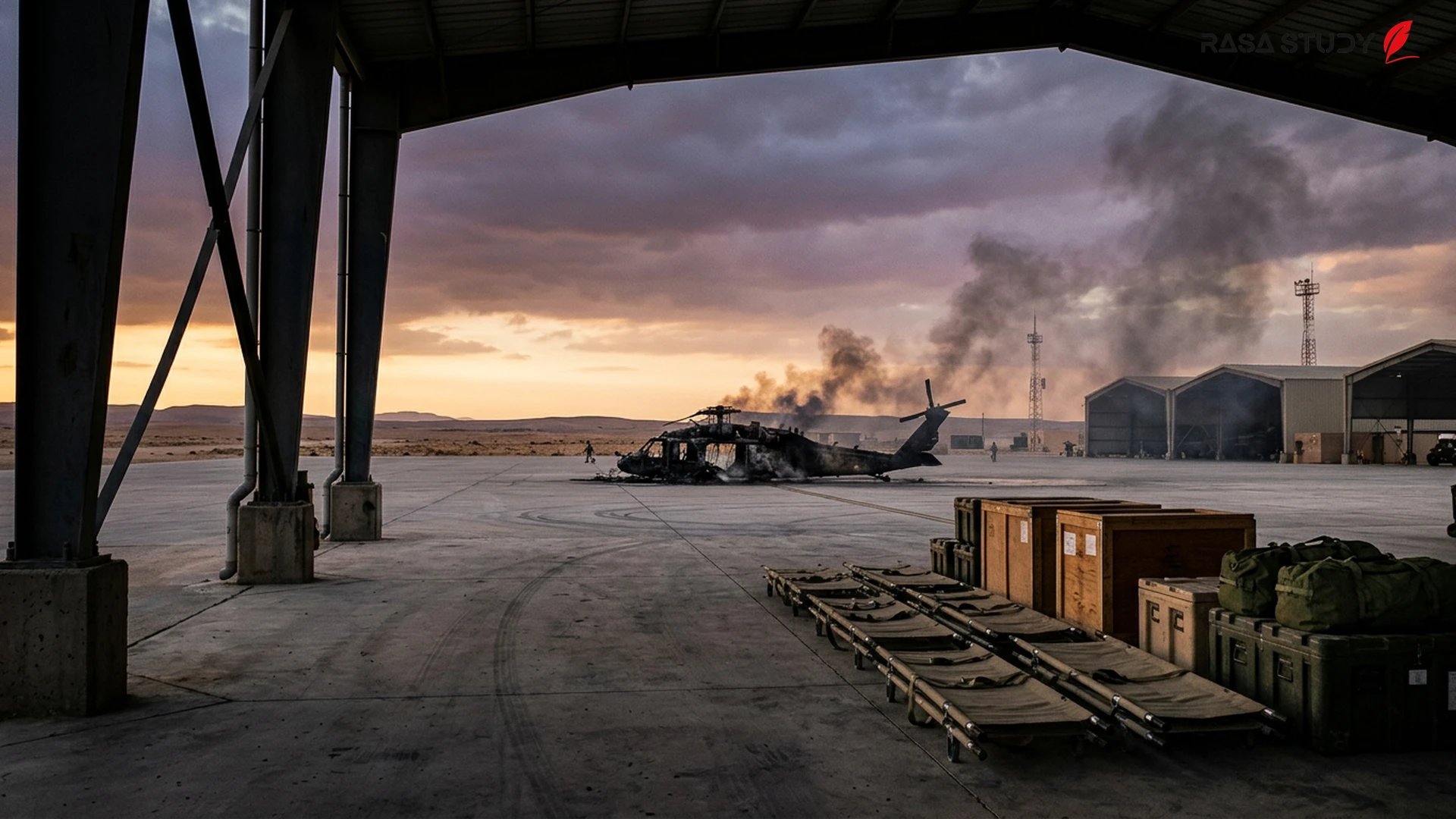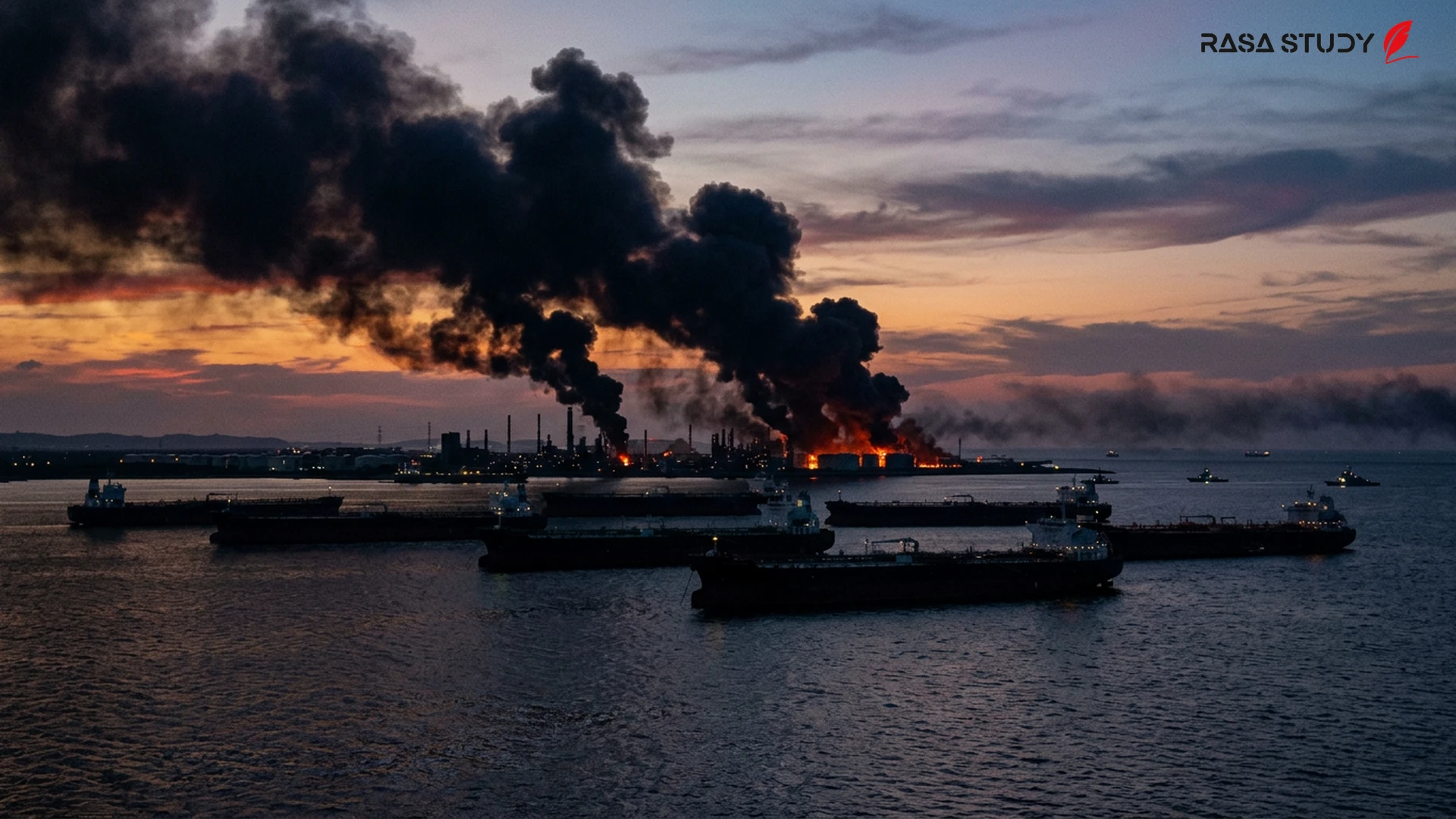
On a fateful day, the Middle East witnessed a stark contrast between war and diplomacy; the United States targeted positions on Iranian soil, while Israel and Lebanon simultaneously agreed on a historic peace framework.
United States Retaliatory Strike on Targets in Iran
In the late hours of Friday, June 26, 2026, the United States Central Command (CENTCOM) announced that American forces conducted extensive airstrikes against Iranian drone and missile warehouses and facilities [1]. These strikes, primarily concentrated near the port of Sirik and Qeshm Island, were carried out in response to yesterday's drone attack on the commercial vessel "Ever Lovely" in the Strait of Hormuz [2].
US President Donald Trump called this Iranian action a "foolish violation" of the temporary ceasefire signed between the two countries just a week ago [4]. CENTCOM emphasized in an official statement that these strikes were a "powerful response" to Iran's dangerous behavior that jeopardized international maritime security. In contrast, the Islamic Revolutionary Guard Corps claimed to have repelled some of these attacks and warned that any further aggression would be met with a more crushing response [1].
Peace Framework Agreement Between Israel and Lebanon
While the flames of war flared in the Persian Gulf, an unprecedented diplomatic development occurred in Washington, D.C. US Secretary of State Marco Rubio announced that Israel and Lebanon have agreed on a "framework agreement" to end decades of hostilities [3]. This agreement, reached through direct US mediation, includes a process for the gradual withdrawal of the Israel Defense Forces (IDF) from occupied areas in southern Lebanon and the deployment of the Lebanese Army in these regions [5].
The agreement, signed by the ambassadors of both countries at the US State Department, emphasizes the disarmament of non-state armed groups, particularly Hezbollah [3]. However, Lebanon's Hezbollah, which was not present in the negotiations, immediately took a stance against the agreement, and the group's supporters held protests in the streets of Beirut [4]. Yechiel Leiter, the Israeli Ambassador to the US, described the agreement as a major blow to Iran's regional influence [5].
Impact on Global Markets and Strait of Hormuz Security
Military tensions in the Strait of Hormuz immediately cast a shadow over global energy markets. The International Maritime Organization (IMO) announced that it has suspended operations to evacuate ships trapped in the Persian Gulf due to security risks [2]. Reports indicate that about 500 ships are still waiting for safe passage in the region. Economic analysts on sites such as "ParaAnaliz" have noted that these conflicts could destroy the optimism resulting from the potential reopening of the Strait of Hormuz and return oil prices to critical levels once again [1].
The Fragile Future of Regional Agreements
Although the signing of the framework agreement between Israel and Lebanon is considered a historic step, its coincidence with direct US strikes on Iran has cast a shadow of doubt on the sustainability of any regional peace. US Vice President JD Vance warned that "violence will be met with violence" and emphasized that Iran must adhere to its commitments in the June Memorandum of Understanding [2]. Now, eyes are fixed on Tehran's final reaction and the extent of the Lebanese government's influence over Hezbollah's field forces to determine whether the Middle East moves toward a new order or remains in an endless cycle of conflict.
The confrontation of war and diplomacy in the Middle East; US retaliatory strikes on Iran and the Israel-Lebanon peace agreement on the same day.
linkSources
- US strikes Iran in response to drone strike on commercial ship — Al Jazeera (2026-06-27)
- U.S. strikes targets in Iran after drone attack on cargo ship — CBS News (2026-06-27)
- Israel and Lebanon sign framework agreement — Axios (2026-06-26)
- U.S. forces launch airstrikes against Iranian missile and drone locations — Washington Post (2026-06-27)
- Israel, Lebanon and US reach framework agreement for peace — Times of Israel (2026-06-26)