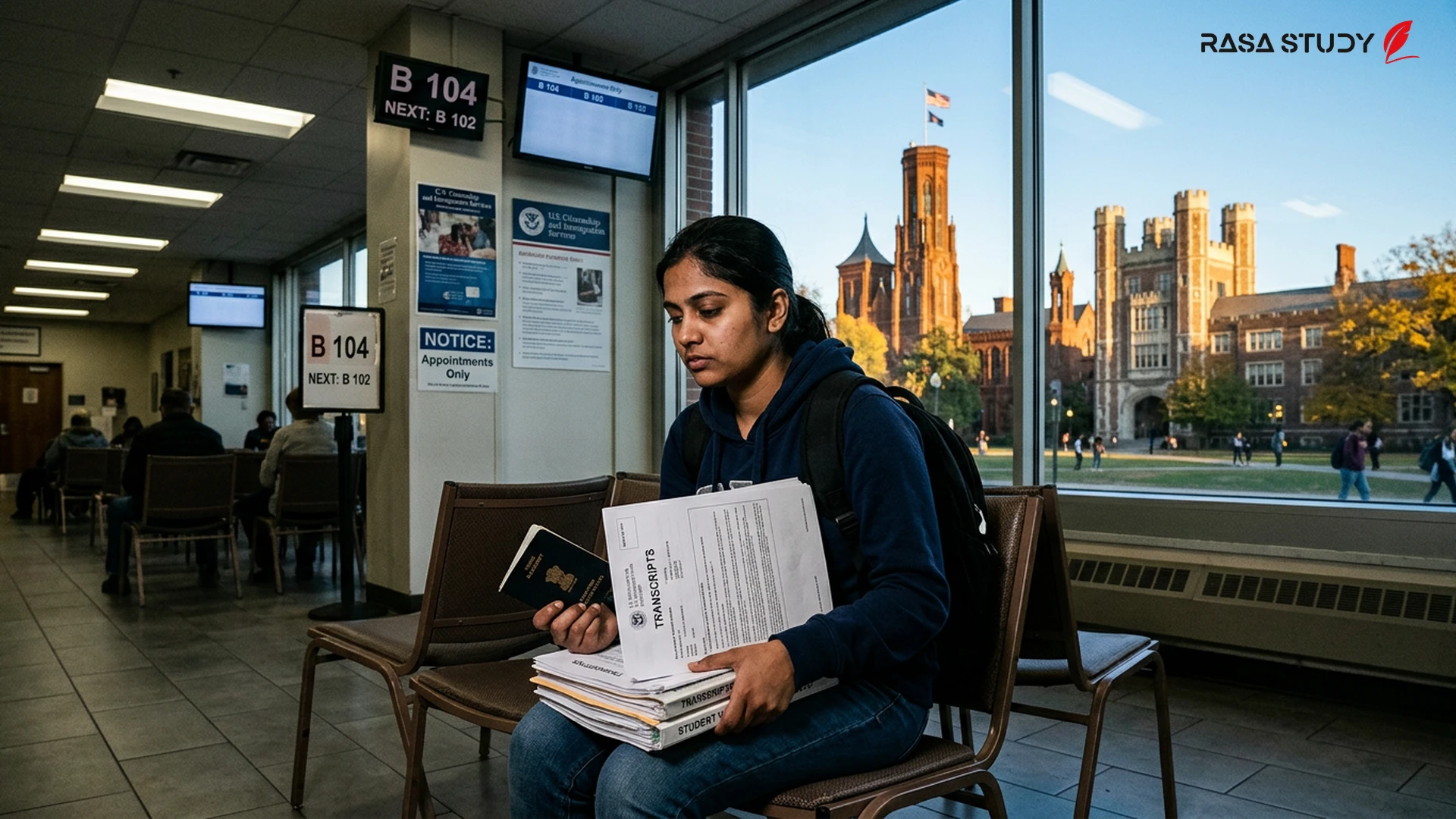
The US government has completely transformed student visa regulations by abolishing the 50-year 'Duration of Status' policy. These changes, effective July 2026, establish new time limits for study and residency.
On July 16, 2026, the US Department of Homeland Security (DHS) published a final regulation, abolishing one of the country's oldest and most flexible immigration policies that had been in place since 1978 [1]. This policy, known as 'Duration of Status' (D/S), allowed international students to remain in the United States as long as they were enrolled in a valid educational program without needing annual visa renewals. Now, with the removal of this rule, all F, J, and I type visas will have a specific expiration date.
End of Unlimited Visa Validity; 4-Year Cap for Students Under the new rules, international students (F visa) and exchange visitors (J visa) will be admitted for a maximum period of four years [2]. This means that even if a doctoral or medical program lasts six to eight years, the student is required to apply for an extension of stay before the end of the fourth year. Previously, Designated School Officials (DSO) at universities had the authority to extend I-20 forms, but this power has now been transferred to the US Citizenship and Immigration Services (USCIS) [3].
Direct Federal Oversight and New Extension Requirements Another structural change is the requirement for students to file a formal application for extension of stay (Form I-539). This process includes paying new fees, submitting biometrics (fingerprints), and undergoing extensive security checks by the federal government [1]. Critics, including the Association of International Educators (NAFSA), have warned that this move creates unnecessary bureaucracy and fear among global talent. Fanta Aw, Executive Director of NAFSA, believes this new system 'injects uncertainty and bureaucracy into a system that has worked well for decades' [2].
Reduced Grace Period and Restrictions on Changing Majors The new 2026 rules also reduced the grace period for F-1 visa graduates to leave the country from 60 days to 30 days [3]. This short timeframe puts additional pressure on graduates seeking to change their visa status to a work visa (such as H-1B) or transfer to another university. Furthermore, strict restrictions have been placed on changing majors or educational levels; students will not have the right to change universities or majors in their first year of study, and at the graduate level, any change requires exiting the US and re-entering with new documents [5].
Consequences for International Talent and Iranian Students These reforms, which federal officials say are designed to prevent the phenomenon of 'eternal students' and abuse of the immigration system, will have the greatest impact on students from India, China, and the Middle East [4]. For Iranian students, who already faced long clearance processes, this new layer of federal oversight could mean longer delays and higher risks in residency extensions. Experts warn that these strict measures may reduce the attractiveness of the United States as a top study destination and shift competition in favor of countries like Canada and Australia [3].
New US student visa laws in 2026 impose strict time limits on educational residency.
linkSources
- Trump Administration Issues Final Rule to End Foreign Student Visa Abuse — U.S. Department of Homeland Security (DHS) (2026-07-16)
- U.S. tightens visa rules for foreign students, journalists — The Hindu (2026-07-16)
- Trump Administration Finalizes Immigration Rule Affecting International Students — Forbes (2026-07-17)
- US introduces stricter immigration rules for international students — Dawn News English (2026-07-18)
- 2026 U.S. Visa Policy Update: How the DHS Proposal Impacts International Students — LYD LAW (2026-07-16)


