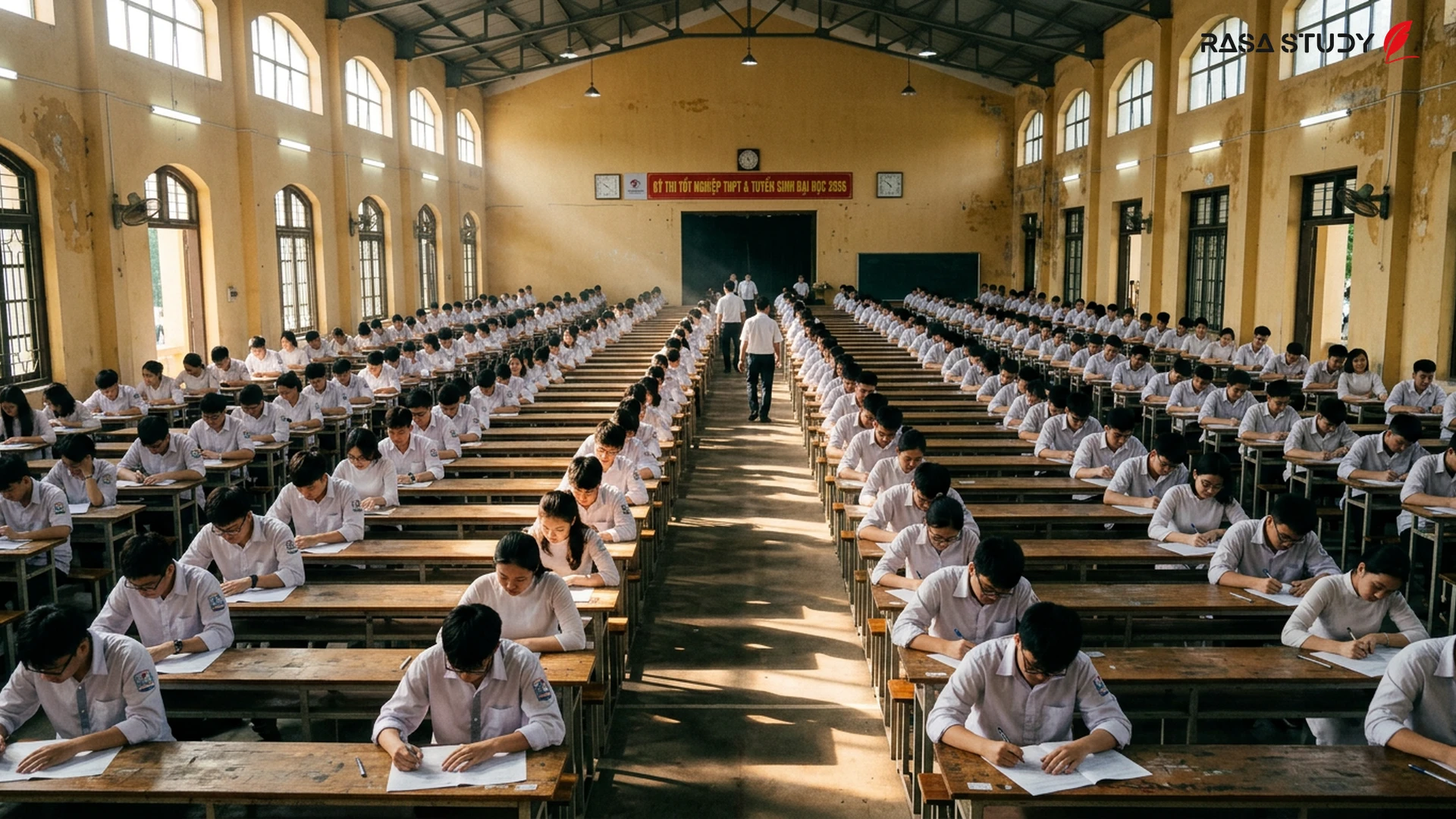
With the conclusion of the 2026 national exams in Vietnam, heated debates have emerged regarding the separation of the "High School Graduation Exam" from the "University Entrance Exam," a topic that became a top priority for the education system after the exposure of widespread violations.
A Major Shift in the 2026 Education System The year 2026 marks a turning point for Vietnam's education system. This was the first year the high school graduation exam was held based on the new educational program (approved in 2018) [2]. In this new structure, students participated in only two mandatory subjects (Mathematics and Literature) and two elective subjects. The goal of these reforms was to reduce pressure on students and focus on practical skills rather than rote memorization. However, using the results of this same exam for university admissions (the 2-in-1 model) has once again called the efficiency of this system into question [1].
The Tuyen Quang Scandal: A Spark for Change What brought the debate over separating exams to the headlines in July 2026 was the exposure of a massive educational fraud in Tuyen Quang province. Reports indicate that 147 Mathematics exam papers at a specific center achieved a perfect score of 10, leading to the arrest of 19 people, including local education officials [3]. This incident demonstrated that when the fate of university entrance is tied to a single exam, the incentive for violations and cheating increases significantly. Nguyen Dac Vinh, Chairman of the National Assembly's Committee on Culture and Education, emphasized at a July 14 meeting that these irregularities are "very serious" and that macro policies must change to prevent their recurrence [4].
Proponents and Opponents of Exam Separation Currently, the Vietnamese educational community is divided into two groups. Proponents of separation, such as Dr. Le Dong Phuong, believe that the goal of the final exam should only be to certify graduation eligibility by the provinces, while universities should manage their own independent admission processes [4]. This group argues that merging the two creates unnecessary pressure and causes society to focus solely on entrance exam scores rather than the quality of general education.
In contrast, some experts warn that complete separation might increase costs and create an additional financial burden for families. Professor Nguyen Dinh Duc believes that if independent and standardized testing centers are not established, returning to a system of separate exams could make the admission process more complex and expensive [1].
The Future of University Admissions in Vietnam As of today, July 15, 2026, candidates have entered the phase of paying major selection fees, but the shadow of reform looms large over this process [1]. Current proposals include local authorities conducting graduation exams and delegating the responsibility of entrance exams to standardized testing centers or the universities themselves. Given the public pressure following recent scandals, the Ministry of Education and Training of Vietnam is expected to put deeper structural changes on the agenda for 2027 to restore public trust in educational fairness.
High school graduation exam session in Hanoi, June 2026; a year marked by new reforms and serious challenges.
linkSources
- Lise mezuniyet sınavı ve üniversite giriş sınavı ayrı ayrı mı yapılmalı? — Vietnam.vn (2026-07-14)
- 2026 high school graduation exam concludes safely, marks first year of new curriculum — VOV World (2024-06-12)
- Vietnam charges 19 people over high school exam scandal — VietnamNet (2026-07-15)
- Should high school graduation and university entrance exams be separated? — VietnamNet (2026-07-15)


