Based on a new decision by the Turkish government in June 2026, the requirement to obtain a work permit for Syrian nationals under temporary protection has been abolished. This move aims to facilitate legal employment and reduce administrative bureaucracy.
In late June 2026, the Turkish government took a significant step toward organizing the labor market and managing refugees. Mustafa Çiftçi, the Minister of Interior, announced in a meeting held on June 26 that the requirement to obtain a work permit for Syrian nationals under 'temporary protection' has been abolished and replaced by a 'work permit exemption' system [3]. This decision, which affects more than 2.2 million Syrians living in Turkey, was made with the goal of attracting foreign labor into the formal economy and reducing illegal employment [2].
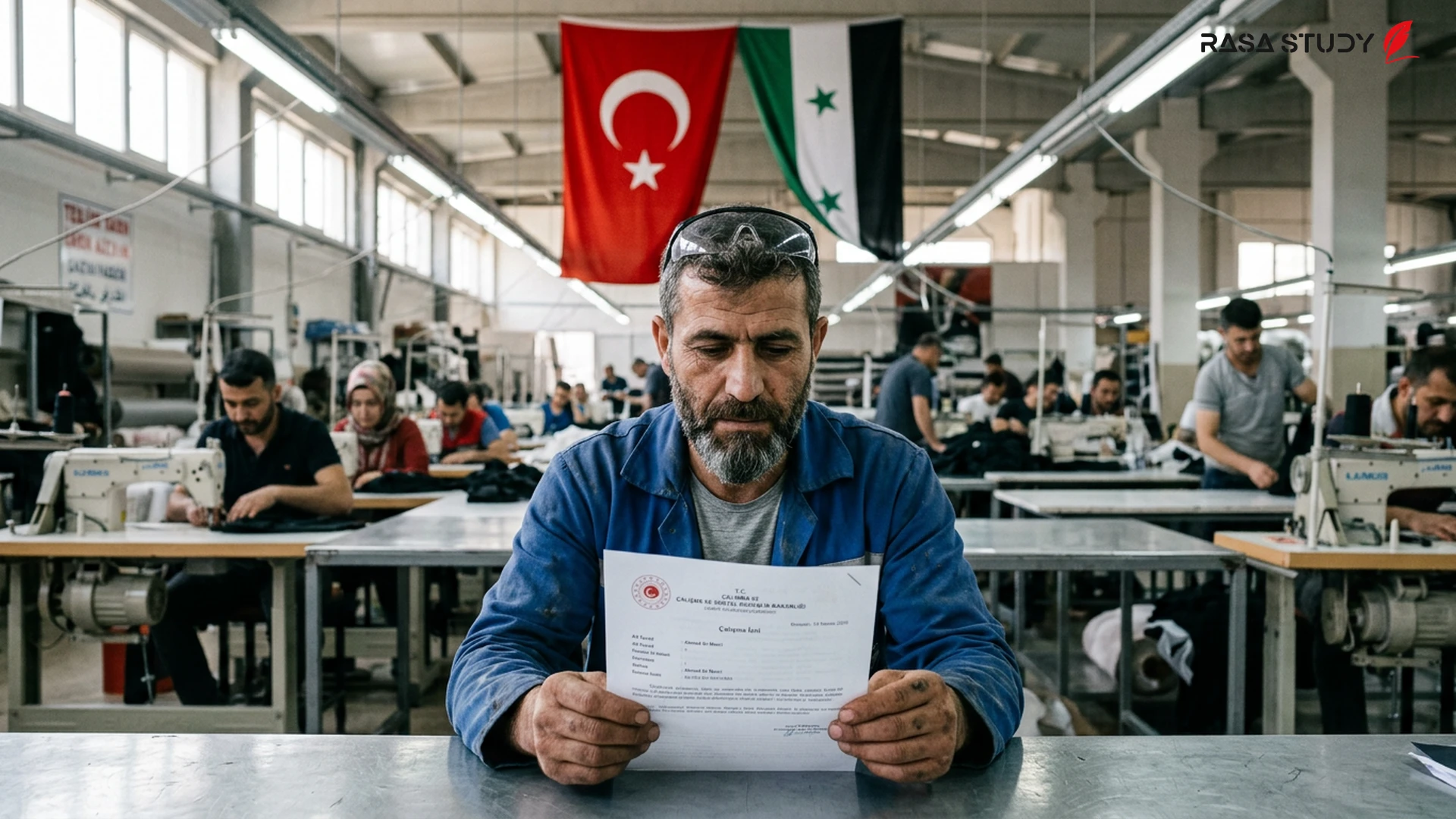
What is a Work Permit Exemption? A work permit exemption refers to an official document that allows foreign nationals to work legally in Turkey without going through the lengthy procedures of obtaining a standard work permit [1]. According to the new regulations, this exemption also serves as a substitute for a residence permit during its validity period. Previously, employers had to navigate complex procedures at the Ministry of Labor and Social Security for every Syrian worker, but this process has now been drastically simplified to remove the bureaucratic burden from businesses [4].
Details of the New Plan and Its Implementation According to reports published on June 30, 2026, this new process allows Syrians under temporary protection to enter the labor market directly. The Interior Minister emphasized that this decision was made after analyzing labor market needs and the role of Syrian workers in the national economy [1]. In the new system, instead of long individual applications, an exemption-based mechanism is implemented that facilitates registration with the Social Security Institution (SGK) for employers [3]. This measure will have a significant impact, especially in sectors facing labor shortages, such as agriculture and manufacturing.
Economic Goals and Migration Policy Changes This policy shift occurs as official statistics show that more than 1.43 million Syrians have voluntarily returned to their country since 2016 [2]. However, for the 2.26 million people who remain in Turkey—many of whom were born in the country—the government is seeking long-term social and demographic solutions [3]. Turkish officials believe that formalizing the employment of these individuals will not only increase tax revenues but also prevent the exploitation of workers in informal sectors [4].
Impact of Syrian Developments on New Laws The revision of Turkey's migration policies accelerated following the political developments of December 2024 in Syria. The Turkish government now views migration with a strategic lens, seeing it not as a crisis but as an opportunity to provide specialized labor and investment [2]. With the removal of old requirements, the registered employment rate among foreign nationals is expected to grow significantly in the second half of 2026 [1].
Mustafa Çiftçi, the Turkish Interior Minister, explained the details of the work permit exemption for Syrian nationals.
linkSources
- Çalışma İzni Muafiyeti Nedir? Suriyeliler İçin Süreç Nasıl İşleyecek? — Kanal 46 (2026-06-30)
- Suriyelilere çalışma izni muafiyeti getirilmesi ne anlama geliyor? — T24 (2026-06-29)
- Türkiye grants work permit exemption to over 2M Syrians under temporary protection — Türkiye Today (2026-06-26)
- Suriyeli çalışanlar için yeni dönem: O zorunluluk tamamen kaldırıldı! — Sözcü (2026-06-26)