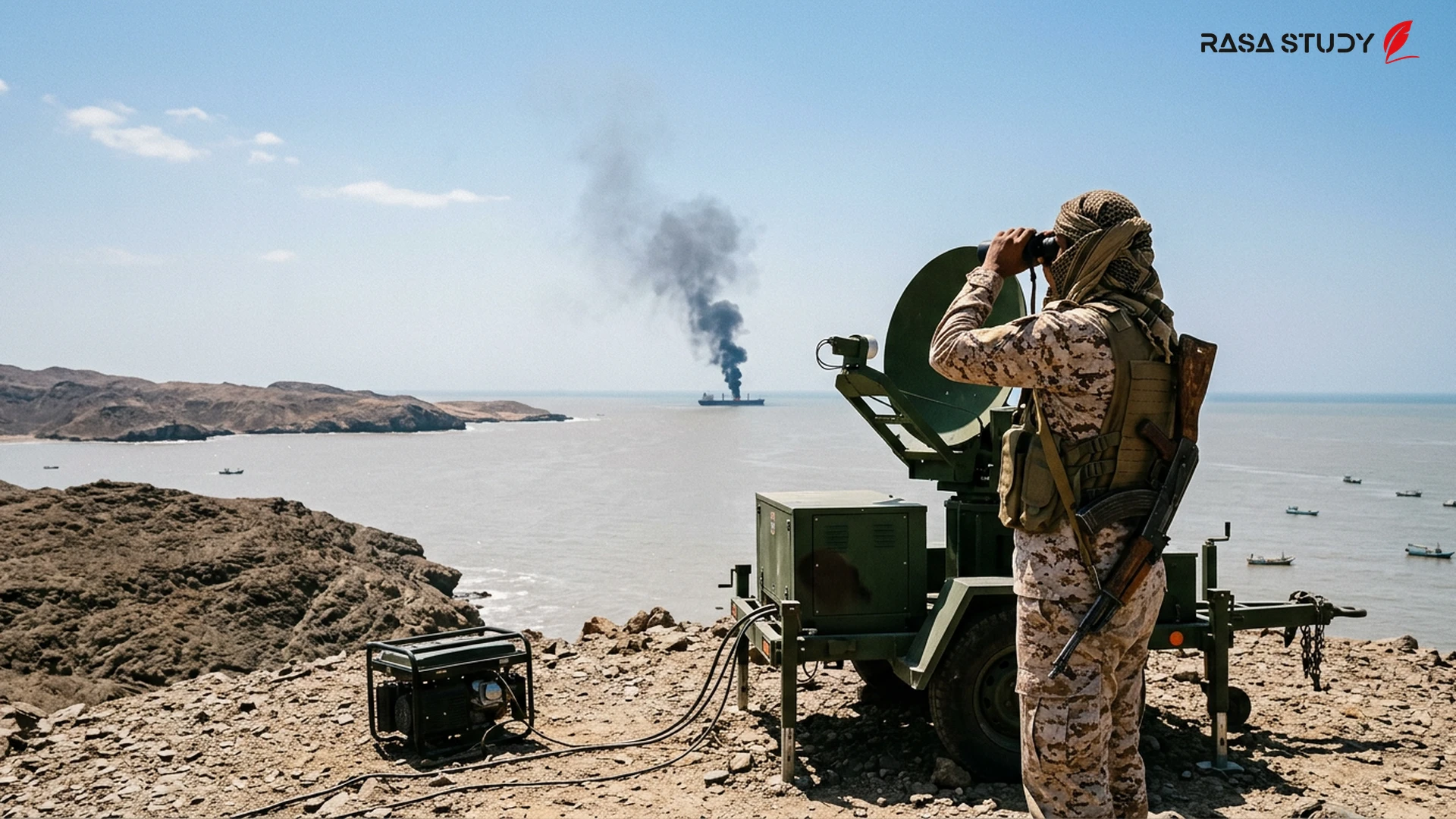
Following claims of airspace violations and increased military movements in the region, Yemen has emerged as a new front against Iran. Media reports indicate the end of Sana'a's strategic patience and the possibility of a large-scale military conflict.
Yemen's Entry into Complex Regional War Equations
Today, July 13, 2026, reports published by the newspaper "Türkiye Gazetesi" indicate that a new front of tension has opened in the Middle East. Tahir al-Aqili, the Yemeni Defense Minister, accused Iran of repeated violations of his country's airspace and announced that Sana'a's patience has run out [1]. These statements come as the region has been embroiled in a war of attrition with Tehran since last February, following the start of the joint US-Israeli operation known as "Epic Fury."
Al-Aqili emphasized that Yemeni forces are ready to respond with force to any drone movements or unidentified aircraft in their skies. This sharp stance places Yemen alongside a coalition seeking to limit Iran's regional influence following major changes in the country's leadership [1][4].
Crisis in the Strait of Hormuz and Heavy Exchange of Fire
Simultaneous with Yemen's threats, field reports from the Strait of Hormuz indicate a heavy exchange of fire between United States naval forces and the Iranian Revolutionary Guard Corps. Iran has officially announced that it has banned the passage of ships through this vital waterway and, in response to US attacks, has targeted military bases in Bahrain, Kuwait, and Jordan [2].
US President Donald Trump, in his latest statement, claimed that American forces are "crushing" Iran's military capabilities, while simultaneously leaving the door open for potential negotiations [2]. However, Mohammad Bagher Ghalibaf, Iran's chief negotiator, emphasized that the era of unilateral agreements is over and the opposing parties must pay the price for their actions [2].
Economic Consequences and Diplomatic Deadlock
Recent tensions have had a direct impact on global markets. Brent oil prices have faced a 3% increase, and in the Turkish domestic market, the price of gold per gram has reached an unprecedented record of 6150 Lira [5]. Economic analysts warn that the continuation of this situation could bring global inflation to dangerous levels.
On the diplomatic front, mediation efforts by Oman and Qatar continue, but Washington's pressure on Muscat not to cooperate with Tehran in managing the Strait of Hormuz has brought these efforts to a deadlock [3]. Ilham Aliyev, the President of Azerbaijan, also expressed concern over the situation on his southern borders, calling for a swift end to the conflicts and emphasizing that instability in the neighborhood threatens the security of the entire region [3].
Given the death of Iran's former leader in the February attacks and the rise of Mojtaba Khamenei, it appears the region has entered a new phase of confrontation in which smaller actors such as Yemen also play key roles [4].
Increased military presence in the region following mutual threats between Iran and neighboring countries.
linkSources
- Bir ülke daha İran'la savaşa giriyor! 'Sabrımız tükendi, karşılık veririz' — Türkiye Gazetesi (2026-07-13)
- US and Iranian forces exchange heavy missile and drone attacks over control of strait of Hormuz — The Guardian (2026-07-13)
- Iran says mediators continuing efforts to resolve conflict with US — The Times of Israel (2026-07-13)
- Azerbaijan Facilitates Evacuation of Foreign Nationals from War-Hit Iran — Caspian News (2026-07-09)
- Middle East tensions drive gold and oil prices higher — Türkiye Gazetesi (2026-07-13)


