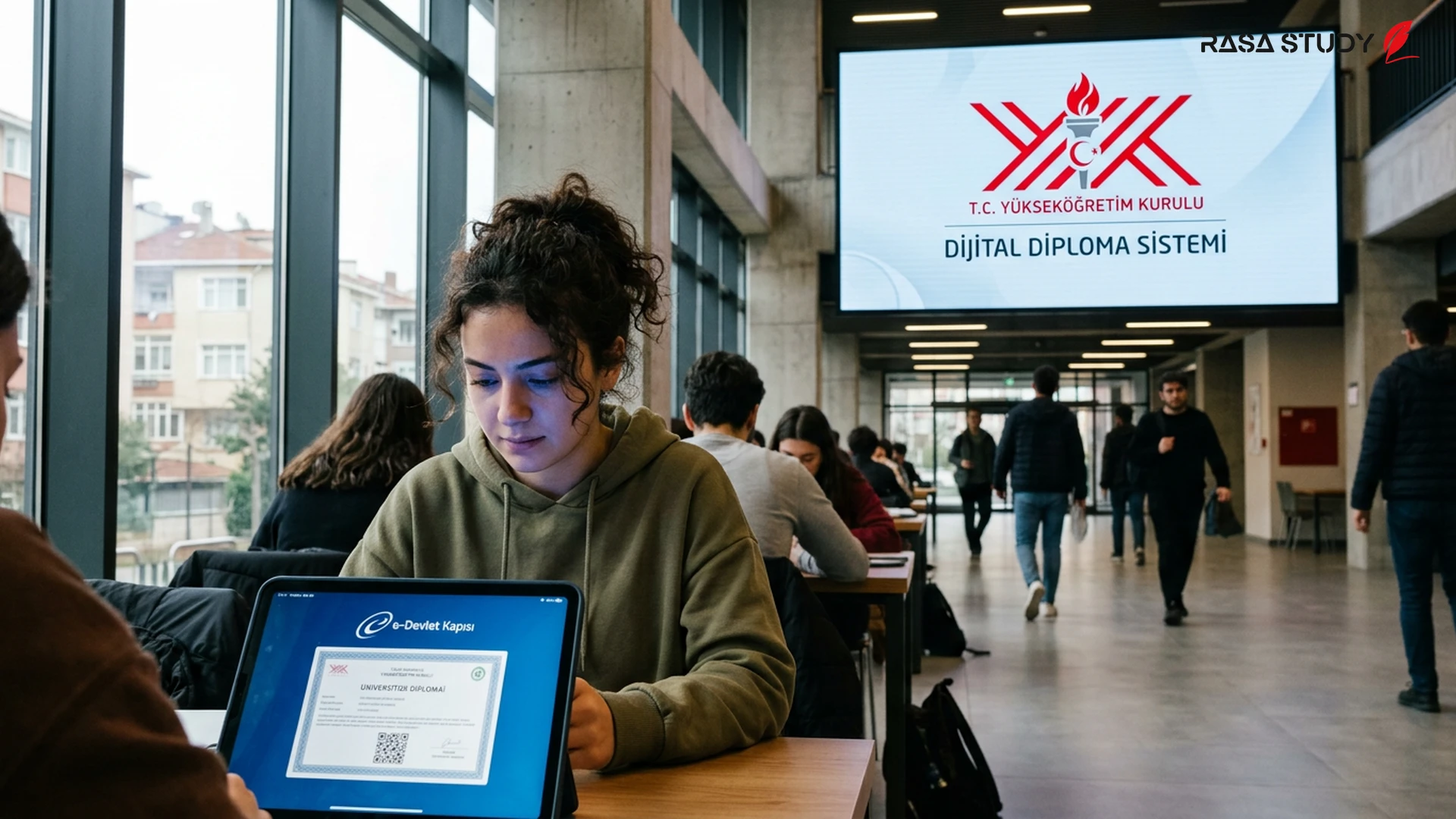
The Council of Higher Education (YÖK) has issued a new circular initiating strict oversight of university open courses to end the phenomenon of "certificate inflation" and restore the credibility of educational documents at the national level.
The Council of Higher Education (YÖK), in an unprecedented move described by national media as a "revolution in educational standards," has officially taken action against the phenomenon of educational certificate inflation. According to a circular sent to all Turkish universities on July 2, 2026, starting from the beginning of October this year, no university will be allowed to organize certificate courses without the direct approval of this council [1].
The End of Unregulated Certificate Issuance in Turkey In recent years, the mushrooming of short-term training courses by "Continuing Education Centers" (SEM) within universities had sparked widespread criticism. Many of these courses were conducted without adhering to academic standards and solely for commercial purposes, leading to a labor market saturated with low-quality credentials. YÖK has now set a deadline of October 1, 2026, announcing that all educational programs must be registered in the "YÖKSİS" system and evaluated by council experts before implementation [2]. This measure aims to prevent the sale of diplomas and ensure the quality of educational content.
Validation Through the Electronic Government (e-Devlet) System One of the most significant parts of these reforms is the centralization of document issuance. According to the new regulations, certificates for successfully completed courses will no longer be issued independently by the universities themselves; instead, they will be issued centrally through the Electronic Government (e-Devlet) system and will be verifiable online [1]. This new system not only reduces the possibility of document forgery to zero but also allows employers in both public and private sectors to instantly verify the authenticity and quality of the course completed by the applicant.
Link Between Short-Term Courses and Academic Education This decision by YÖK follows last month's (June 2026) resolution regarding "Micro-credentials." Based on that resolution, students can fulfill up to 10% of the course units (ECTS) required for their graduation through these approved certificates [3]. Therefore, the standardization of these courses is considered vital for maintaining the quality of the entire Turkish higher education system. With the new system, only courses that pass YÖK's strict standards will be convertible into university credits [2].
Impact on the Labor Market and Public Recruitment These new regulations are expected to affect the recruitment process in government offices as well. Previously, the accumulation of various certificates in resumes had caused confusion in evaluating individuals' actual skills. Now, with direct YÖK supervision, only documents registered in the central system will hold legal value. This benefits applicants who have participated in high-quality, reputable courses and closes the door on potential abuses [1].
YÖK ensures the quality of short-term training courses in Turkey with the new oversight system.
linkSources
- YÖK Sertifika Enflasyonuna Dur Dedi! — Memurlar.Net (2026-07-03)
- YÖK Sertifika programlarında yeni dönem! — Kamudanhaber (2026-07-03)
- Yükseköğretim Kurumlarında Mikro Yeterlilikler Çerçevesine İlişkin Usul ve Esaslar — YÖK (2026-06-23)