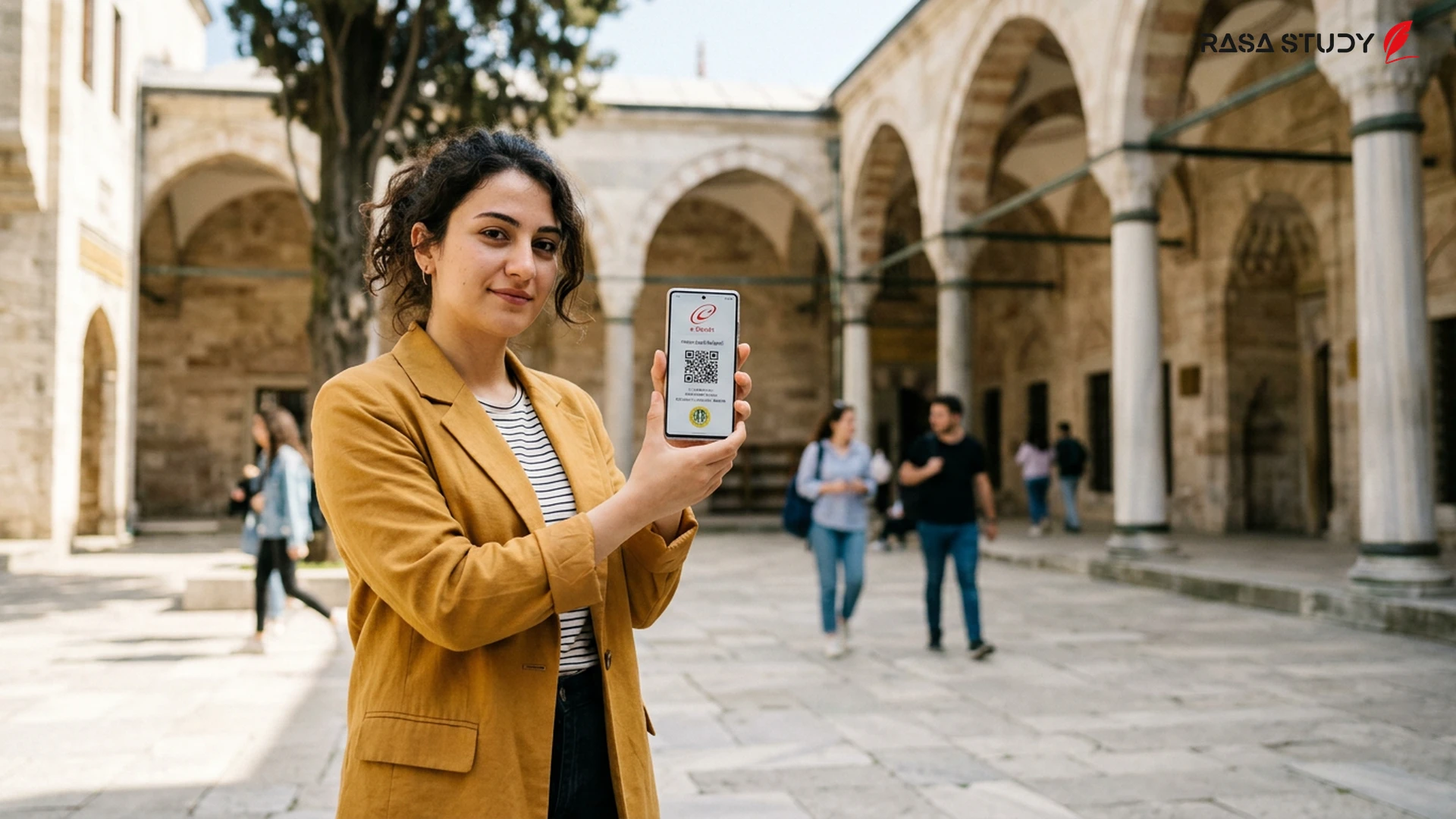
To enhance quality standards and prevent document forgery, the Council of Higher Education of Turkey (YÖK) has launched a new system for issuing and verifying university certificate programs through the "e-Devlet" (e-Government) portal.
Today, July 8, 2026, the Council of Higher Education of Turkey (YÖK) announced a new phase in the digitalization of higher education. According to this plan, all certificates issued by university Continuing Education Centers (SEM) will henceforth be centrally issued and managed through the Turkish e-Government portal (e-Devlet) [1]. This move is considered a major step toward unifying educational documents and increasing their international credibility.
Details of YÖK's New Certificate Plan According to an official statement from YÖK, starting October 1, 2026, all certificate programs beginning at universities must first be approved by the council. Universities are required to record course and participant information in the Higher Education Information System (YÖKSİS) [2]. Erol Özvar, President of YÖK, emphasized that this system is designed to end the activities of unauthorized and "under-the-stairs" institutions that issue invalid documents. With this method, every certificate will have a common quality standard guaranteed by the state [3].
The Role of the e-Devlet System in Authentication One of the most important features of this plan is the possibility of digital inquiry and verification of documents. Users can view their certificates and download the valid file by visiting the "Council of Higher Education Services" section on the e-Devlet portal [1]. These documents will be equipped with QR codes and security barcodes that make forgery impossible. Employers in both public and private sectors can also ensure the authenticity of the presented document in seconds by scanning these codes [4]. This transparency ensures that the true value of short-term training courses is correctly recognized in the labor market.
Benefits for Students and the Labor Market This digital transformation is part of the "Micro-Credentials" framework recently approved by Turkey. The goal of this framework is to convert skills acquired in short courses into transferable credits (ECTS) [3]. In this way, students can officially record skills such as artificial intelligence, data science, or foreign languages learned outside the formal curriculum in their academic transcripts. This not only strengthens individuals' resumes but also allows companies to select specialized labor with greater precision [2].
Implementation Timeline and Future Outlook Full implementation of this system will begin on October 1, 2026, and all public and private universities are required to comply with the new standards [1]. YÖK has announced that this program will be expanded in the future so that Turkish certificates can be easily recognized and equated at the European Union level. This move places Turkey among the leaders in digital education and lifelong learning in the region [4].
From now on, all short-term university course certificates in Turkey can be obtained and verified through the e-Government portal.
linkSources
- Eğitim sertifikaları artık e-Devlette — Milliyet (2026-07-08)
- e-Devlet artık sertifika avcısı: YÖK'ten kalite ve doğrulama hamlesi — Alparslandiyari (2026-07-07)
- University certificates become digitally verified in Türkiye — Daily Sabah (2026-07-06)
- YÖK, üniversitelerde yaşam boyu öğrenme alanındaki kalite güvencesini güçlendirecek — Haberler.com (2026-07-06)


