Researchers at Karabük University (KBÜ) have developed a new system for the automated identification of damage and wear in historical stone buildings using advanced artificial intelligence algorithms, marking a significant step in the digital preservation of cultural heritage.
Karabük University (KBÜ) has once again pioneered at the intersection of technology and history. A team of researchers from the Safranbolu Başak Cengiz Faculty of Architecture has completed an innovative project supported by the Scientific and Technological Research Council of Türkiye (TÜBİTAK), aimed at the automated detection of surface damage in historical stone structures using machine learning models [1].
Technology in Service of Cultural Heritage The project, titled "Detection of Surface Damages in Historical Stone Structures with Machine Learning Models," was led by Associate Professor Dr. Muhammet Mutlu, with researchers such as Mustafa Hakkı Eraslan playing key roles. The system was fed with visual data collected from various historical cities in Türkiye, including Safranbolu, Istanbul, Amasya, and Tokat [2]. The primary goal of this research is to create a digital workflow that can replace traditional manual visual inspections, which are often time-consuming and prone to human error.
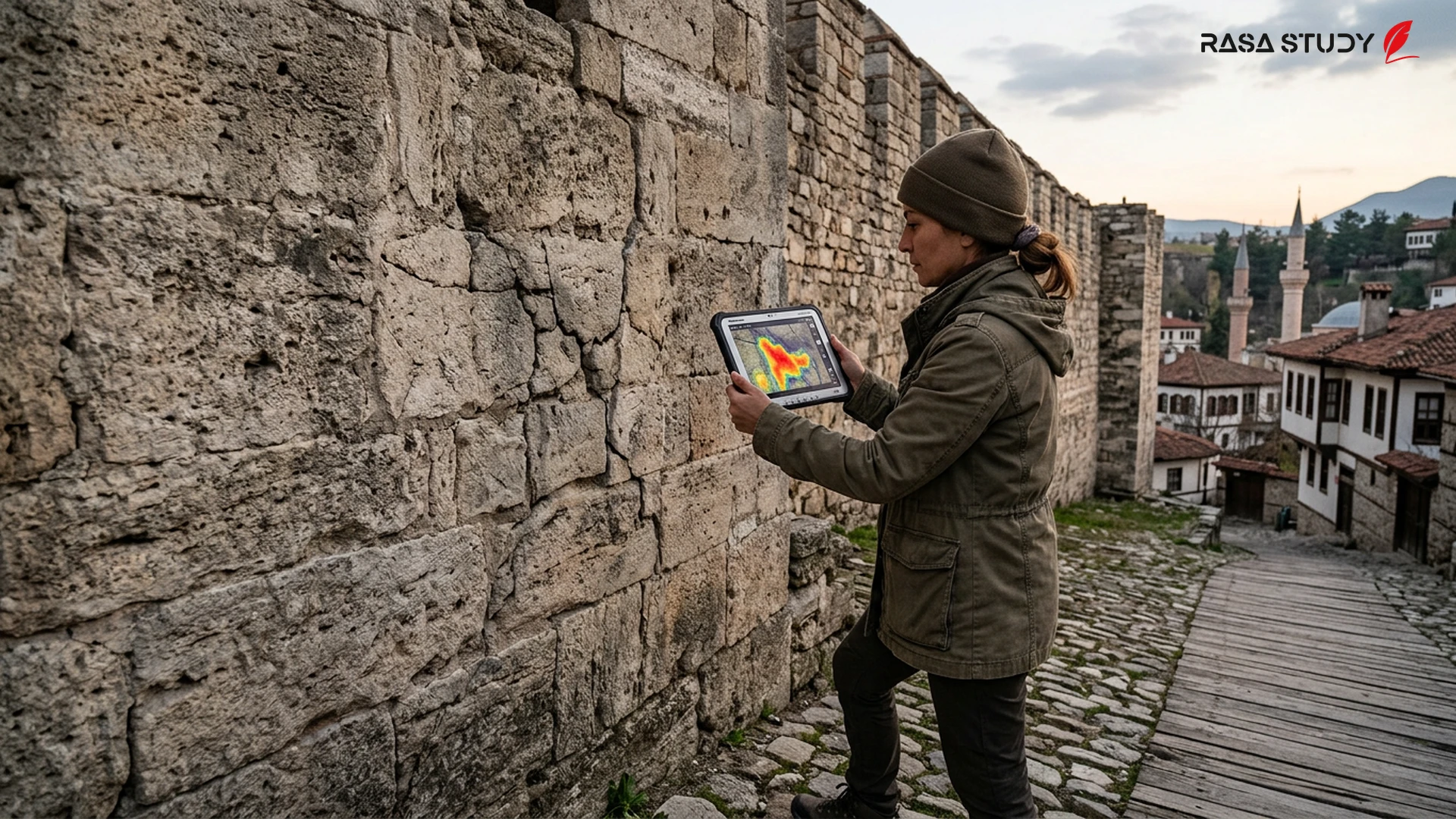
High Precision with Deep Learning and 3D Modeling In this method, photogrammetric data is first collected from historical buildings to create precise 3D models. Subsequently, deep learning algorithms trained on thousands of images of various damage types—such as cracks, moisture-induced wear, and mortar degradation—analyze these models [1]. The system is capable of automatically drawing damage maps and providing detailed technical reports in a digital environment. According to the researchers, the use of models like YOLOv10 and Mask R-CNN in this project has significantly increased the speed of identifying minor damages [3].
National and International Significance Türkiye is one of the world's richest countries in terms of cultural heritage due to its thousands of historical stone monuments. The collaboration between Karabük University and the General Directorate of Cultural Heritage and Museums in this project demonstrates its strategic importance for archaeological preservation [2]. This technology not only reduces restoration costs but also prevents sudden collapses by continuously monitoring structural health. This methodology is expected to be implemented across all UNESCO World Heritage sites in Türkiye in the near future.
The new system at Karabük University uses AI for digital mapping of damages in stone structures.
linkSources
- KBÜ'de Yapay Zekâ ile Tarihi Taş Yapıların Hasarları Tespit Ediliyor — Karabük Üniversitesi Medya (2026-06-26)
- Karabük Üniversitesi'nde tarihi taş yapıların hasarlarını belirleyen yapay zeka destekli proje geliştirildi — Habertürk (2026-06-26)
- Tarihi Taş Yapılarda Yüzey Hasarlarının Tespiti İçin Makine Öğrenmesi Modellerine Yönelik Etiketli Veri Seti Geliştirilmesi — KBÜ Akademik Veri Yönetim Sistemi (2026-06-12)