Russia has officially announced that the first unit of the Akkuyu Nuclear Power Plant will open by the end of 2026. However, the exchange rate jump from 1.5 to 47 Lira has subjected the project to severe economic criticism.
Official Operation Date Announced by Russia Alexey Likhachev, CEO of the Russian state corporation Rosatom, announced on July 11, 2026, that the first unit of the Akkuyu Nuclear Power Plant (NGS) will definitely enter service before the end of this calendar year [1]. According to him, this project is now a top priority in Russia's plans, and there is no doubt regarding its launch in 2026 [2].
Currently, sensitive technical stages are underway. This month (July 2026), "hot tests" for the first unit of the plant have begun, which is a vital stage to ensure reactor safety before fuel loading [5]. Nuclear fuel loading is expected to take place in the autumn of 2026 to connect Turkey's first nuclear electricity to the national grid.
Currency Disaster; From 1.5 Lira to 47 Lira Despite technical progress, the Akkuyu plant has come under heavy criticism due to its economic model. When the electricity purchase guarantee agreement was signed with Russia, the dollar exchange rate against the Turkish Lira was approximately 1.50 Lira [4]. However, today, in July 2026, this rate has reached 47 Lira. This staggering jump means that the cost of the purchase guarantee, set on a dollar basis (12.35 cents per kWh), has now become a backbreaking burden on Turkey's public budget.
Critics point out that this price difference imposes a massive loss on the Turkish Electricity Generation Company (EÜAŞ), as the purchase price from Akkuyu is significantly higher than current market prices [3].
Why is Akkuyu a Target of Criticism? Akkuyu is not just an energy project; it has become a hot political and economic issue. The main reasons placing this project at the center of attacks include:
- Exorbitant Cost: With an exchange rate of 47 Lira, the cost of electricity produced at this plant is much more expensive for the end consumer than renewable sources [3].
- Build-Own-Operate (BOO) Model: This is the first time in the world that Russia holds full ownership of a nuclear power plant on another country's soil, sparking sovereignty debates.
- Working Conditions: Reports of harsh working conditions and labor protests at the construction site have led the project to be nicknamed "Workers' Hell" [1].
Future Outlook of Energy in Turkey The Akkuyu plant has a total of 4 units with a capacity of 4800 MW, which, upon completion, will supply about 10% of Turkey's electricity needs [5]. Government officials believe this project is a vital step toward reducing dependence on natural gas imports. However, the government's main challenge in 2026 is managing the massive exchange rate discrepancy and preventing this project from becoming a permanent financial crisis for the Treasury [4].
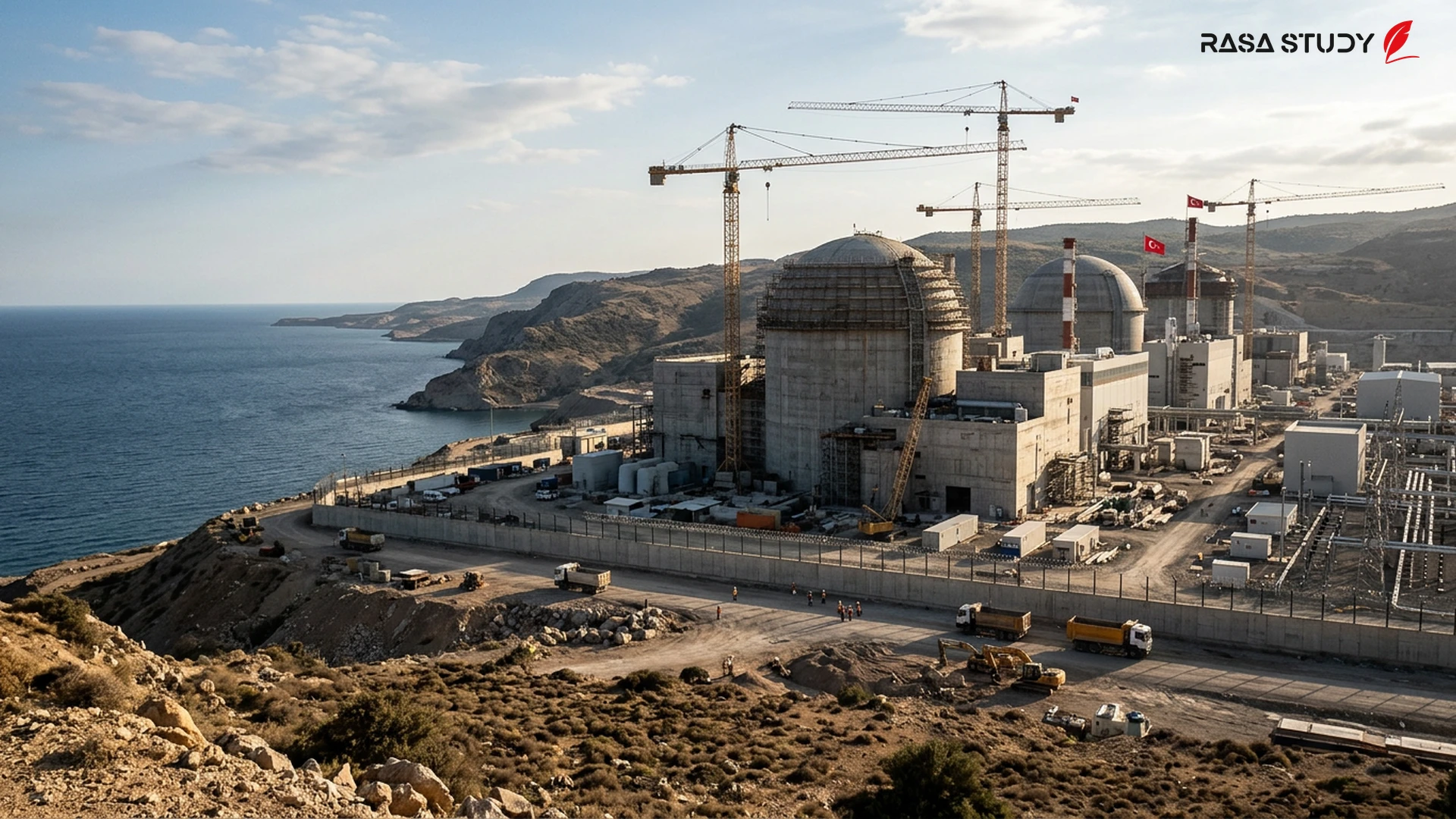
The Akkuyu Nuclear Power Plant in Mersin, Turkey, being built by the Russian company Rosatom.
linkSources
- Rusya'dan resmi açıklama geldi: Akkuyu Nükleer Santrali 2026 bitmeden açılacak — Gazete Oksijen (2026-07-11)
- Rosatom Genel Müdürü Likhachev: Akkuyu 2026 bitmeden devreye alınacak — T24 (2026-07-11)
- Akkuyu NES'in devreye girmesi kamu maliyesine ek yük getirecek — BirGün (2026-06-18)
- Akkuyu NGS'de maliyet tartışmaları: 1,50 liradan 47 liraya — Mansetiz (2026-07-11)
- Akkuyu NPP's Unit 1 launch set for fall 2026: Rosatom CEO — Hürriyet Daily News (2026-06-30)