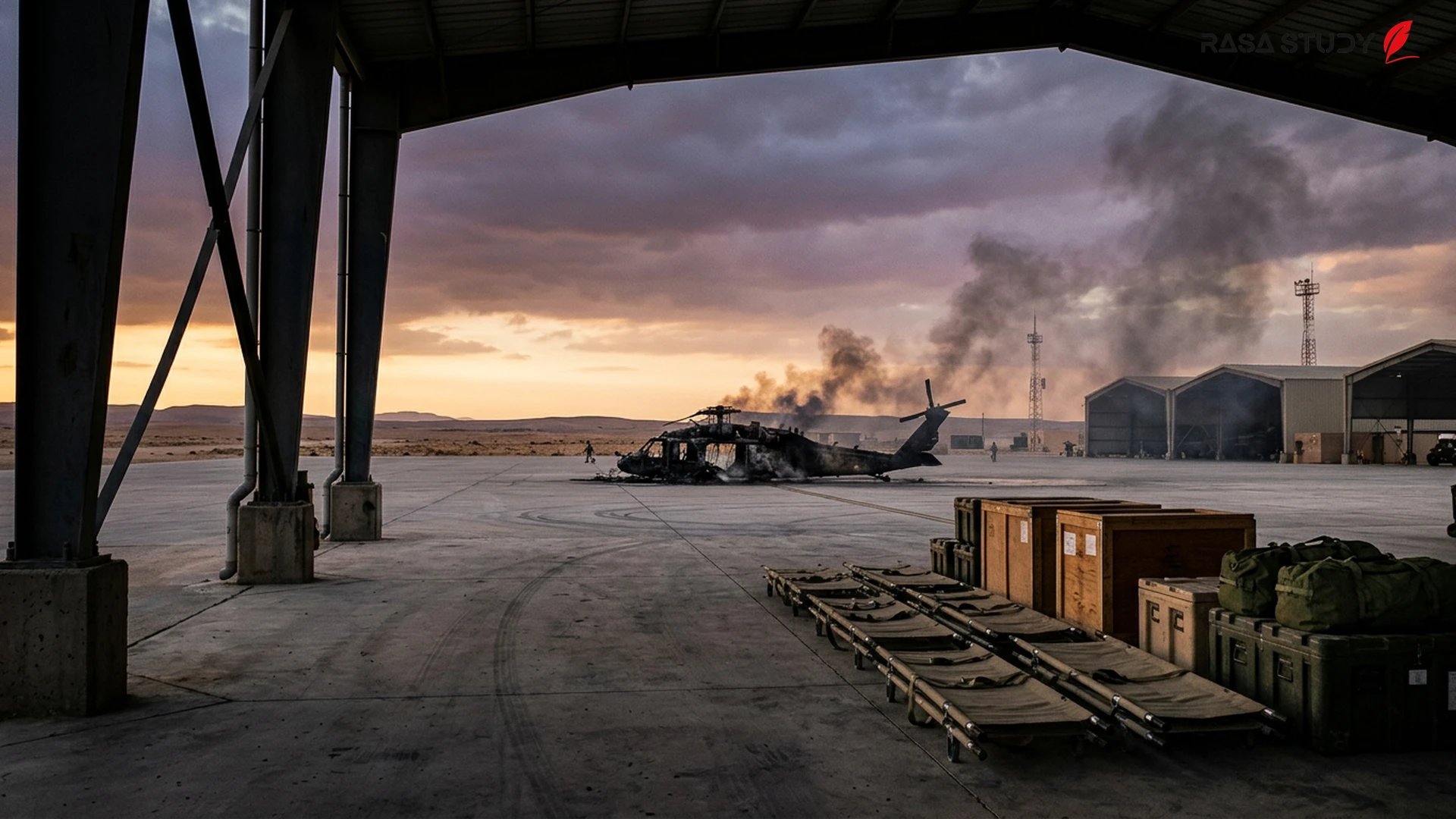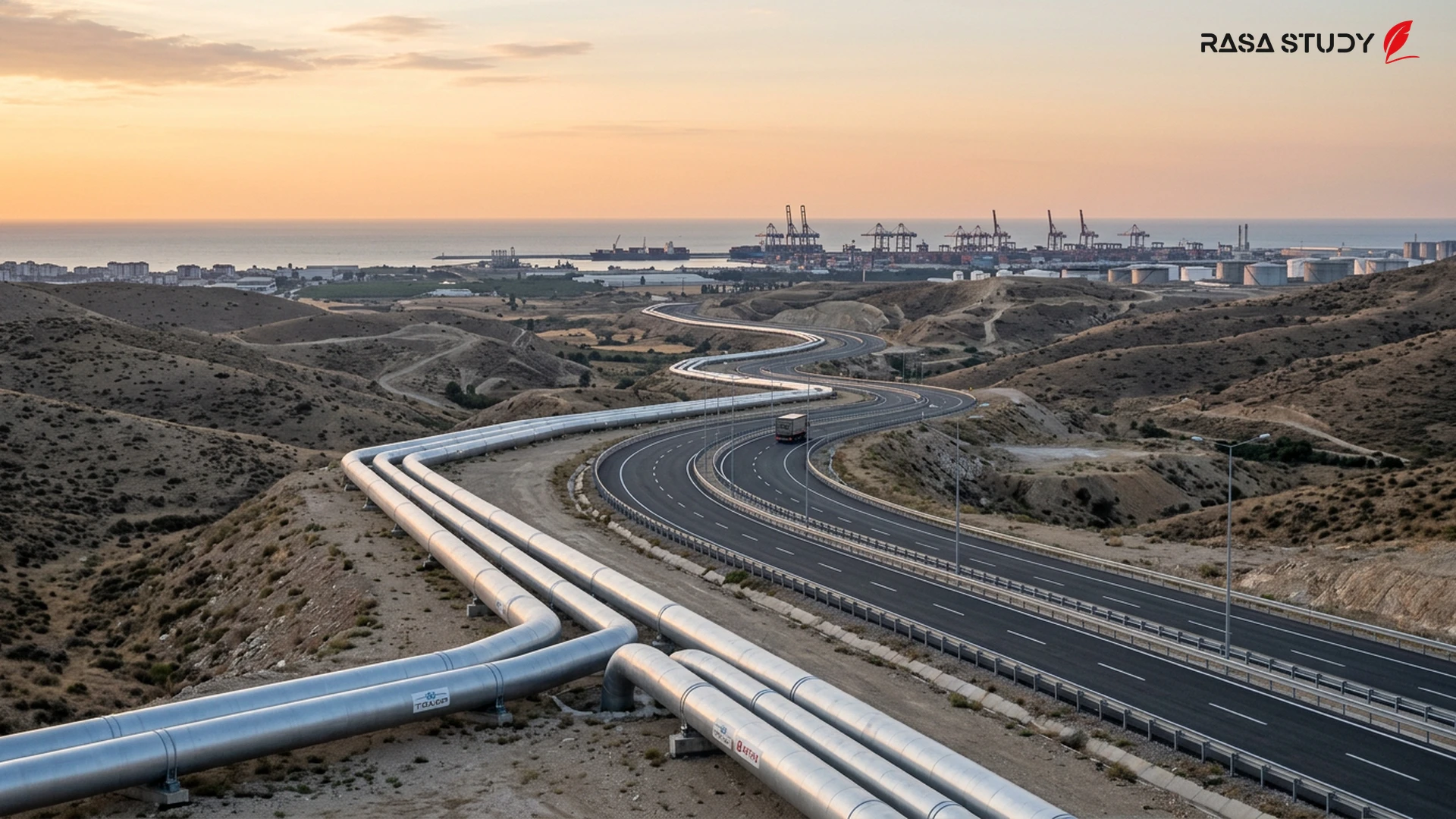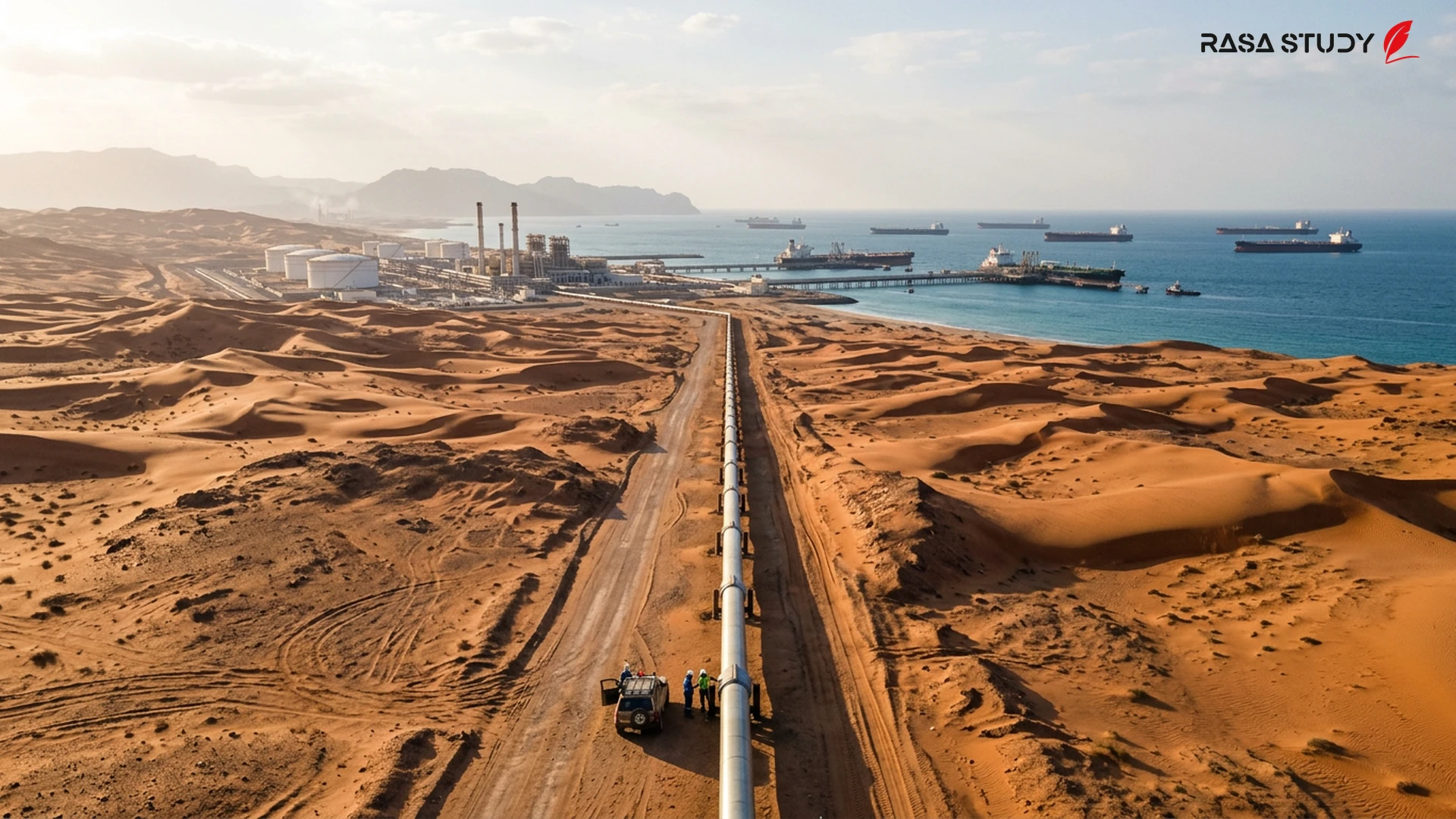
Following the 2026 military tensions and the partial blockage of the Strait of Hormuz, regional countries are completing alternative routes at an unprecedented pace to permanently end the world's historical dependence on this strategic bottleneck.
Today, July 17, 2026, global energy markets are witnessing a fundamental shift in the structure of oil and gas transit. The blockage and insecurity in the Strait of Hormuz, which intensified since February this year, has forced oil-exporting countries to advance their infrastructure projects to bypass this vital route with incredible speed. New reports indicate that the balance of power in the Persian Gulf region is shifting in favor of land routes and ports along the Sea of Oman.
Saudi and UAE Pipelines: New Life Arteries Saudi Arabia and the United Arab Emirates are at the forefront of these changes. Saudi Arabia's "East-West" pipeline (Petroline) is now operating at its full capacity of 7 million barrels per day (bpd), and Riyadh is considering plans to increase this capacity to 9 million bpd [3]. This pipeline, which transports oil from eastern fields to the port of Yanbu on the Red Sea, has become the global market's most important safety valve.
On the other hand, the United Arab Emirates has accelerated its second pipeline project, being built parallel to the "Habshan-Fujairah" pipeline, under the direct order of the Crown Prince of Abu Dhabi [2]. With the completion of this project in 2027, the UAE's export capacity from the port of Fujairah is expected to reach over 3.6 million bpd, effectively covering the country's entire export needs without requiring passage through the Strait of Hormuz [1].
Iraq's "Development Road" Project: Linking the Gulf to Europe Iraq is also redefining its role in global trade with its massive $17 billion project known as the "Development Road." This project, which includes a 1,200-kilometer rail and road corridor from the Grand Faw Port in Basra to the Turkish border, is designed to connect the Persian Gulf directly to Europe's logistics network [4]. Although the first phase of this project was planned for 2028, the current crisis in the Strait of Hormuz has led Baghdad and Ankara to reach new agreements to accelerate its implementation [4].
The Rise of Strategic Ports in the Sea of Oman The port of Fujairah in the UAE and the port of Duqm in Oman have now become the main energy hubs outside the Persian Gulf. DP World recently announced plans to build a new container terminal on the UAE's eastern coast to reduce Dubai's commercial dependence on the port of Jebel Ali [5]. Meanwhile, Oman has consolidated its position as a secure and stable player on the edge of the Indian Ocean by increasing oil production and exports through the port of Duqm.
These structural changes represent a new reality in energy geopolitics: the Strait of Hormuz is no longer the only option on the table. With billion-dollar investments in pipelines and land corridors, the leverage resulting from the threat to close this strait is weaker than ever before in history.
The development of export infrastructure in Fujairah and Yanbu has minimized dependence on the Strait of Hormuz.
linkSources
- UAE and Saudi Arabia fast-tracking pipeline expansions to bypass Hormuz — Kpler (2026-07-10)
- UAE to complete second oil pipeline bypassing strait of Hormuz by 2027 — The Guardian (2026-05-15)
- Saudi Arabia says East–West pipeline restored to full capacity of 7 million bpd — Energy Connects (2026-04-13)
- What Exactly Is the Development Road Project? — Tendify (2026-02-04)
- UAE to build new port to bypass Strait of Hormuz — The Independent (2026-07-15)