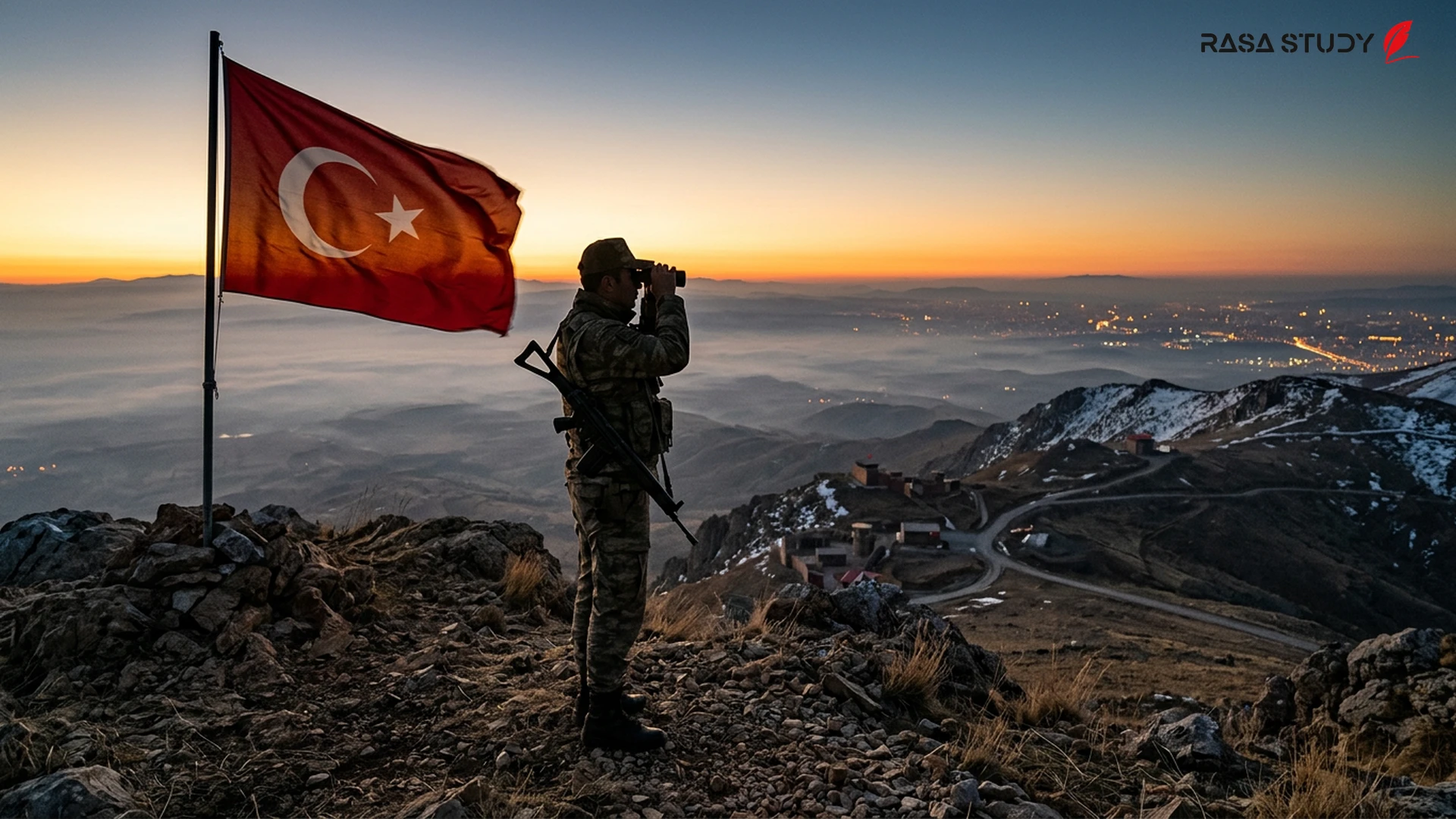
Abdülkadir Ünal, senior analyst and head of the IKNA think tank, claimed in a controversial note that the successful advancement of the 'Terror-Free Turkey' plan played a vital role in preventing border instability and Iran's strategic influence on Turkish soil.
The Nature of the 'Terror-Free Turkey' Plan in 2026
As Turkey today, July 1, 2026, prepares to host the decisive NATO summit in Ankara, discussions surrounding internal security and regional stability have reached their peak. The 'Terror-Free Turkey' (Terörsüz Türkiye) plan, which began in late 2024 as a new security paradigm by the Turkish government with the support of the People's Alliance, has now reached its final stages [1]. This process focused not only on the disarmament of militant groups but also aimed at eliminating the grounds for foreign power influence through proxy groups within Turkish territory.
Abdülkadir Ünal's Analysis and the Iran Containment Hypothesis
In his recent analysis published in the 'Ankara Net Haber' media outlet, Abdülkadir Ünal answers the key question of whether this internal stability prevented an 'unofficial occupation' or widespread influence by Iran [2]. Ünal believes that in the shadow of the ongoing war between Iran on one side and the United States and Israel on the other, Tehran has sought to create new fronts to reduce pressure on its borders. According to him, if Turkey had not succeeded in resolving the domestic terrorism issue, these groups would have become tools in the hands of regional powers to destabilize Ankara.
Ankara and Tehran Confrontation in the Shadow of Regional Crisis
Diplomatic reports indicate that in recent months, tensions between Ankara and Tehran over influence in Syria and Iraq have intensified significantly [3]. With the weakening of some of Iran's traditional influence networks in the region, Turkey has been able to play the role of a powerful mediator by relying on its internal security. Ünal notes in his analysis that the 'occupation' he refers to does not necessarily mean the entry of tanks, but rather the occupation of Turkey's security and political space by chaos that could have been directed from the eastern borders [4].
Strategic Consequences for National Security
Success in the 'Terror-Free Turkey' plan has allowed Ankara to focus on strengthening its defense industries and presence in international trade corridors without worrying about internal uprisings. This analysis emphasizes that the national cohesion resulting from this process has effectively cut off foreign actors' access to internal 'pressure cards' in Turkey. On the eve of the NATO summit, this achievement is evaluated as one of the greatest strengths of Turkish diplomacy against the regional pressures of Iran and its allies [3].
Analysts believe Turkey's internal stability is key to containing tensions from the Iran-US war in the region.
linkSources
- Terörsüz Türkiye'ye geçiş sürecinde son aşama — Anadolu Ajansı (2026-05-18)
- İran işgalini 'Terörsüz Türkiye' süreci mi durdurdu? — Ankara Net Haber (2026-07-01)
- Turkish diplomacy turns US-Iran conflict into strategic gain — Yeni Şafak (2026-06-29)
- The Real Targets of a War with Iran: Türkiye and the US — IKNA Think Tank (2026-03-14)


