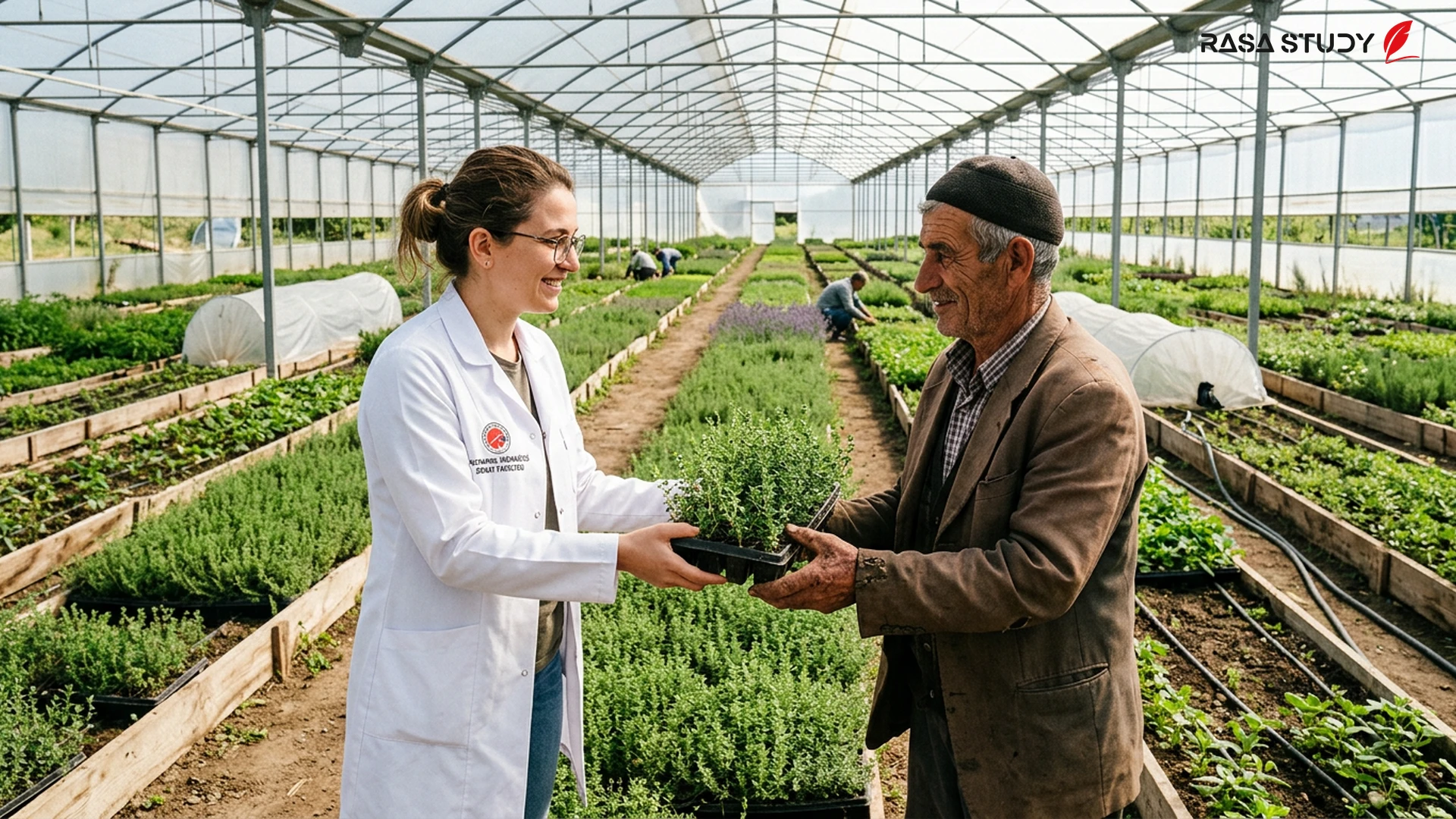
In an innovative move to strengthen the rural economy, Kastamonu University has begun the large-scale production and distribution of aromatic plants using greenhouse technologies. This project aims to replace low-yield crops with high-profit medicinal plants, directly targeting the income of regional farmers.
Today, July 11, 2026, Turkey's agricultural sector is witnessing a scientific transformation in the commercialization of plant products. Kastamonu University, as part of a strategic project supported by the Presidency Strategy and Budget Department, has succeeded in the mass production of medicinal and aromatic plants in its modern greenhouses. This project, designed to increase biodiversity and economically empower local farmers, has now reached the stage of large-scale seedling distribution [1].
University Leadership in Modern Agricultural Development The Faculty of Forestry at Kastamonu University has become a hub for research and production of aromatic plants by constructing a 750-square-meter polycarbonate greenhouse complex and 500-square-meter auxiliary spaces. Dr. Kerim Güney, the project manager, emphasizes that the main goal of this plan is to transform academic knowledge into tangible economic value for villagers. In these greenhouses, environmental conditions are carefully controlled to produce seedlings with the highest quality and the maximum amount of active ingredients [2].
Distribution of Half a Million Seedlings; A Step Toward Self-Sufficiency This year, the center has successfully produced over 504,000 seedlings. This figure includes 480,000 Izmir Thyme plants and 24,000 medicinal Sage plants. These seedlings, in cooperation with the Provincial Directorate of Agriculture and Forestry, have been provided completely free of charge to farmers in selected areas, including Pınarbaşı and the village of Taşlık. This action not only reduces the initial cultivation cost for farmers to zero but also guarantees the quality of the final product in export markets [3].
Training and Technical Support; The Key to Project Success The major difference between this plan and traditional projects is the step-by-step guidance provided by experts to farmers. In addition to seedling distribution, specialized training courses are held on the correct planting, maintenance, and harvesting of medicinal plants. Dr. Güney and his team personally visit the fields and assist farmers during the seedling transplantation stages. This technical support also includes proper processing and drying methods to preserve the added value of the products at the time of sale [1][2].
Economic Outlook and Global Markets Given food inflation and climate change, the cultivation of medicinal plants is considered an ideal option for the future of agriculture due to lower water requirements and higher resistance to pests. Local officials believe that with the expansion of this project in the coming years and the introduction of other plants such as Lemon Balm and Echinacea into the production cycle, the Kastamonu region could become one of the main exporters of plant essential oils in the region. This change in cultivation patterns has the potential to increase the net income of farmers by up to 3 times compared to traditional crops [3].
Distribution and planting of seedlings produced in Kastamonu University greenhouses to support local farmers - July 11, 2026
linkSources
- Kastamonu'da aromatik bitkiler çiftçiye yeni gelir kapısı olacak — Taşköprü Postası (2026-07-11)
- Kastamonu üniversitesi serasında aromatik bitki üretimi çiftçilere ekonomik katkı sağlıyor — Haber365 (2026-07-11)
- Üniversite serasında üretiliyor: Çiftçilerin geliri aromatik bitkilerle artacak — Habertürk (2026-07-11)