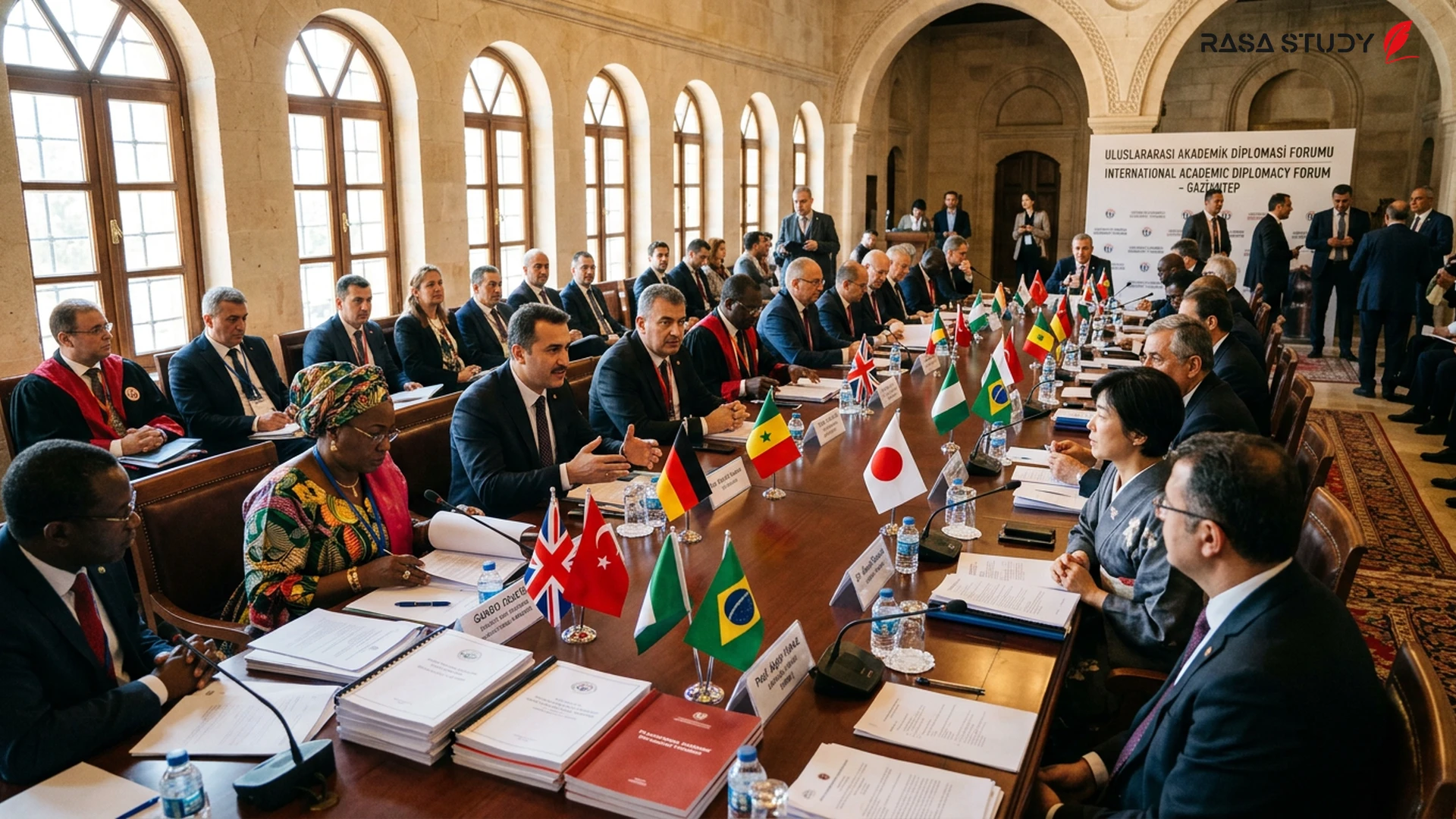
In June 2026, the Social Sciences University of Ankara (ASBÜ) took significant steps to strengthen scientific networks and strategic collaborations with prestigious universities in the Islamic world and Central Asia by adopting a new approach to academic diplomacy.
The Social Sciences University of Ankara (ASBÜ), as one of Turkey's leading research-oriented institutions, is vigorously pursuing its new strategy to become an international scientific hub in the field of social sciences. On June 27, 2026, the university announced a new phase in the expansion of its global network through "academic diplomacy" and strategic collaborations [1].
Strategic Meeting in Gaziantep and New Alliances Professor Dr. Musa Kazım Arıcan, Rector of ASBÜ, participated in the "First Consultative Meeting of Islamic University Rectors" hosted by Gaziantep Islamic Science and Technology University (GİBTÜ). This meeting, attended by senior representatives of international higher education institutions, provided a platform for signing multilateral agreements aimed at expanding ASBÜ's scientific influence globally [1].
During this event, ASBÜ decided to sign comprehensive "KA171 + MoU" agreements with higher education institutions in 5 key countries, including Egypt, Saudi Arabia, Kuwait, Bahrain, and Palestine. These agreements will not only facilitate student and faculty exchanges but also pave the way for joint research projects in sensitive areas of social sciences and diplomacy [1].
Cooperation Roadmap with 15 Countries In addition to the comprehensive agreements, ASBÜ has developed a plan to establish initial institutional links with 15 other countries, including Uzbekistan, Iraq, Morocco, the United Arab Emirates, Tunisia, Libya, the Maldives, Sudan, Syria, Jordan, Bangladesh, Brunei, Thailand, and Somalia. The goal of these Memoranda of Understanding (MoU) is to create the necessary infrastructure for scientific cooperation in countries that have high potential for international projects but have so far had limited participation in programs like Erasmus+ [1].
From Central Asia to the Far East: Expanding the Sosyokent Model ASBÜ's efforts are not limited to Arab countries. In early June 2026, the university signed a cooperation protocol with Bukhara State University in Uzbekistan, which includes extensive cultural and research exchanges [2]. Furthermore, reports indicate that ASBÜ is in negotiations to transfer its successful "Sosyokent" model to Kazakhstan and Azerbaijan to strengthen social science innovation ecosystems in these regions [3].
These movements reflect the university's 2026-2027 vision for the internationalization of higher education. With the extension of the registration deadline for international graduate students in June 2026, ASBÜ is clearly attracting global talent to strengthen its scientific foundation [1][2].
Professor Dr. Musa Kazım Arıcan explaining ASBÜ's academic diplomacy strategy in June 2026.
linkSources
- ASBÜ, Küresel Akademik Ağını Akademik Diplomasi ve Stratejik İş Birlikleriyle Güçlendiriyor — Ankara Sosyal Bilimler Üniversitesi (2026-06-27)
- ASBU and Bukhara State University Signs a Cooperation Protocol — ASBÜ International Office (2026-06-11)
- ASBÜ'den Astana'da Stratejik Akademik İş Birliği Hamlesi — ASBÜ News (2026-04-13)


