Following the conclusion of the extensive funeral and burial ceremonies for Ayatollah Khamenei in Mashhad, international analysts are examining Iran's political future. Sefer Aşır Eraslan, in an article for the newspaper 'Haber Ekspres,' has analyzed new dimensions of this event and the succession of Mojtaba Khamenei.
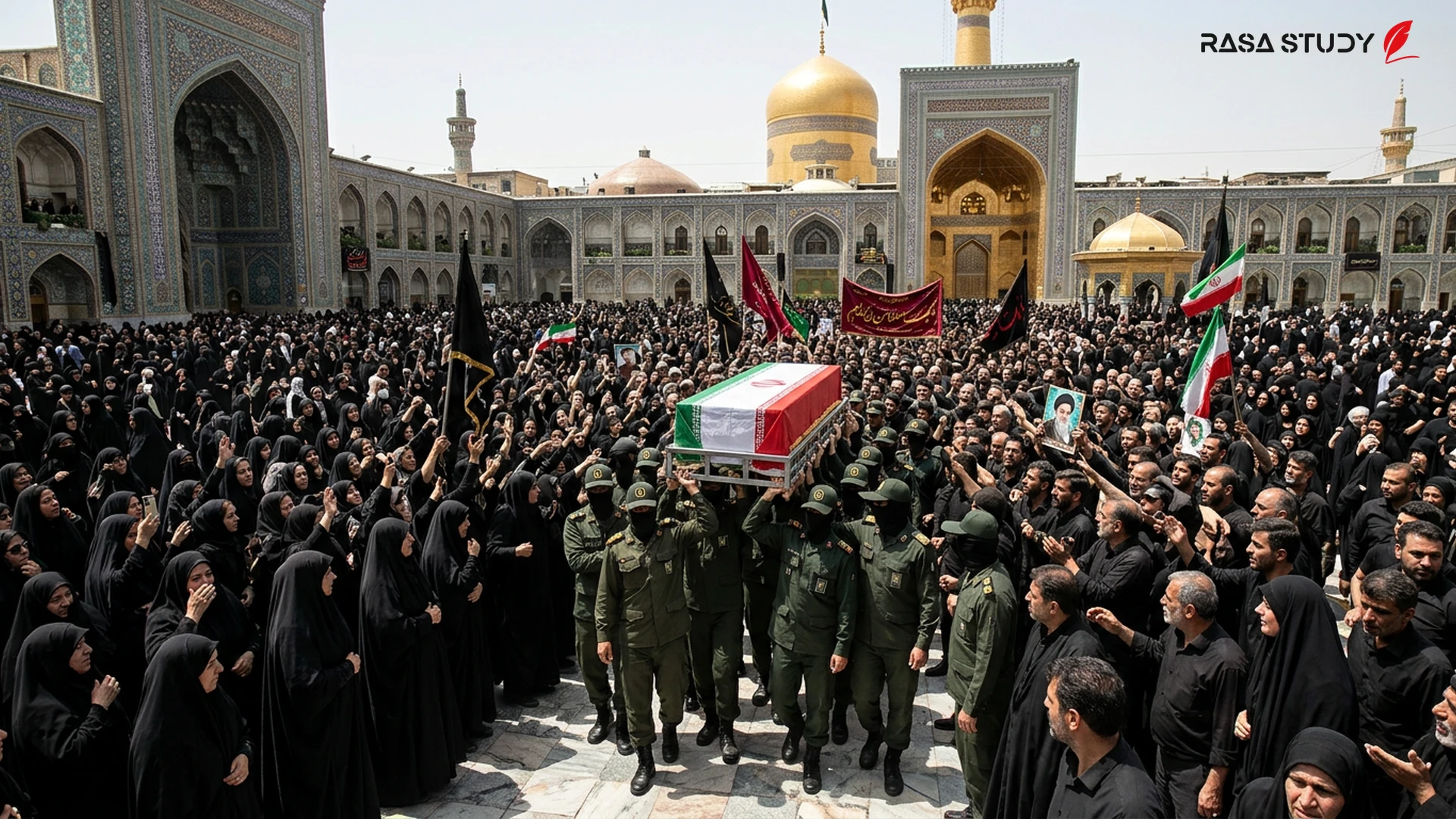
End of an Era: Burial Ceremony in Mashhad Following the assassination of Ayatollah Ali Khamenei in February 2026 and a several-month delay of the ceremony due to wartime conditions, the body of the second leader of the Islamic Republic of Iran was finally laid to rest on July 9, 2026, at the Imam Reza Shrine in Mashhad [2][3]. This ceremony, which marked the end of a week of funeral processions in the cities of Tehran, Qom, Najaf, and Karbala, was held with the participation of millions, according to Iranian state media [6]. The burial in Mashhad, his birthplace, is seen as a symbol of returning to roots during the most critical period in Iran's contemporary history.
Sefer Aşır Eraslan's Analysis in Haber Ekspres Newspaper Sefer Aşır Eraslan, a Turkish writer and strategic analyst, examined the consequences of this event in a note titled 'The Burial of Khamenei' in the 'Haber Ekspres' newspaper [1]. Eraslan believes that this burial was not merely a religious ceremony but a symbol of the system's attempt to reconstruct its legitimacy amidst intense tensions with the United States and Israel. He notes that the long-term absence of Mojtaba Khamenei, the designated successor, from public ceremonies indicates complex security layers and fear of subsequent assassinations within the power structure [4][5].
The Succession Challenge and the Role of the IRGC One of the main axes of discussion in regional media is the transfer of power to Mojtaba Khamenei. In his analysis, Eraslan emphasizes that Iran's new leadership faces a dual challenge: the lack of his father's revolutionary charisma and a heavy dependence on the Islamic Revolutionary Guard Corps (IRGC) to maintain stability [4]. Reports indicate that during the burial ceremony, vengeful slogans against Donald Trump and Israeli officials dominated the atmosphere, indicating the continuation of aggressive policies in the post-Khamenei era [3][6].
Regional Reflections and the Future of Relations with Turkey For Turkey, the death of the Iranian leader means a reassessment of the power balance on its eastern borders. Eraslan warns in 'Haber Ekspres' that the power vacuum resulting from this change may lead to instability in energy markets and border security [1]. He believes that Ankara must prepare itself for an Iran in which military institutions play a more decisive role than traditional religious institutions. This structural change could directly affect shared files such as Syria and the Caucasus [4].
Conclusion: Iran on the Brink of Change The burial ceremony in Mashhad, although held with great splendor, could not dispel the heavy shadow of political ambiguities from Tehran. As Sefer Aşır Eraslan noted, Iran's new era is tied to a combination of national mourning and readiness for military confrontations. The main question now is whether the new leadership can maintain internal cohesion against external pressures or not [2][5].
The body of Ayatollah Khamenei was buried on July 9, 2026, at the Imam Reza Shrine.
linkSources
- SEFER AŞIR ERASLAN: HAMANEY’İN DEFNİ — Haber Ekspres (2026-07-15)
- State funeral of Ali Khamenei — Wikipedia (2026-07-13)
- Khamenei, four family members buried in Mashhad — Jerusalem Post (2026-07-10)
- Iran after Khamenei: A new order takes shape — Inquirer.net (2026-07-12)
- Ali Khamenei's six-day funeral expected to draw millions in Iran — The Guardian (2026-07-03)