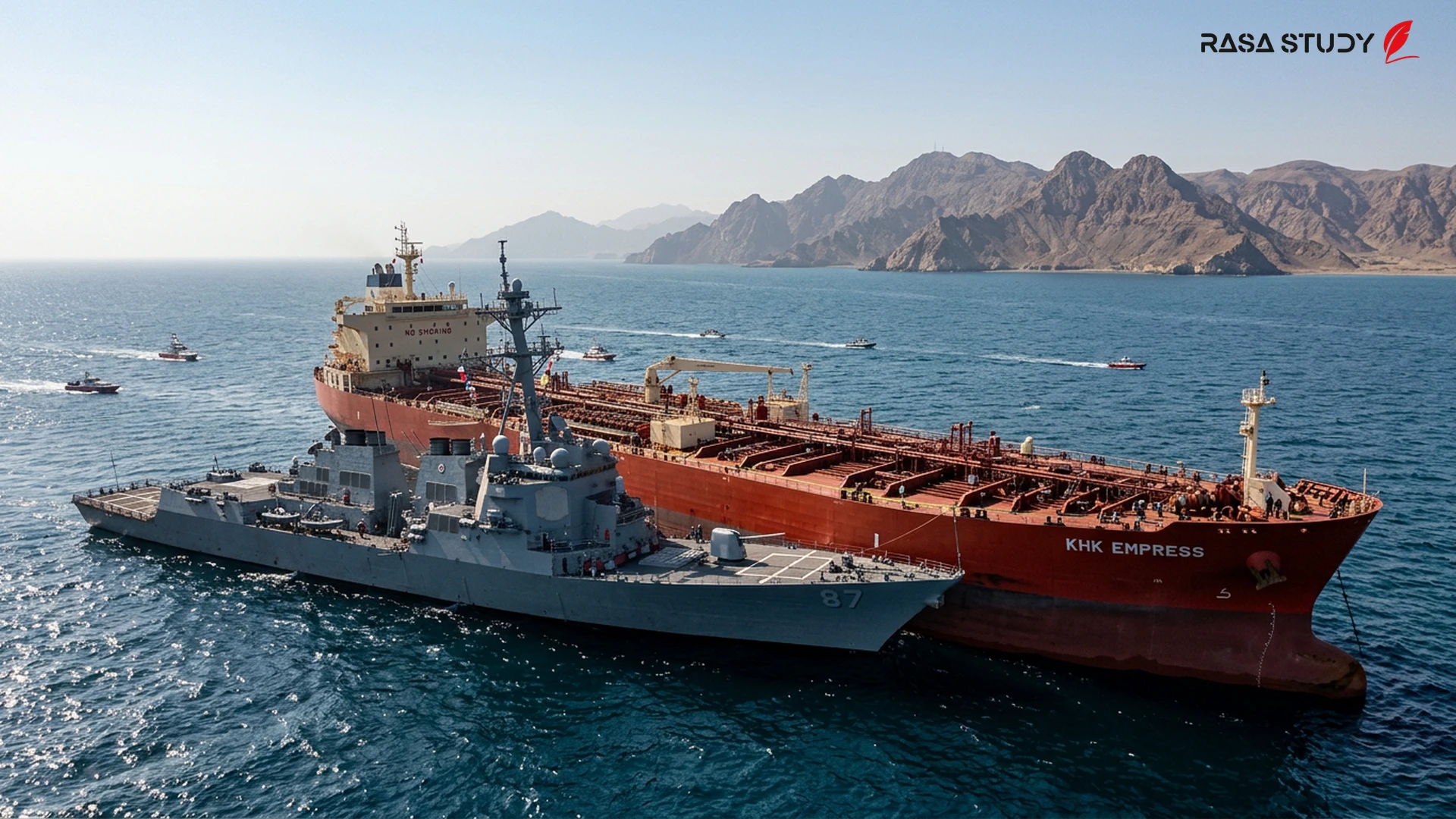
U.S. Central Command (CENTCOM) announced that only 17 hours after re-establishing the naval blockade of Iranian ports, American forces intercepted and rerouted two commercial vessels attempting to pass through the area.
Following an unprecedented rise in tensions in the Persian Gulf region, U.S. Central Command (CENTCOM) reported on Wednesday, July 15, 2026, that its naval forces successfully stopped two commercial ships attempting to violate the naval blockade of Iranian ports. This operation occurred just 17 hours after the United States, under orders from President Donald Trump, reactivated a comprehensive naval blockade against the Islamic Republic of Iran [1][3].
Details of the CENTCOM Interception According to an official CENTCOM statement, the two commercial vessels were attempting to enter Iranian port waters when they were forced to change course by U.S. warships. While further details regarding the identity of these ships or their cargo have not been released, CENTCOM emphasized that American forces remain on full alert to ensure complete compliance with blockade regulations [2]. The command posted on its social media account: "U.S. forces remain vigilant, lethal, and ready" [5].
Return to Maximum Pressure and Naval Blockade The new naval blockade, which began at 4:00 PM local time on Tuesday, marks the collapse of recent diplomatic efforts between Washington and Tehran. This action follows the cancellation of a 60-day temporary ceasefire agreement due to repeated attacks on commercial shipping last week. President Trump stated in controversial remarks that the United States will now act as the "Guardian of the Strait of Hormuz" and has proposed a 20% toll on all passing cargo to secure the international waterway [4][6].
Escalation of Conflict and Retaliatory Strikes Admiral Brad Cooper, commander of CENTCOM, noted that Iran has attacked seven commercial vessels in the past week, resulting in nearly 12 civilian crew members killed, wounded, or missing [1]. In response to these actions, U.S. fighter jets and drones have conducted a new wave of precision strikes against Iranian missile sites, drone facilities, and naval capabilities on strategic islands, including Greater Tunb, to reduce Tehran's ability to threaten commercial shipping [3][5].
Economic Implications and Energy Security Currently, more than 20 U.S. warships and hundreds of military aircraft are deployed across the Middle East to enforce this blockade. While ships carrying humanitarian aid and vessels unrelated to Iran are permitted to pass, strict surveillance is being applied to all traffic in the Strait of Hormuz [2][4]. This situation has caused widespread concern in global energy markets, as the Strait of Hormuz is the transit route for a large portion of the world's crude oil, and any prolonged disruption could sharply increase prices.
CENTCOM forces enforcing the naval blockade of Iranian ports to ensure shipping security in the Persian Gulf.
linkSources
- US says 2 commercial vessels redirected since Iran naval blockade resumed — Anadolu Agency (2026-07-15)
- U.S. blockade of Iranian ports restarts — CBS News (2026-07-15)
- CENTCOM says two ships changed course after attempting to breach Iran blockade — APA News Agency (2026-07-15)
- US launches fresh Iran strikes as CENTCOM resumes naval blockade — Fox News (2026-07-15)