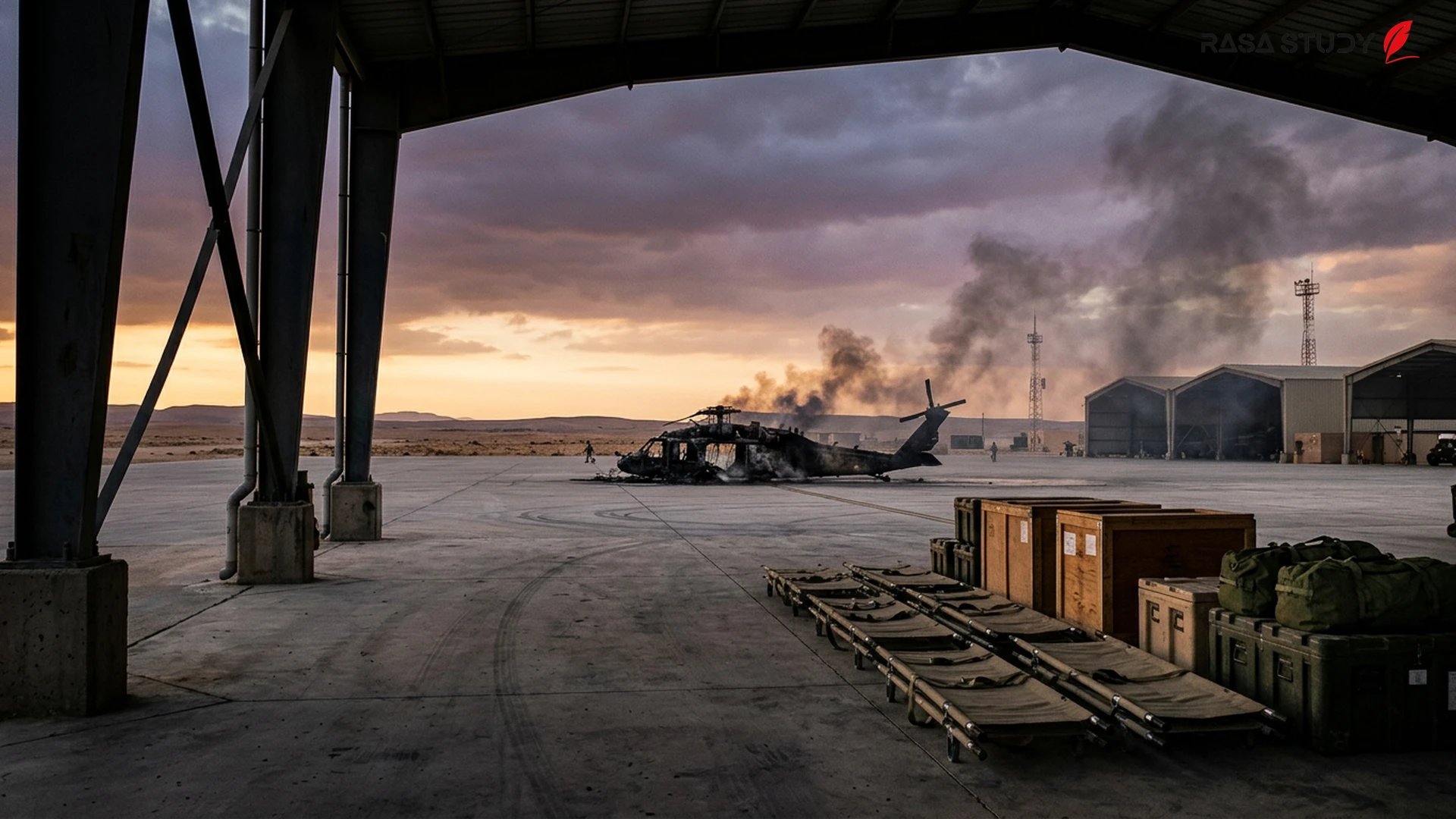
As a fragile ceasefire takes hold in June 2026, the Chinese military is meticulously analyzing the outcomes of 'Operation Epic Fury.' Beijing views this conflict as a laboratory for identifying American defense vulnerabilities and the depletion of Washington's weapon stockpiles.
Today, June 29, 2026, as peace negotiations continue in Islamabad between representatives from Washington and Tehran, strategic reports from Beijing indicate that the Chinese People's Liberation Army (PLA) considers the recent months-long war an indirect victory. Chinese military analysts believe that despite initial tactical successes, the United States failed to achieve its strategic objectives [2].
Attrition of US Missile and Defense Stockpiles One of the most significant findings by the Chinese military is the high consumption rate of advanced munitions by American forces. Reports suggest that during the conflicts from February to May 2026, the United States consumed more than half of its THAAD interceptor missile stocks and a large portion of its Tomahawk cruise missiles [5]. For Beijing, this translates to a reduction in American deterrence capabilities in East Asia and the Taiwan Strait. Chinese experts note that replacing this volume of weaponry at current US defense industry production rates will take years [2].
Drone Lessons for Future Combat The Chinese military has closely monitored the performance of low-cost Iranian drones (such as the Shahed series) against expensive American and Israeli defense systems. Retired Chinese Colonel Fu Qianshao believes that Iran's success in penetrating defensive layers using 'drone swarms' will serve as a model for potential Chinese operations in the Pacific [1]. This war proved that low-cost, mass-produced technologies can challenge the qualitative superiority of complex Western systems.
Technological Integration and the BeiDou System During this conflict, the role of China's BeiDou satellite system in increasing the accuracy of Iranian missiles and their resistance to American electronic warfare became prominent [4]. Western analysts believe that by fully integrating into the Chinese satellite network, Iran was able to create a digital wall against cyber and electronic attacks. This cooperation signals the formation of a new technological bloc directly countering the dominance of the American GPS.
Strategic Failure in the Shadow of Tactical Victory Although 'Operation Epic Fury' led to the physical elimination of some senior Iranian leaders in February 2026 [4], Beijing believes that the power structure in Tehran did not collapse but maintained its cohesion with the appointment of new leadership. From China's perspective, Washington has once again fallen into the trap of 'tactical victory without a strategic goal,' the result of which has merely been an increase in China's diplomatic influence as a peace mediator in the region [3].
Chinese military analysts reviewing drone combat data from the Persian Gulf, June 2026.
linkSources
- Çin Ordusu ABD-İran Savaşını Nasıl Değerlendiriyor? — ssbulten.com.tr (2026-06-20)
- PLA analysis of US tactical vs strategic failures in Iran — Defense One (2026-06-28)
- Fresh US-Iran strikes expose fragility of MoU — Global Times (2026-06-28)
- Iran: 2026 Conflict with the United States and Israel — Britannica (2026-06-26)
- US ammunition depletion in Iran war gives China advantage — Haber7 (2026-05-08)