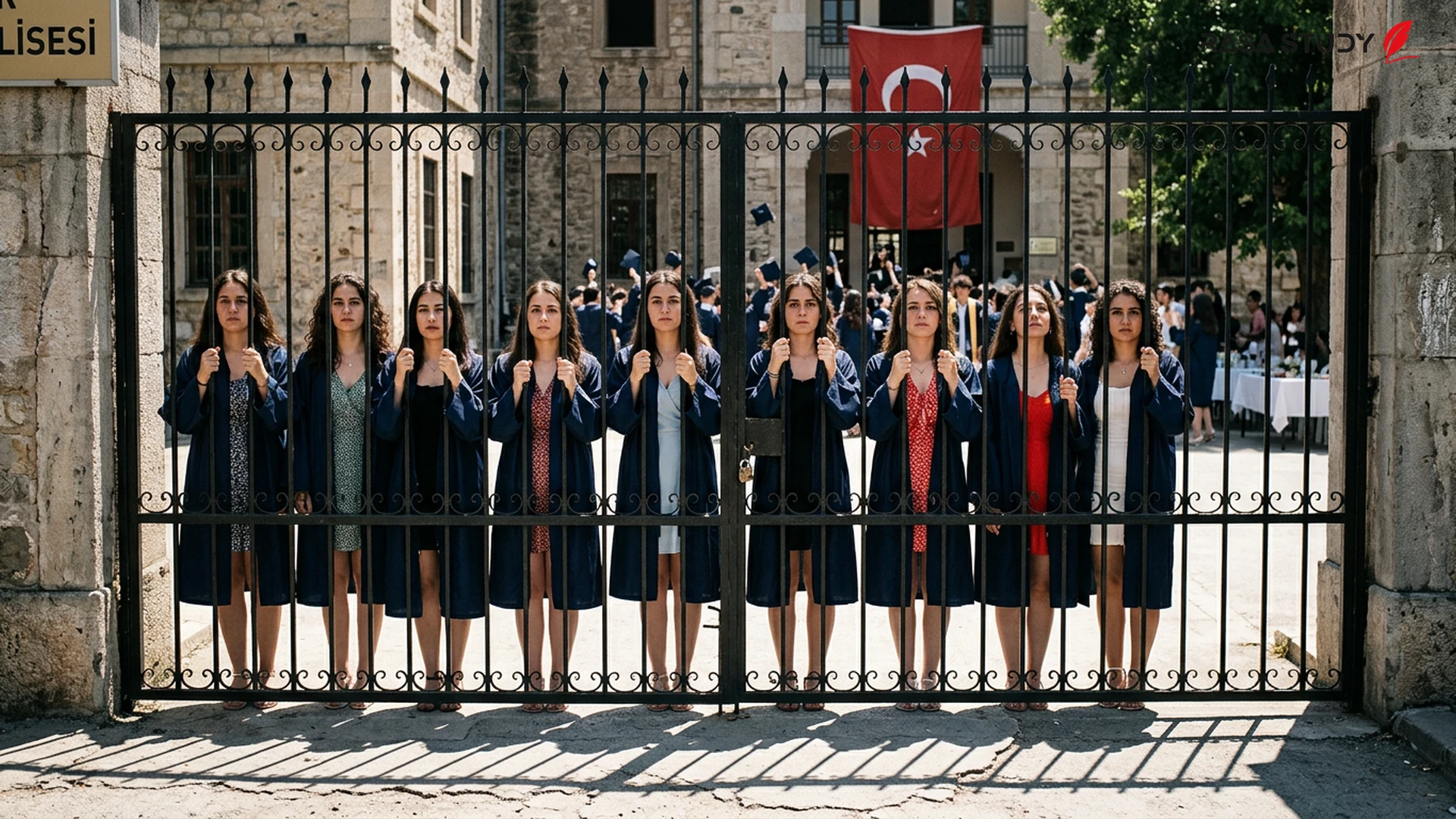
Mahmut Coşkun, President of the Şanlıurfa branch of the Eğitim-Bir-Sen union, has strongly criticized recent incidents at graduation ceremonies, labeling the prevention of student entry based on dress code as illegal and insulting.
Ongoing Tensions in Turkish Graduation Ceremonies
With the arrival of July 2026, heated debates surrounding the conduct of graduation ceremonies in Turkish schools have once again returned to the headlines. Following incidents in some schools where students were prevented from entering ceremonies due to non-compliance with strict dress codes, a wave of criticism has emerged in the country's media. This issue, rooted in the clash between traditional and modern perspectives within the Turkish educational system, has now met with a sharp reaction from union officials [1].
Mahmut Coşkun's Strong Reaction to Restrictions
Mahmut Coşkun, head of the education union in the Şanlıurfa region, lashed out at these treatments in a statement published by the media outlet "Urfa Agency." Pointing out that such actions are reminiscent of the bitter past and ideological restrictions, he emphasized that no administrator has the right to deprive students of their natural rights on their happiest academic day due to personal preferences [1]. Coşkun believes that such behaviors not only fail to align with educational laws but also create polarization in society and damage the mental health of young people.
Roots of the Crisis: From Gebze to All of Turkey
This is not the first time such tensions have made headlines in Turkey. Previously, in similar incidents in regions like Gebze, barring female students due to their attire led to direct intervention by the Ministry of National Education and the opening of judicial cases [2]. At that time, the Ministry issued a circular emphasizing that graduation ceremonies should be held with respect for national and spiritual values while remaining non-discriminatory [3]. However, it appears that in 2026, some schools are still oscillating between extremes in interpreting these circulars.
Necessity of Reforming Oversight Structures
In another part of his speech, Coşkun called for stricter government oversight of school administrators' performance. He noted that graduation ceremonies should be a symbol of unity and success, not a field for political or cultural score-settling. He added: "We will not allow obsolete mindsets that seek to classify students to take root in our educational system again" [1]. These statements indicate a deep rift between education unions and some school executive bodies regarding the management of the cultural environment.
Social and Political Consequences
Analysts believe that reactions like those expressed by Mahmut Coşkun demonstrate the high sensitivity of Turkish society toward civil rights in educational settings. While the government attempts to establish a balance between traditional values and individual freedoms by enacting comprehensive laws, such incidents show that there is a long road ahead to reach a collective understanding. It is expected that in the coming days, the Turkish Ministry of National Education will provide a new official response to these criticisms.
Mahmut Coşkun called for an end to arbitrary treatments in school graduation ceremonies.
linkSources
- Coşkun’dan mezuniyet törenindeki olaya sert çıkış! — Ajans Urfa (2024-06-14)
- Gebze'de mezuniyet töreninde 'kıyafet' gerginliği — BBC Türkçe (2024-06-13)
- Milli Eğitim Bakanlığı'ndan mezuniyet töreni genelgesi — Hürriyet (2024-06-14)