With the announcement of the DGS 2026 exam results by the Turkish Assessment, Selection and Placement Center (ÖSYM), the competition for Nursing faculty seats has reached its peak; candidates must now begin the preference process by carefully analyzing base scores and rankings.
Analysis of Nursing Base Scores in the DGS 2026 Exam
After months of anticipation, the Turkish Assessment, Selection and Placement Center (ÖSYM) has finally announced the results of the 2026 Vertical Transfer Exam (DGS) [1]. As in previous years, the Nursing department remains one of the most popular options for associate degree graduates intending to complete their undergraduate education. This year's base scores indicate a relative increase in competition for top state universities in cities such as Istanbul, Ankara, and Izmir.
According to data published by GZT, base scores for the Nursing department have been influenced by the difficulty level of the Numerical (Sayısal) section questions and the total number of participants [2]. Candidates should note that base scores are determined each year based on the last person admitted the previous year and serve merely as a guide for this year's preference selection.
Top Rankings and Target Universities
Success Rankings (Başarı Sıralamaları) in the DGS exam are much more important than the raw score. In 2026, prestigious health science universities in Turkey have allocated limited quotas for student admission through DGS. Universities such as Hacettepe University and Istanbul University remain at the top of the preference lists for high-ranking candidates [3].
Analysis shows that to be admitted to first-tier state universities, candidates must rank within the top 5,000 nationally. Of course, this rank can shift to lower ranges for private universities or smaller cities. A careful review of the ÖSYM preference guide is essential to understand new capacities and specific quotas.
How Many Correct Answers (Nets) Are Needed for Nursing Admission?
One of the key questions for candidates is the number of correct answers, or "Nets," required in the Mathematics and Turkish sections. For the Nursing department, which falls under the Numerical (Sayısal) scoring category, performance in the Mathematics section is the primary determinant.
Educational reports indicate that to obtain an admission score for an average state university, candidates needed at least 35 to 40 correct answers in the Mathematics section and about 20 correct answers in the Turkish section [2]. Naturally, these numbers may fluctuate depending on the difficulty coefficient of the 2026 exam and the national average. Candidates aiming for scholarship or private universities may succeed with a lower number of nets [3].
Preference Calendar and Next Steps
With the release of results on July 15, 2026 [1], the preference (Tercih) process is expected to begin in late July. Candidates should organize their priority lists based on the 2026 rankings and the base scores of previous years. It is recommended that candidates include a mix of optimistic, realistic, and safe choices in their lists to maximize their chances of admission. All stages of the preference process will be conducted electronically through the ÖSYM AIS system.
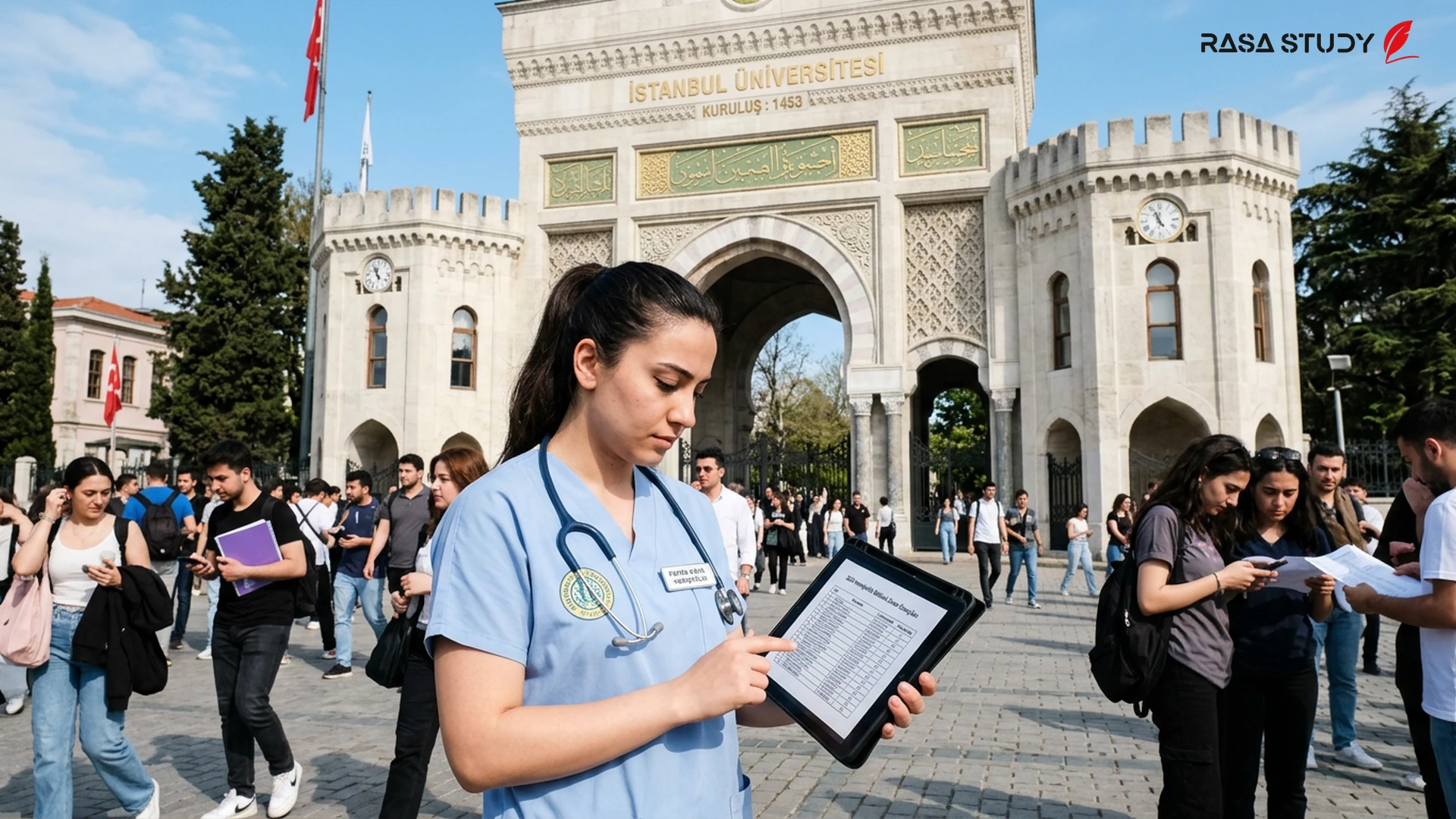
DGS 2026 candidates reviewing new base scores and rankings for Nursing preference selection.
linkSources
- 2026-DGS Sonuçları Açıklandı — ÖSYM (2026-07-15)
- DGS Hemşirelik Taban Puanları 2026: ÖSYM Başarı Sıralamaları — GZT (2026-07-18)
- DGS Hemşirelik İçin Kaç Net Gerekiyor? 2026 Kontenjanları — Hürriyet (2026-07-17)