In morning trading on July 17, 2026, the prices of the Dollar and Euro in the Istanbul free market saw a relative increase. While the Dollar reached the 47.16 Lira threshold, analysts emphasize the impact of regional tensions on monetary stability.
Today, Friday, July 17, 2026, the Turkish foreign exchange market witnessed new fluctuations in the Lira's exchange rate against major global currencies. According to reports from the Istanbul free market, the Dollar and Euro rates began the early hours of trading with a slight upward trend, indicating continued inflationary pressures and geopolitical impacts on the country's economy [1].
Price Details in the Free Market According to data recorded at 09:30 AM local time, each US Dollar is being bought at 47.1623 Lira and sold at 47.1669 Lira. This figure represents a 0.15% increase compared to yesterday [1]. Meanwhile, the Euro followed a similar trend, trading at a rate of 54.0207 Lira for buying and 54.0366 Lira for selling, showing a growth of 0.13% [1]. The British Pound has stabilized at the 63.58 Lira level. These fluctuations occur while yesterday, the Dollar experienced a ceiling of 47.11 Lira, and by crossing this threshold today, it is testing a new resistance level [3].
Analysis of Monetary Policy and Inflation The Central Bank of the Republic of Turkey (CBRT) has faced numerous challenges in recent months. Governor Fatih Karahan previously increased the year-end 2026 inflation target from 16% to 24% [2]. This revision in forecasts is mainly due to rising energy prices and transportation costs caused by international tensions. The bank interest rate, which was stabilized at 37% in April 2026, continues to be used as a tool to curb liquidity, but the foreign exchange market remains highly sensitive to political news [2].
Geopolitical Impacts and Economic Growth One of the main reasons for the Lira's instability in July is cited as increasing tensions in the Middle East and its impact on the energy supply chain. Reports indicate that indirect conflicts between regional powers have caused investors to act more cautiously regarding high-risk assets in emerging markets [2]. On the other hand, economic data shows that the Turkish economy experienced a 2.5% growth in the first quarter of 2026, which has slowed down compared to previous periods [4]. This decrease in growth, alongside high inflation, has put additional pressure on the value of the national currency.
Market Outlook for the Second Half of the Year Economic experts believe that the Turkish Lira will remain under pressure in the coming months. Given that the Dollar rate has grown by more than 9.6% since the beginning of 2026, maintaining stability at the 47 Lira threshold is of vital importance for policymakers [1]. It is expected that in the next Monetary Policy Committee meeting on July 23, new decisions will be made to manage currency fluctuations. Free market traders are now closely following monthly inflation data and Central Bank statements to predict the market's next direction.
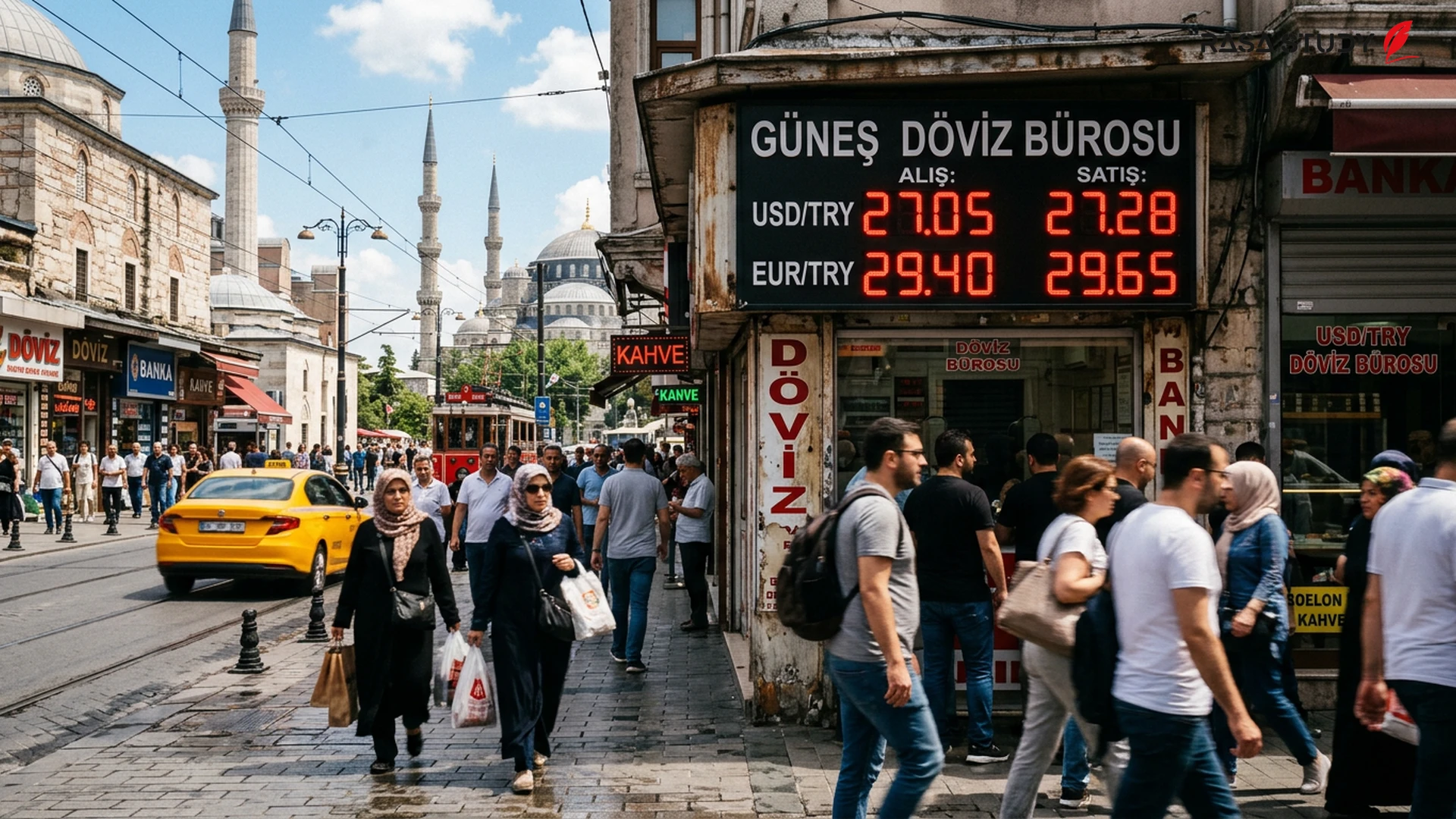
The Istanbul currency market saw increased demand for the Dollar and Euro on July 17, 2026.
linkSources
- Dolar Ve Euroda Son Durum! 17 Temmuz 2026 Dolar Ve Euro Fiyatları — BloombergHT (2026-07-17)
- Turkey's central bank raises 2026 inflation target to 24 percent — Turkish Minute (2026-05-14)
- Dolar ve Euro güne böyle başladı! 16 Temmuz 2026 — Haber7 (2026-07-16)
- Turkish economy grows 2.5 pct in first quarter of 2026 — Hürriyet Daily News (2026-06-01)