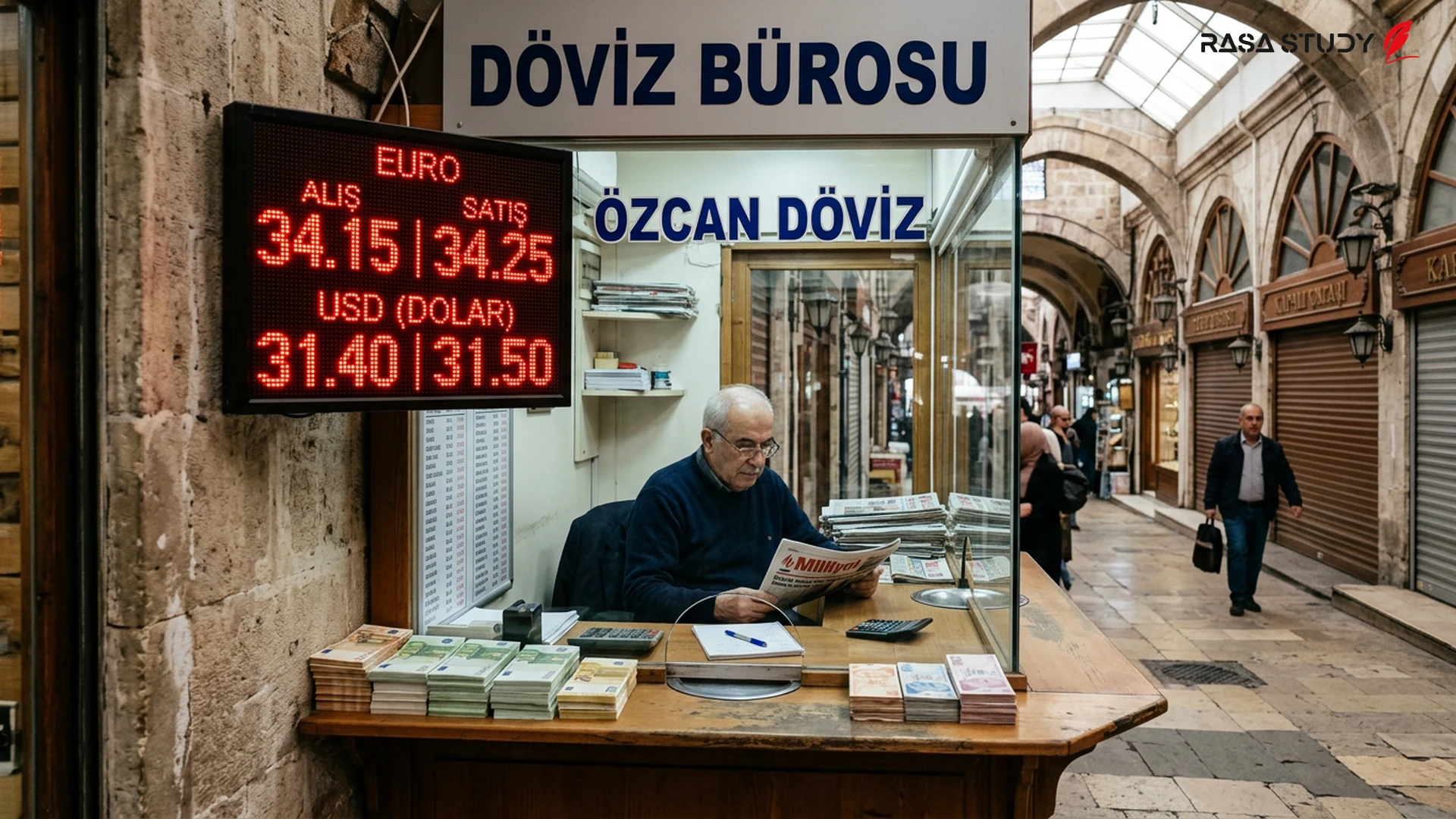
As the second week of July 2026 begins, the Turkish currency market is witnessing relative stability in the Euro rate. Despite inflationary pressures, traders have preferred to adopt a cautious approach until the release of new economic data.
In this morning's trading, July 14, 2026, the Euro rate in the Istanbul free market and the Turkish banking system faced very minor changes. This trend, which began yesterday (Monday), indicates a temporary rest period in Turkey's volatile financial markets [1]. Analysts believe that this "calm before the storm" could be due to investors' anticipation of upcoming central bank meetings.
Current Status of the Euro Rate in the Turkish Market Based on data received from banking sources, the Euro rate against the Turkish Lira is trading within a stable range, showing no significant change compared to the end of last week. This stability occurs while currency fluctuations have been one of the main challenges of the Turkish economy in recent months [3]. Field reports from the Grand Bazaar in Istanbul indicate that trading volume is at a low level and speculative demand has temporarily subsided.
Factors Affecting Euro Stability in Global Markets At the international level, the Euro is experiencing a similar situation against the US Dollar. The lack of macroeconomic data release in the past 24 hours has caused the EUR/USD pair to fluctuate within a narrow range [2]. International traders are now turning their eyes to the Eurozone inflation reports scheduled for release later this week. Any sign of decreasing inflation could affect the European Central Bank's (ECB) contractionary policies and, consequently, change the value of the Euro in global and local markets.
Impact of the Central Bank of Turkey's Monetary Policies The Central Bank of the Republic of Turkey (TCMB) has emphasized maintaining price stability in its recent statements. New regulatory measures on liquidity flow and bank interest rates have prevented sudden currency spikes [3]. However, experts warn that the current stability of the Lira against the Euro is fragile and depends on this month's trade balance. Turkey's tourism sector, which is at the peak of the summer season, plays an important role in providing foreign currency liquidity and controlling rates by injecting currency into the market.
Forecast for the Coming Days This calm trend is expected to continue until mid-week. However, as the end of the week approaches and employment and industrial production statistics are released in Europe, the probability of fluctuations returning to the Turkish currency market is very high [1]. Domestic investors in Turkey are also closely monitoring the domestic inflation rate, as any deviation from forecasts could lead to a shift in capital flow from the Lira toward stable currencies like the Euro and the Dollar.
The Turkish currency market in mid-July 2026 is witnessing relative stability in the Euro to Lira exchange rate.
linkSources
- Euro/TL haftaya yatay seyirle başladı: 13 Temmuz piyasa verileri — Bloomberg HT (2026-07-13)
- Global Forex Markets: Euro remains steady ahead of ECB meeting — Reuters (2026-07-14)
- TCMB Günlük Döviz Kurları ve Piyasa Analizi — Central Bank of the Republic of Türkiye (2026-07-14)