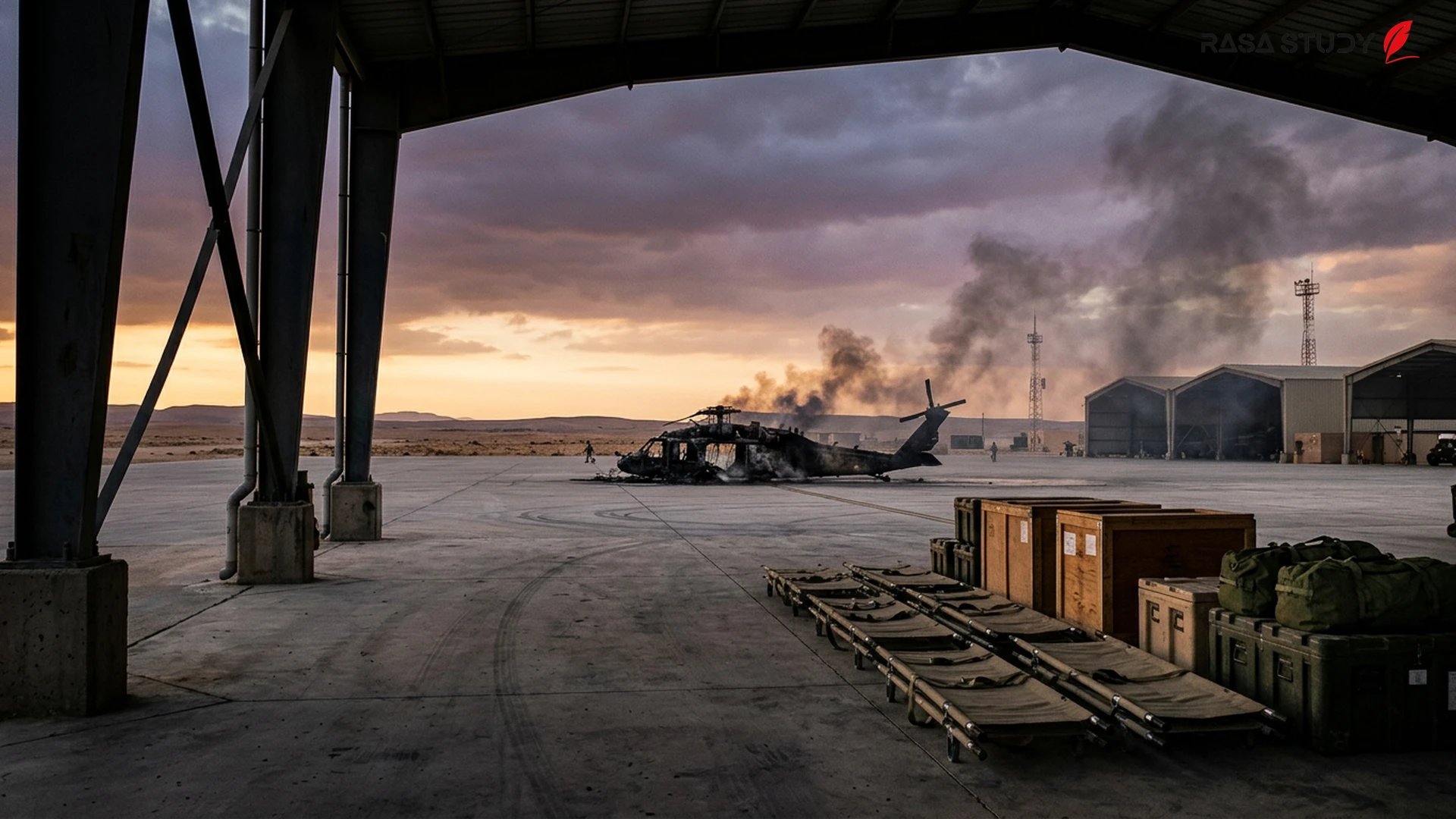
The recent downing of a United States military F-15E fighter over Iranian territory has drawn the attention of Washington's intelligence circles toward a mysterious and innovative Iranian weapon known as 'Product 358.'
As military tensions in the region reach their peak, reports released in June 2026 indicate that the downing of an F-15E Strike Eagle fighter on April 3 has created a turning point in modern aerial confrontations. This incident, which occurred during the operation known as 'Epic Fury,' has not only questioned the effectiveness of advanced fourth-generation fighters but also unveiled Iran's new defensive capabilities [1][2].
Product 358: The Loitering Missile That Changed the Rules The weapon now at the center of the Pentagon's attention is known as 'Product 358,' designated by NATO as SA-67. This weapon is a hybrid platform that merges the characteristics of traditional defensive missiles with loitering drones. Unlike conventional missiles that head toward a target immediately after launch, Product 358 can fly over a specific area for a long duration to search for a target [3].
This missile utilizes a small turbojet engine that allows it to patrol at subsonic speeds (approximately 700 km/h) at altitudes up to 28,000 feet. The use of passive infrared (IR) seekers means this weapon emits no radar signals, and American pilots receive no early warning before impact [1][3].
Pilot's Account of the Drone 'Jellyfish' One of the strangest aspects of this incident is the testimony of the F-15E pilot who, before ejecting from the aircraft, witnessed an unusual phenomenon in the sky. According to leaked reports from CNN, the pilot described a collection of drones moving in a coordinated and connected formation, resembling a 'jellyfish' in space. He compared this scene to an 'aerial minefield' that was impossible for fast fighters to bypass [1][2].
Analysts believe this description indicates Iran's significant progress in 'Swarm Intelligence' technology. In this model, several 358 missiles and reconnaissance drones are connected in a network and can automatically find the best attack angle to hunt high-speed targets [1].
A New Challenge for American Air Superiority The downing of the F-15E and damage to an F-35 in similar incidents have confronted Washington with a bitter economic and tactical reality. The production cost of each 358 missile is only a fraction of the price of expensive defensive missiles like the Patriot, yet its ability to down multi-million dollar assets like MQ-9 Reaper drones and now manned fighters has shifted the power balance in favor of asymmetric warfare [3].
The Pentagon is now investigating new defense systems to counter these 'flying mines,' as traditional electronic warfare tactics have little effectiveness against the optical and passive seekers of Product 358. This incident showed that even the world's most advanced fighters are vulnerable to low-cost but intelligent innovations [1].
Iran's 358 missile (SA-67), known as a hunter of drones and low-altitude fighters.
linkSources
- F-15E uçağının düşürülmesi, ABD'nin dikkatini İran'ın 'Ürün 358' silahına çekti — Vietnam.vn (2026-06-26)
- US F-15E pilot shot down above Iran had survived earlier downing: Report — Middle East Monitor (2026-06-02)
- Iran's 358 Loitering Missile: Low-Cost Design Downing High-Value US Assets — Medium (2026-04-20)