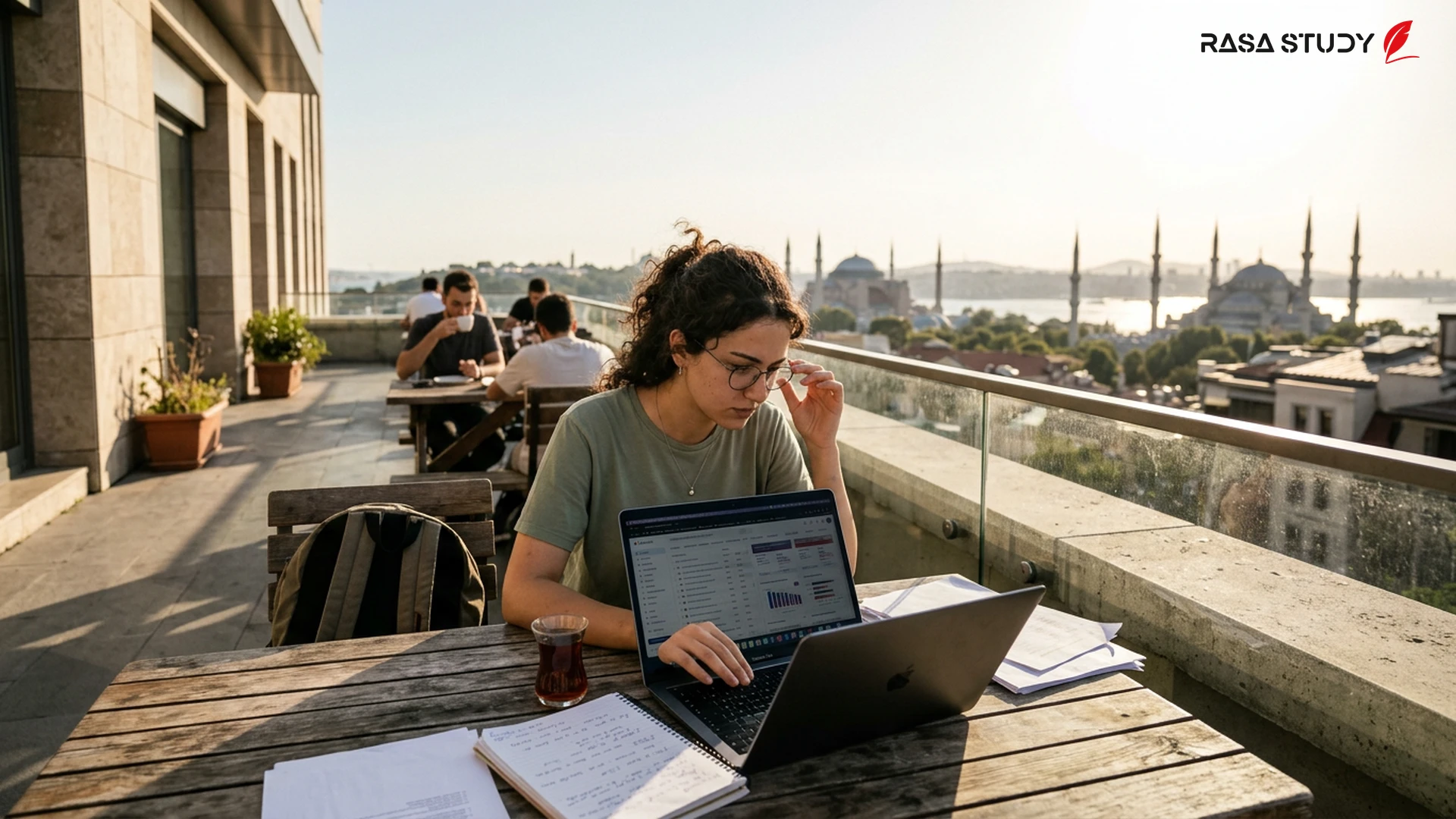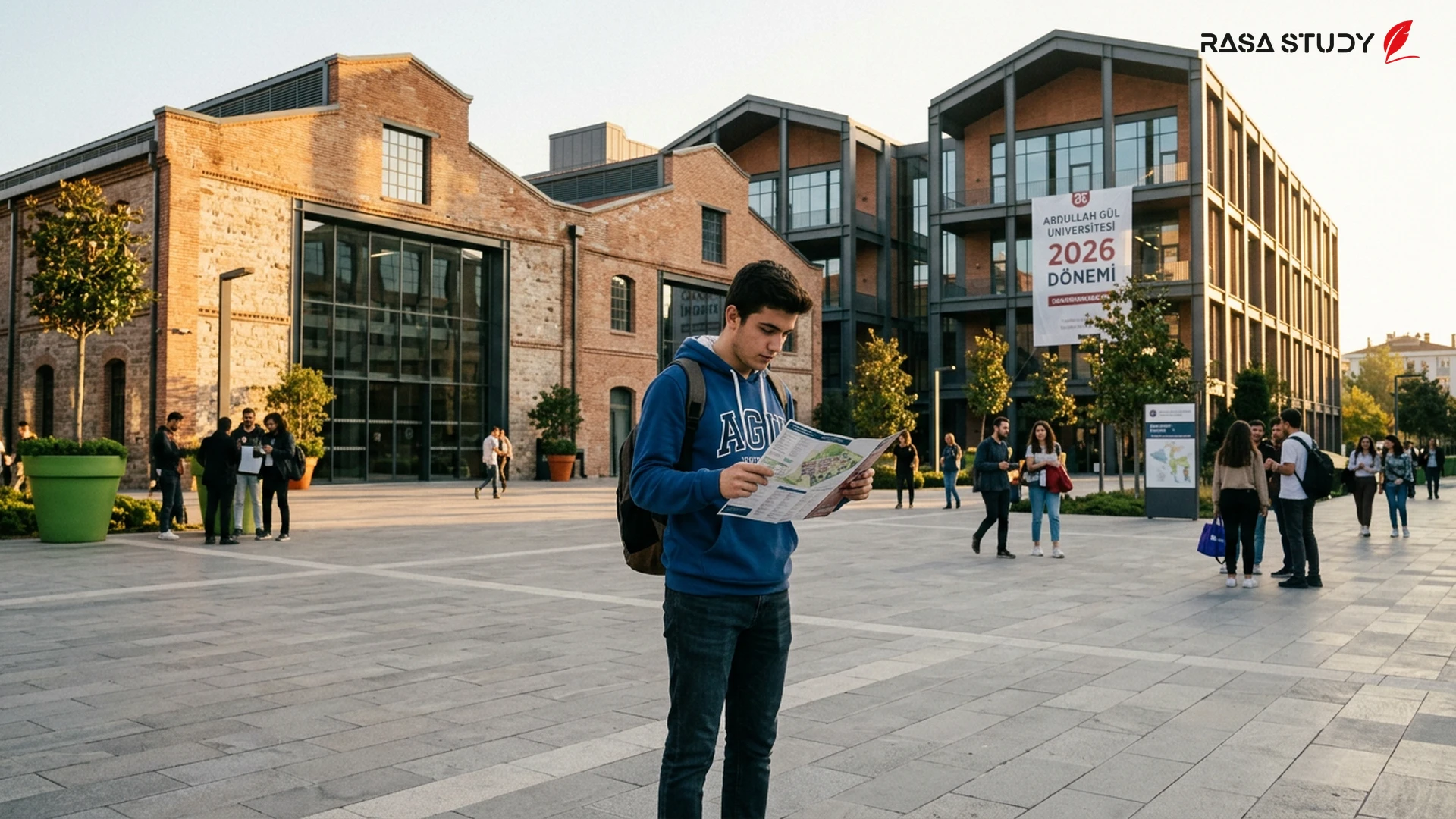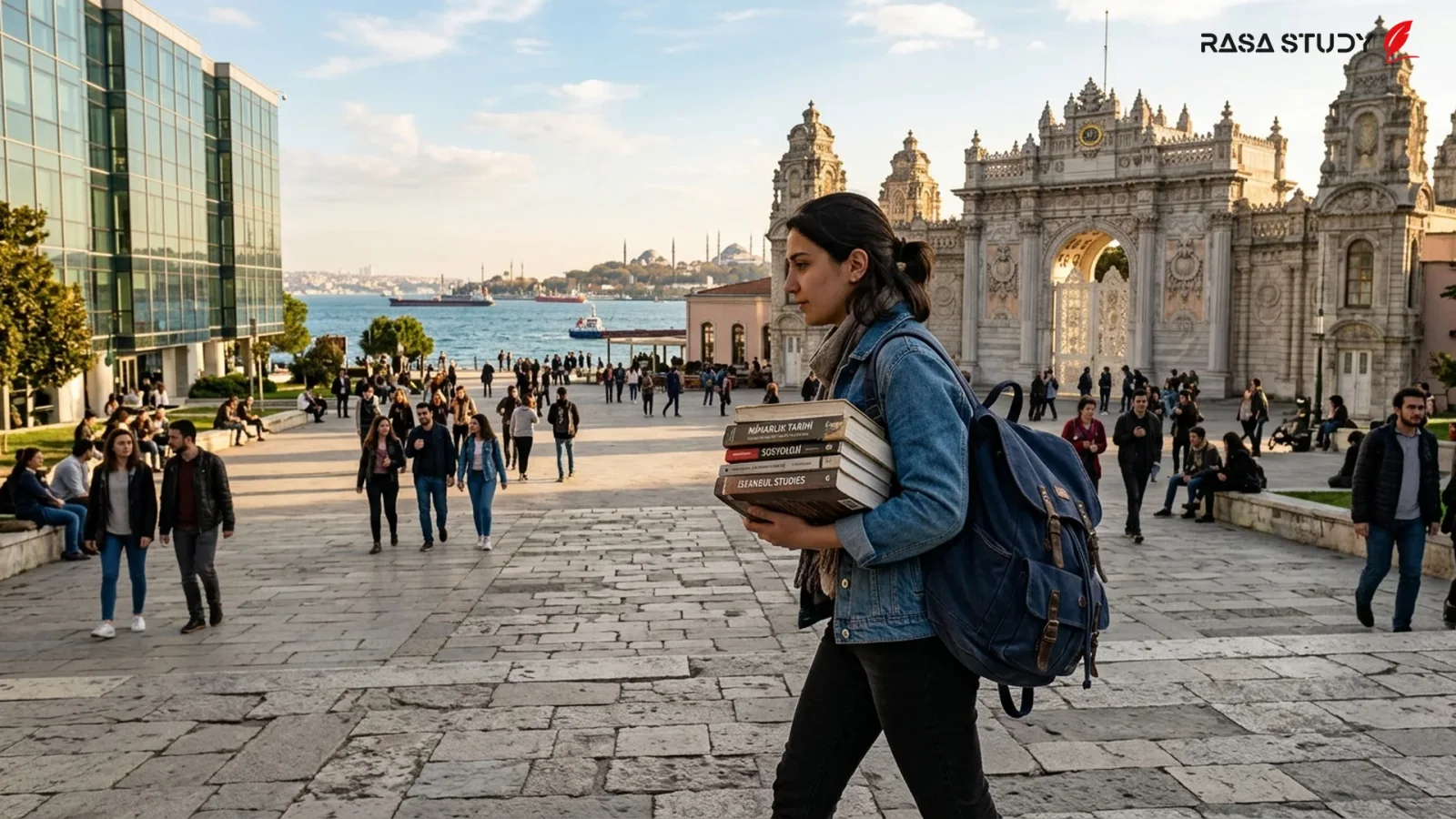
Deciding to study abroad requires careful financial planning. In this article, we examine all the details of the cost of studying in Turkey in 2026.
Deciding to study abroad is one of the biggest and most life-changing stages of any student's life. On this path, the first and most important question that occupies the minds of applicants and their families is: "How much does it cost to study?". Due to its unique geographical location, high quality of education, world-renowned universities, and most importantly, affordable costs, Turkey has become one of the most popular study destinations for international students, especially Iranians.
Given global economic fluctuations and currency changes, having accurate and up-to-date information for financial planning is vital. In this comprehensive and evergreen guide from Rasa Study, a specialized international education consulting center in Istanbul, we intend to examine the cost of studying in Turkey in 2026 in full detail. This article covers all financial aspects, including tuition fees at public and private universities, the cost of living in various cities, dormitories, food, and transportation, so you can start your educational journey with a clear vision and a realistic budget.
---
Why Turkey? Assessing Value for Money in 2026
Turkey offers an attractive combination of European educational standards and Middle Eastern living costs. The universities in this country are members of the Bologna Process; meaning their degrees are valid and evaluable throughout Europe and many countries around the world (including Iran).
In 2026, despite recent inflation in the Turkish economy, the cost of studying and living in this country remains significantly lower than in countries like the UK, USA, Canada, and even Eastern European countries such as Hungary or Poland. For example, while a year of studying engineering in the UK might cost over $20,000, the same major at a reputable private university in Turkey can be completed for between $3,500 and $9,000 per year.
---
Step-by-Step with Financial Planning and Budgeting for Studying in Turkey
To properly manage the cost of studying in Turkey, you need to divide your expenses into three main categories and plan for them:
- Pre-arrival Costs: Includes the cost of official translation of documents, obtaining educational equivalence (Denklik), registration fees for entrance exams (like YÖS or SAT), university application fees (usually between $35 and $100), student visa fees, and flight tickets.
- Fixed Annual Costs: The most important parts of this category are "university tuition" and "annual health insurance".
- Variable Monthly Costs: Includes dormitory or apartment rent, food, transportation, internet, bills, and entertainment.
Important Note: Since the Turkish Lira exchange rate fluctuates against foreign currencies, Turkish universities (especially private ones) often charge international student tuition in 2026 in US Dollars (USD) or Euros (EUR). Therefore, for long-term budgeting, be sure to use the Dollar as your benchmark, but for daily living expenses, make your calculations based on the Lira (TRY).
---
Turkish University Tuition Fees in 2026 (Public and Private)
University tuition in Turkey depends on three main factors: type of university (public or private), field of study, and language of instruction (Turkish or English). Below, we review the up-to-date figures for 2026 in detail.
1. Public University Tuition Fees Public universities in Turkey (such as Istanbul University, Ankara University, Middle East Technical University (METU), and Boğaziçi University) use government funding and therefore have very low tuition fees. Admission to these universities requires passing entrance exams (TR-YÖS or SAT) and having a strong academic resume.
- Engineering, Humanities, Management, and Arts majors: Between $300 and $1,500 per year.
- Medicine, Dentistry, and Pharmacy majors: Between $1,000 and $4,000 per year.
*Note:* Studying in English at public universities is usually slightly more expensive than studying in Turkish (about $600 to $1,500 for non-medical majors).
2. Private University Tuition Fees Private universities (such as Koç, Sabancı, Medipol, Aydın, and Bahçeşehir) do not require rigorous entrance exams and often accept students based on their academic records (GPA). Amenities, modern laboratories, and student exchange opportunities (Erasmus) are highly available at these universities.
- Engineering, Management, Law, and Humanities majors: Between $3,000 and $10,000 per year.
- Medicine and Dentistry majors: Between $12,000 and $35,000 per year. (In some specific universities like Koç or Medipol, medical tuition in English can even reach $38,000 to $59,000 per year).
Special Offer: Many private universities in Turkey offer tuition discount scholarships (from 25% to 75%) for international students. Our experts at Rasa Study can review your resume and get you admission with the highest scholarship amount from the best private universities in Istanbul and other cities. Our initial consultation is completely free.
---
Student Cost of Living in Turkey (Monthly and Annually)
The cost of living in Turkey depends entirely on your lifestyle and the city where you reside. In 2026, the average living cost for a student (excluding tuition) ranges between $300 and $600 per month.
Cost Differences in Various Cities * Istanbul: The most expensive city in Turkey to live in. The average monthly cost for a student in Istanbul is between $450 and $700. The bulk of this amount goes to rent. * Ankara and Izmir: Large but more affordable cities. The cost of living in these cities is about $350 to $500 per month. * Smaller student cities (like Eskişehir, Konya, Kayseri, and Antalya): Living in these cities is very economical, and you can live comfortably with a budget between $250 and $350 per month.
---
Detailed Breakdown of Accommodation and Dormitory Costs
The largest part of the cost of living in Turkey relates to housing. International students have four main accommodation options in 2026:
1. State Dormitories (KYK) These dormitories are managed under the Turkish Credit and Dormitories Institution and are the cheapest possible option (about $20 to $50 per month, including breakfast and dinner). However, the capacity of these dormitories is limited, and priority is given to Turkish citizens; therefore, admission for foreign students is very difficult.
2. University Dormitories (On-Campus) Many public and private universities have dedicated dormitories within the campus. The cost of these dormitories varies depending on the facilities and the number of people in the room (1 to 4 beds), ranging between $100 and $300 per month. This option is very popular due to high security and eliminating commuting costs.
3. Private Dormitories (Özel Yurtlar) Private dormitories are scattered across the city and offer excellent amenities (such as daily cleaning, gym, laundry, and meals). The cost of these dormitories in 2026 is between $200 and $450 per month.
4. Renting an Apartment (Independent or Shared) If you prefer to live independently, renting a one-bedroom apartment (1+1) in a city like Istanbul costs between $400 and $800 per month. But most students split this cost by getting roommates. With shared renting, each student's share of the rent will be about $150 to $300 per month. *Note:* When renting an apartment in complexes (Site), be sure to consider the monthly building maintenance fee, which is called "Aydat"; because sometimes the Aydat of luxury complexes equals the rent amount!
---
Other Daily Expenses: Food, Transportation, and Bills
Cost of Food The cost of groceries in Turkey is reasonable and affordable, provided you cook yourself. * Monthly supermarket shopping: About $100 to $200. (Using discount chain stores like BİM, A101, and ŞOK drastically reduces costs). * Eating out: An economical meal (like Döner Kebab or Pide) at local restaurants costs between $3 and $7, and a meal at mid-range restaurants costs between $10 and $20. University cafeterias also usually offer a hot meal with a government subsidy (about $1 to $2).
Student Transportation Costs The Turkish government offers incredible discounts for student transportation. By obtaining a student card (e.g., Istanbulkart Student), your transportation costs are greatly reduced. In 2026, the monthly top-up cost of a student card for unlimited use (or a very high number of transactions) on the metro, bus, and ferry is about $10 to $20 (equivalent to 300 to 600 Lira).
Incidental Expenses (Insurance, Internet, and Entertainment) * Health Insurance: Having health insurance is mandatory for renewing your residence permit (Kimlik). State health insurance (SGK) or private student insurances cost between $30 and $100 annually. * Bills and Internet: The cost of water, electricity, gas, and internet for an apartment averages $50 to $100 per month (this amount increases in winter due to the use of heating systems). * Entertainment and Clothing: Turkey is the hub of high-quality and cheap clothing. For student entertainment, cinema, cafe-hopping, and buying clothes, consider about $50 to $100 per month.
---
Realistic Annual Budget for a Student in Turkey (2026)
To give you a clear view of the cost of studying in Turkey, we have outlined three hypothetical and realistic scenarios for an academic year (12 months):
Scenario 1: Engineering student at a public university (Ankara)
* Annual tuition: $500
* Living and dormitory costs ($350/month): $4,200
* Annual insurance and incidental expenses: $200
* Total annual budget: About $4,900
Scenario 2: Management student at a private university (Istanbul)
* Annual tuition (with Rasa Study scholarship): $4,500
* Living and shared apartment costs ($550/month): $6,600
* Annual insurance and incidental expenses: $300
* Total annual budget: About $11,400
Scenario 3: Medical student at a private university (Istanbul or Izmir)
* Annual tuition: $20,000
* Living and private dormitory costs ($600/month): $7,200
* Annual insurance and incidental expenses: $300
* Total annual budget: About $27,500
---
Required Documents for Admission, Dormitory, and Scholarships
To go through the admission process with the lowest cost and the highest chance of receiving a scholarship, you must have the following documents ready, translated (into Turkish or English):
- Original and translation of high school and pre-university diplomas (along with transcripts).
- Valid passport with at least 6 months of validity.
- Several passport-sized photos (biometric).
- English (TOEFL/IELTS) or Turkish (TÖMER) language certificate – *if available. (Many private universities grant admission without a language certificate and will give you a placement test)*.
- Proof of financial capability (to present to the embassy or immigration office to prove the ability to pay living expenses).
- Results of international exams like SAT or YÖS (only for public universities).
---
Common Student Mistakes in Managing Expenses
In our years of consulting experience at Rasa Study, we have seen international students sometimes incur many additional costs due to a lack of awareness. Common mistakes include:
- Ignoring hidden costs: Not calculating costs such as residence tax, Kimlik card issuance fee, document translation in Turkey, and buying original textbooks.
- Not applying for a student card on time: Some students use regular transportation (Tam Bilet) for months, which costs 5 to 6 times more than a student card.
- Renting a house without careful inspection: Renting an apartment without seeing the property, ignoring the "Aydat" (building maintenance) cost, and signing unofficial contracts that lead to losing the deposit.
- Trusting unofficial intermediaries: Paying exorbitant fees to profiteers to get admission to universities that offer free or cheap admission themselves. Always seek help from reputable and registered institutions.
---
Golden Tips for Reducing the Cost of Studying in Turkey
- Use scholarships: Besides "Türkiye Bursları" (Turkish Scholarships), where competition is very high, many private universities offer special discounts for Early Bird registration or high GPAs.
- Get a Museum Pass (Müzekart): By paying a very nominal fee, you can visit all museums and historical sites in Turkey for free for a year.
- Cook your own meals: Shopping at local weekly markets (Pazar) for fresh fruits and vegetables cuts your food costs in half.
- Use free consultation: The expert team at Rasa Study, with full knowledge of the conditions of Turkish universities in 2026, helps you find a university that fits your budget. We are by your side in all stages, from getting admission with the highest tuition discount to booking a dormitory.
---
Frequently Asked Questions (FAQ)
1. Is it possible to study for free in Turkey? Yes, through the Turkish government scholarship program (Türkiye Bursları), you can benefit from completely free tuition, free dormitory, insurance, flight tickets, and even a monthly stipend. However, global competition for this scholarship is extremely fierce and requires an exceptionally strong academic resume, reputable publications, and high grades.
2. How much does it cost to study medicine in Turkey in 2026? The cost of studying medicine at public universities is between $1,000 and $4,000 per year (requires passing the YÖS/SAT exam with a very high score). In private universities, this cost varies between $12,000 and $35,000 annually, without the need for an entrance exam.
3. Are international students allowed to work while studying in Turkey? According to 2026 regulations, undergraduate students are not allowed to work officially during their first year of study. However, from the second year onwards, by obtaining a work permit (Çalışma İzni), they can work part-time (maximum 24 hours a week). Master's and PhD students have easier conditions for part-time work or university assistantships.
4. Is the city of Istanbul too expensive for student living? Istanbul is the most expensive city in Turkey, but due to the city's vastness, the variety of prices is also high. If you rent a house in student neighborhoods further from tourist centers, use university dormitories, and do your shopping at local markets, you can keep your expenses at a reasonable level (about $500 per month).
5. Is learning Turkish mandatory to reduce costs? It is not mandatory, but highly recommended. Studying in Turkish at universities (whether public or private) is always cheaper than studying in English. Furthermore, fluency in Turkish in daily life, shopping, bargaining for house rent, and finding a part-time job indirectly reduces your expenses.
Studying in Turkey; a combination of high educational quality and affordable costs
linkSources
- Cost of Studying in Turkey 2026: Full Fee Guide
- Study in Turkey for International Students | 2026 Guide
- Tuition Fees and Living Costs in Turkey for 2026 | Mastersportal
- Study in Turkey | TopUniversities
- Average Cost of Living in Turkey 2026 - StudyFans
- Cost of Studying and Living in Turkey for International Students - Global Scholarships
- تحصیل در ترکیه ۲۰۲۶ | شرایط پذیرش، شهریه دانشگاهها و بورسیه - متروپل سعادتآباد
- هزینه زندگی دانشجویی در ترکیه در سال تحصیلی 2025-2026 - یونی لند