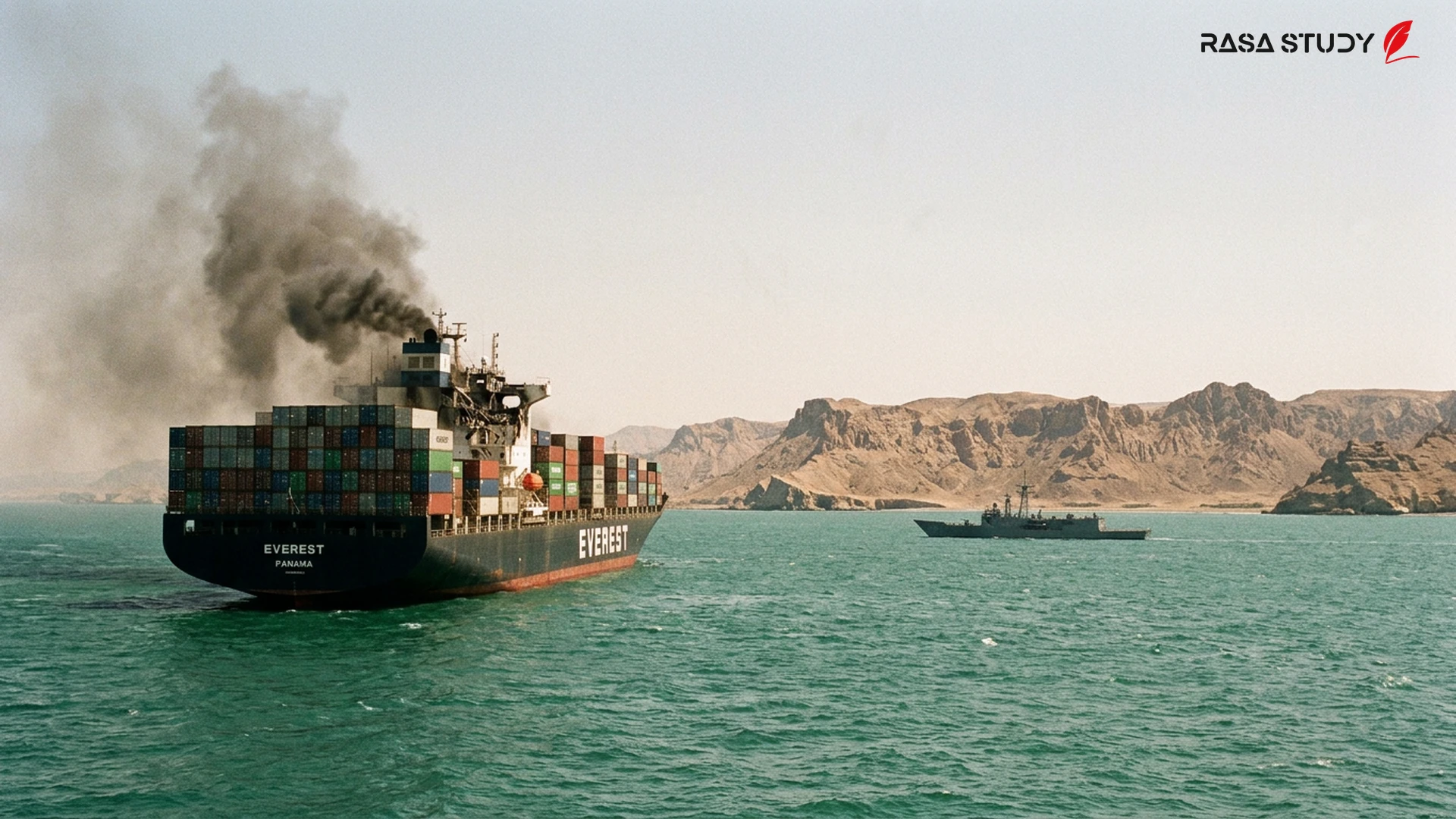
Following the escalation of military tensions in the Strait of Hormuz and the exchange of air and missile attacks between United States and Iranian forces, stability in the world's most vital energy waterway is severely endangered, and hopes for maintaining the recent ceasefire have reached their lowest point.
Spark of Conflict; Attack on Singaporean Ship in the Strait of Hormuz The new crisis began on June 25, 2026, when a Singapore-flagged container ship named M/V Ever Lovely was targeted by a suicide drone while exiting the Strait of Hormuz [2]. This incident, which occurred near the coast of Oman, resulted in damage to the ship's bridge. US President Donald Trump immediately condemned the action, calling it a "foolish violation" of the ceasefire agreement that had been signed only a week prior [3]. Washington claims that Iran was behind the attack, while Iranian officials emphasize their right to monitor unauthorized traffic in regional waters [1].
US Military Response and Bombing of the Iranian Coast In response to the attack on the commercial vessel, the US Central Command (CENTCOM) conducted a large-scale operation against targets on Iranian soil on June 26. According to official statements, American fighter jets targeted four strategic points, including missile warehouses, drone maintenance sites, and coastal radar facilities in the Sirik region and Qeshm Island [4]. Local reports indicated the sound of massive explosions in Hormozgan Province. US officials emphasized that these strikes were aimed at degrading Iran's capabilities to threaten freedom of navigation, and Washington is on full alert to ensure the security of passage in the Strait of Hormuz [3].
Counter-Response by the Revolutionary Guard and Targeting of US Bases Iran's reaction to the US airstrikes did not take long. This morning, June 27, 2026, the Islamic Revolutionary Guard Corps issued a statement announcing that in response to US aggression, it had targeted the country's military bases in the Persian Gulf region with missile and drone attacks [1]. Although precise details regarding the extent of damage to US bases have not yet been released, Iranian state media described the action as a "decisive response" to the violation of their national sovereignty. The Revolutionary Guard warned that in the event of any repeated aggression, subsequent responses would be much broader and more crushing [5].
Fate of the Ceasefire Agreement in Limbo These direct clashes have put the temporary peace agreement and the memorandum of understanding reached last week through international mediation at risk of total collapse. While both sides accuse each other of violating the terms of the agreement, analysts believe the "Hormuz Crisis" has now entered a complex stage that could lead to a full-scale regional war [1]. US Vice President JD Vance stated that "violence will be met with violence," while Tehran emphasizes independent management of the Strait of Hormuz and the necessity of the withdrawal of foreign forces [4]. Given the current situation, achieving a lasting ceasefire seems further out of reach than ever.
Tensions in the Strait of Hormuz have reached their peak following mutual air and missile attacks between Iran and the US.
linkSources
- Hürmüz Boğazı'nda sıcak saatler: ABD'nin hava saldırısına İran misilleme yaptı — A Haber (2026-06-27)
- US strikes Iran after attack on cargo ship in Strait of Hormuz — Fox News (2026-06-27)
- The U.S. and Iran Trade Strikes in Worst Escalation Since Peace Deal — Time (2026-06-26)
- Fresh ship struck in Hormuz as Iran, US trade attacks — Al Arabiya (2026-06-27)
- Hürmüz Boğazı'nda yeni denklem: İran'ın geçiş şartları masada — Evrensel (2026-06-26)


