In July 2026, reports published by reputable educational sources, including Vietnam.vn, warn of a phenomenon known as the "IELTS Trap"—a situation where high language scores are mistaken for genuine academic ability.
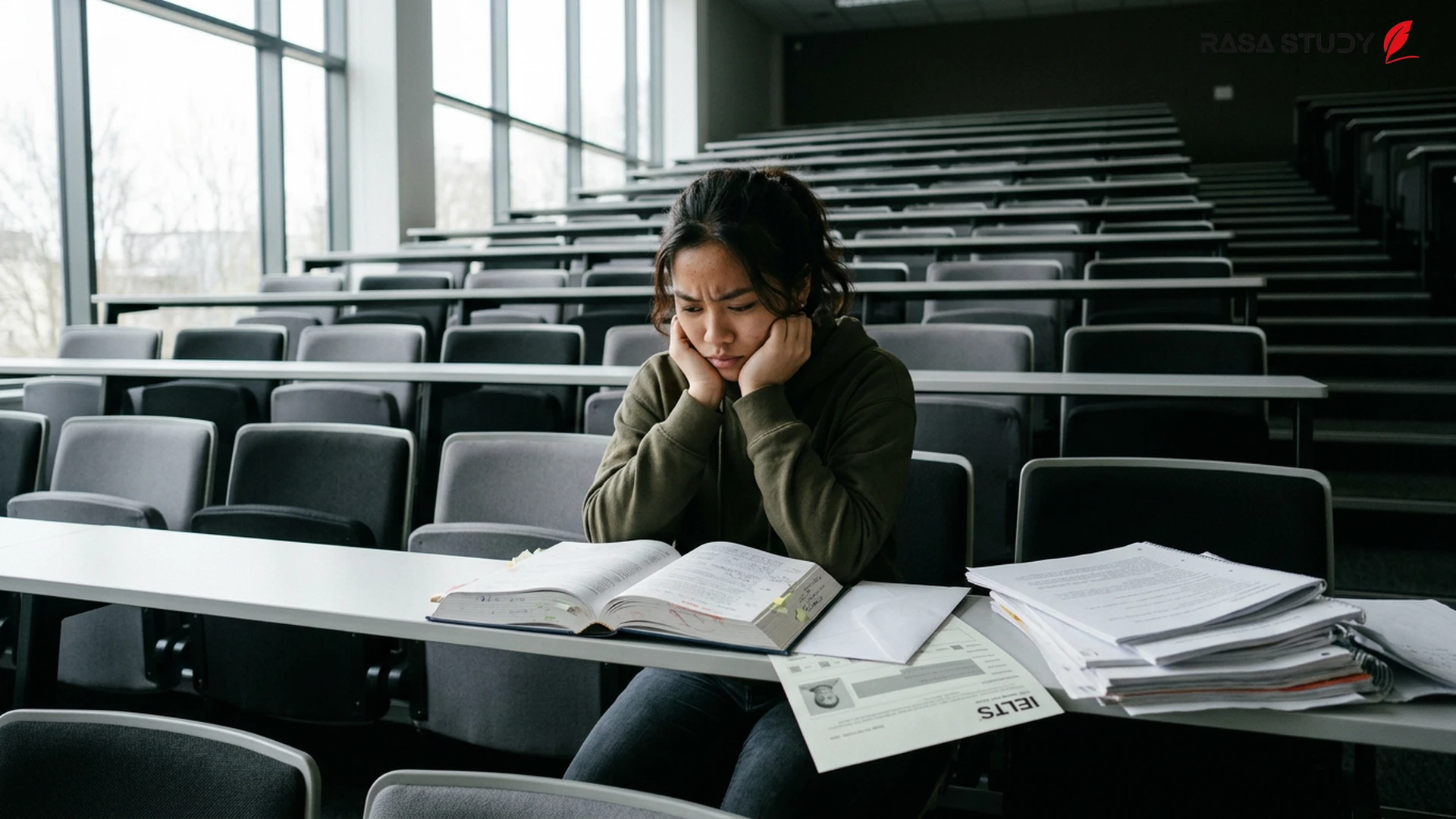
The Score vs. Skill Crisis in 2026 As the second half of 2026 begins, extensive debates have emerged in international educational circles regarding the effectiveness of standardized language tests. A recent report by Vietnam.vn shows that many international students, particularly from Asian countries, face serious difficulties after entering world-class universities despite achieving brilliant scores such as 7.5 or 8.0 on the IELTS exam [1]. This phenomenon, now referred to as the "IELTS Trap," stems from the misconception that mastering IELTS test-taking techniques is equivalent to readiness for an academic environment.
Why a High Score Is Not Enough Field research indicates that students in an academic environment require skills beyond simple reading comprehension or daily conversation. According to published reports, many high IELTS score holders are weak in skills such as critical thinking, complex data analysis, research paper writing, and participation in classroom discussions [1]. In fact, an excessive focus on "memorized formulas" to achieve a score has marginalized real language learning and academic soft skills.
Structural Changes to IELTS in 2026 To combat this trend, IELTS organizing bodies (IDP and British Council) have implemented strict changes in 2026. These changes include heavy penalties for using "memorized templates" in the Writing section and a greater focus on natural and unpredictable conversations in the Speaking section [2]. The goal of these reforms is to ensure that the final score reflects the student's actual ability to communicate in a scientific environment, rather than just their skill in bypassing the testing system.
Reaction from Universities and Immigration Authorities In 2026, top universities in the United Kingdom and Australia have changed their approach to student admissions. Many educational institutions now place more emphasis on individual skill scores (particularly Writing and Speaking) rather than relying solely on the Overall Band score [3]. Additionally, some universities have added in-person interviews or internal assessments to the admission process to more accurately measure the academic capability of applicants and prevent a decline in educational quality in classrooms.
Conclusion for Academic Applicants Educational experts advise that students in 2026 must shift their approach from "pure test-taking" to "academic learning." Success in international universities requires mastery of research skills, time management, and independent thinking, which no single language test can fully measure. The IELTS trap is only broken when language is seen as a tool for learning, not a final goal for obtaining a visa.
In 2026, universities are looking for skills in students that go beyond an IELTS score.
linkSources
- International students are confused by the 'IELTS' trap — Vietnam.vn (2026-07-08)
- IELTS 2026 Changes: Genuine English Ability Over Test Tricks — The Language Lab (2025-10-14)
- UK University IELTS Requirements 2026: What Students Need to Know — Envision Education (2026-03-15)