Following controversial reports in regional media, claims have surfaced regarding Iran's systematic efforts to influence the Azerbaijani minority in Georgia, sparking severe security concerns in Tbilisi and Baku.
Today, June 30, 2026, new reports from regional media, including the analytical website Modern.az, indicate an unprecedented increase in the influence of the Islamic Republic of Iran among Georgia's Azerbaijani population. These reports suggest that Tehran, using religious, educational, and economic tools, is establishing a loyal social base in strategic areas of Georgia, particularly in the Kvemo Kartli region [1].
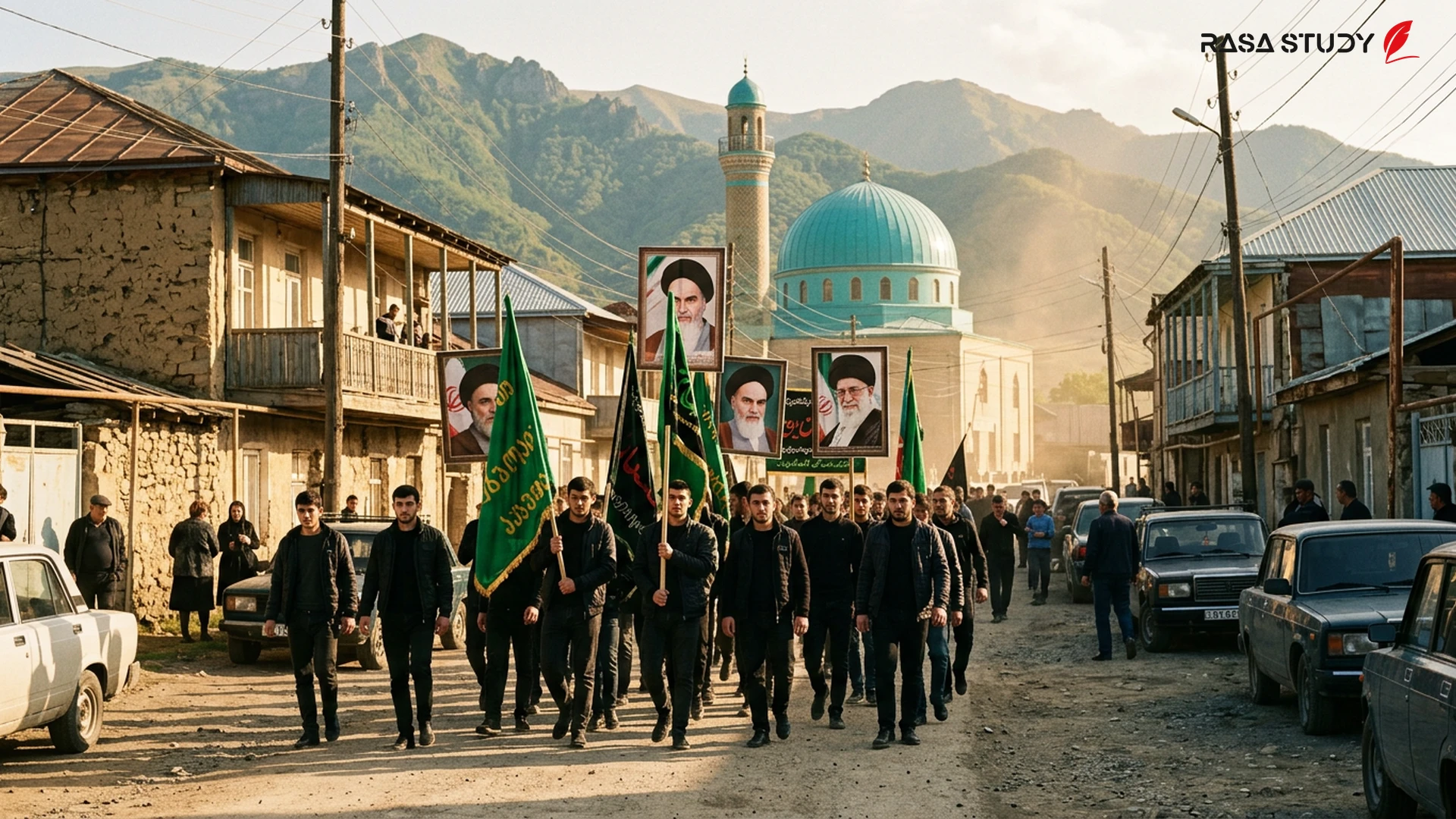
The Modern.az Report and Dimensions of Iranian Influence According to the report published by Modern.az, Rafiq Aliyev, the former chairman of the State Committee for Religious Organizations, warned that Iranian influence over Georgia's Azerbaijani Muslims has significantly strengthened. He noted that religious representatives from Iran constantly travel to Georgia, expanding their influence by establishing close connections and providing financial aid [1]. These activities have reached a point where, during recent religious ceremonies such as Tasua and Ashura in the city of Marneuli, images of senior Iranian leaders and political symbols of the Islamic Republic were widely carried by Georgian citizens [1][4].
The Role of Tehran-Backed Educational and Religious Institutions Research by international organizations, including the Hudson Institute, shows that Iran is promoting its ideology in Georgia through a network of religious schools and educational institutions, including branches of Al-Mustafa International University (which is under United States sanctions) [3]. These institutions are accused of promoting anti-Western narratives and recruiting for Iranian influence networks beyond religious education [2][5]. Reports indicate that some Azeri youth from Georgia are sent to Qom for religious studies and, upon their return, serve as Tehran-loyal preachers in local mosques [3].
Security Reactions in Tbilisi and Baku's Concerns The increase in these movements has prompted the State Security Service of Georgia (SSG) to launch extensive investigations into the activities of Iran-affiliated entities [2]. This issue has also been reflected in the Georgian Parliament, where some representatives have called for stricter monitoring of foreign financial resources in minority-populated areas [1][5]. On the other hand, the government of the Republic of Azerbaijan is also following these developments with concern. The boycott of the Azerbaijani Embassy's Iftar ceremony in Tbilisi by some local clerics under Iranian influence demonstrates the depth of the rift created within the Georgian Azerbaijani community [1].
Shifting Power Balance in the South Caucasus Experts believe that Iranian influence in Georgia is part of a larger strategy to counter Western influence in the South Caucasus. Given recent changes in Georgia's foreign policy and the current government's relative proximity to non-Western axes, Tehran has found the opportunity suitable to expand its "soft power" [4]. This situation not only challenges Georgia's internal security but could also negatively impact the strategic relations between Baku and Tbilisi, as Georgia serves as the main transit route for Azerbaijan's energy to Europe [3][4].
The Marneuli region in Georgia is the primary focus of discussions regarding Iranian religious and political influence among the Azerbaijani minority.
linkSources
- İran Gürcüstandakı azərbaycanlıları ələ keçirir - İDDİA — Modern.az (2026-06-30)
- Investigation Highlights Iran's Growing Religious Footprint In Georgia — RFE/RL (2026-03-13)
- Georgia’s Iranian Turn: Tehran’s Rapid Expansion of Influence — Hudson Institute (2026-03-04)
- Georgia's increasingly authoritarian government is a threat to Trump's Caucasus strategy — Washington Post (2026-05-26)
- SSG investigates claims of Iranian influence in Georgia — OC Media (2026-03-09)