The funeral procession for Ayatollah Ali Khamenei, the former leader of Iran, commenced today, Saturday, July 4, 2026, in Tehran. The six-day event is marked by a massive public turnout and the presence of numerous diplomatic delegations.
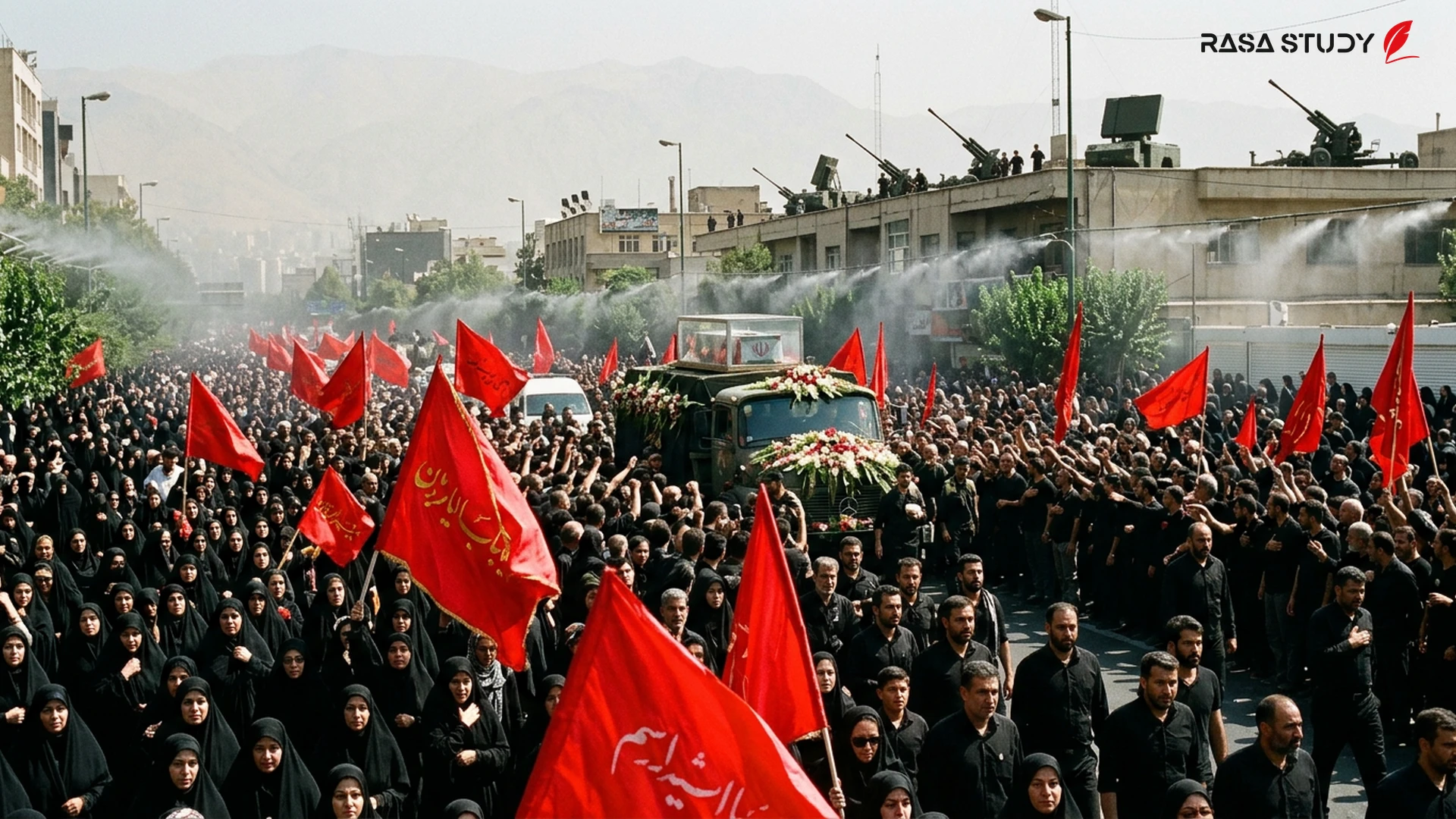
Today, Saturday, July 4, 2026, Iran is witnessing one of the largest funeral ceremonies in its modern history. The body of Ayatollah Ali Khamenei, who was killed during airstrikes on February 28, 2026, was finally transferred to the Imam Khomeini Mosalla in Tehran for public farewell after months of delay caused by war and security conditions [1][4]. Reports indicate the presence of millions of mourners gathered in the capital's streets, carrying red flags as a symbol of vengeance [5].
Commencement of Ceremonies in Tehran and International Presence The official ceremony began this morning at the Grand Mosalla of Tehran, where the former Iranian leader's coffin has been placed in a glass enclosure for public respect [2]. Government officials have announced that more than 100 diplomatic delegations from various countries, including Russia, China, and Turkey, are attending the ceremony. A high-ranking Turkish delegation led by Vice President Cevdet Yılmaz was among the first groups to pay their respects at the ceremony site [4].
Due to the intense summer heat, organizers are attempting to manage the situation using water-spraying systems and distributing cold drinks among the crowd. Simultaneously, security measures have been increased to an unprecedented level, and air defense systems around the ceremony venue have been placed on full alert [3][5].
Schedule and Procession Route in Iran and Iraq According to the timeline released by the ceremony organizing committee, this funeral will be a 6-day process covering several religious cities [3]: * July 4 and 5: Public farewell and religious ceremonies at the Tehran Mosalla. * July 6: Funeral procession through the main streets of Tehran with massive public participation. * July 7: Transfer of the body to the city of Qom and ceremonies at the Shrine of Fatima Masumeh. * July 8: Transfer to Iraq for processions in the holy cities of Najaf and Karbala. * July 9: Return to Iran and final burial at the Imam Reza Shrine in Mashhad, his birthplace [1][3].
The Iraqi government has announced that due to security concerns, ceremonies in that country will be limited only to the cities of Najaf and Karbala [4].
Political Context and the Succession Issue This ceremony takes place while Iran remains embroiled in the aftermath of the recent war and diplomatic negotiations in Doha [1]. Ayatollah Mojtaba Khamenei, who has been introduced as his father's successor, has not yet appeared in public, although his message of condolence was read on state television [2]. Analysts believe the massive public turnout at this ceremony could be interpreted as a message from the establishment to demonstrate internal cohesion against international pressure and threats from Israel and the United States [5].
While Tehran remains in mourning, reports indicate the continuation of technical negotiations in Qatar to reach a sustainable ceasefire. However, the chants of "revenge" echoing through the Mosalla reflect the volatile political atmosphere in the region [2][5].
Mourners at the Imam Khomeini Mosalla in Tehran at the start of the 6-day farewell ceremony for the former Iranian leader, July 4, 2026.
linkSources
- Iran begins six-day funeral for Ali Khamenei — The Guardian (2026-07-03)
- West Asia war LIVE: Iran begins funeral for late Supreme Leader Ayatollah Ali Khamenei — The Hindu (2026-07-04)
- Mapping Iran’s Ali Khamenei funeral: Where mourners will gather each day — Al Jazeera (2026-07-03)
- Iran has begun a dayslong funeral for the late Supreme Leader Ayatollah Ali Khamenei — Washington Post (2026-07-04)
- Iran officially begins several days of public funeral ceremonies for slain supreme leader — CBS News (2026-07-04)