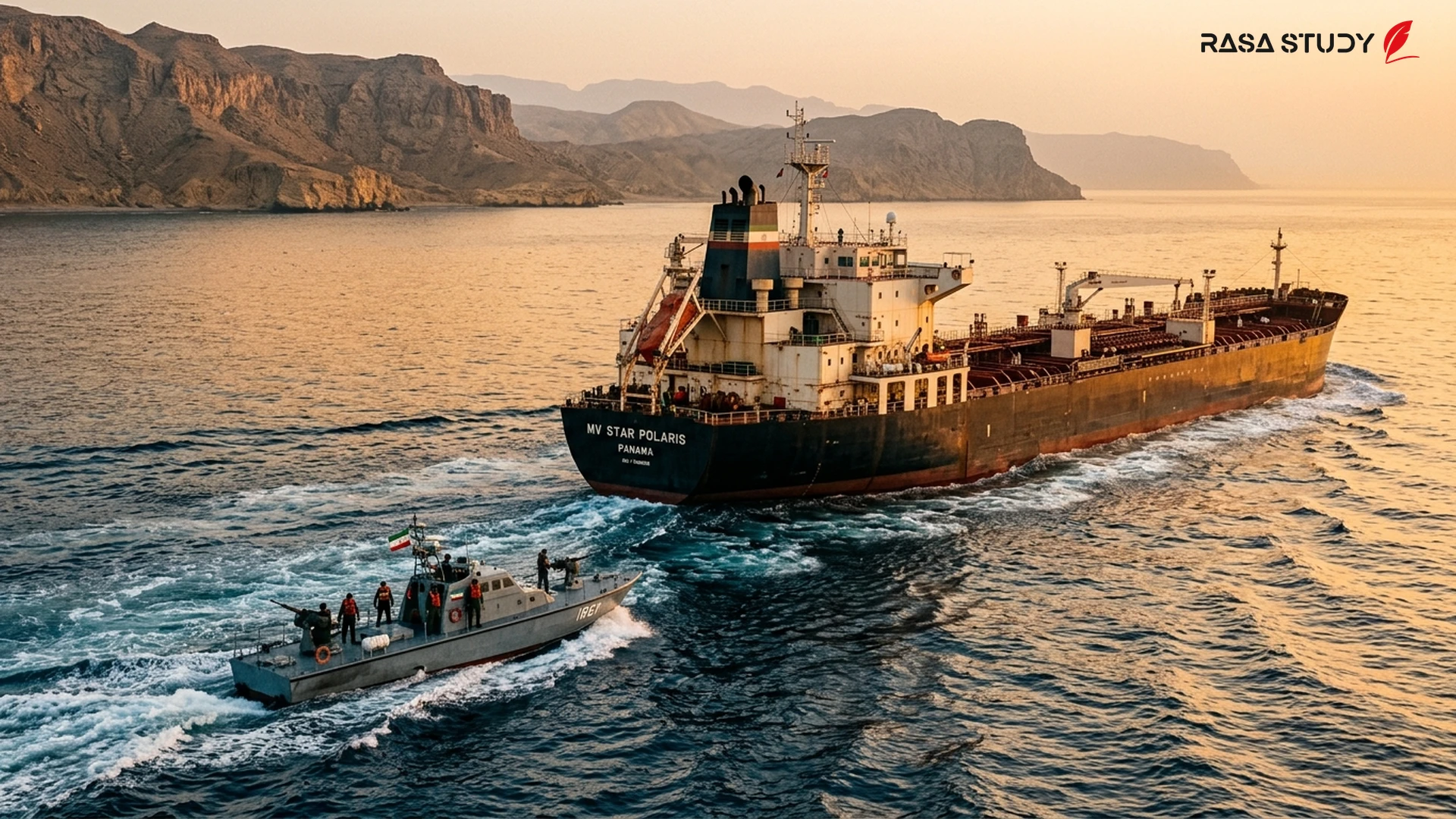
In a move impacting global markets, Iran announced it will henceforth collect "service fees" for ships passing through the Strait of Hormuz. This decision comes amidst sensitive negotiations to end regional conflicts.
Official Announcement of Service Fees in the Strait of Hormuz On June 13, 2026, Abbas Araghchi, Iran's Foreign Minister, announced in an official statement that the era of free passage through the Strait of Hormuz has ended. He emphasized that while international law prohibits collecting a "Toll" for this waterway, Iran considers it its right to collect fees for services provided for security, navigation, and environmental protection from passing vessels [1]. These remarks come as the Strait of Hormuz, one of the world's most vital energy chokepoints, has witnessed unprecedented tensions in recent months.
Financial Details and Unconventional Payment Methods Reports indicate that the management plan for the Strait of Hormuz has entered its operational phase, with an average of $1.5 to $2 million being collected from each passing ship [3][4]. A notable aspect of this plan is the variety of payment methods. Due to banking restrictions and sanctions, Iran has agreed to accept these amounts not only in cash but also in the form of cryptocurrencies (such as Tether), commodity bartering, or the provision of technical services [3]. These revenues are deposited directly into the national treasury and, according to parliamentary officials, will be used to strengthen defense infrastructure and development in the country's southern regions.
Legal Framework and the Formation of the "Persian Gulf Strait Administration" To institutionalize this control, Iran has established an organization called the "Persian Gulf Strait Administration" (PGSA) [5]. Tehran officials argue that since the majority of shipping lanes lie within the territorial waters of Iran and Oman, these two countries bear the primary responsibility for maintaining security and must cover its operational costs [4]. Meanwhile, international conventions emphasize "innocent passage" for ships, but Iran claims the services provided go beyond normal sovereign duties and require financial compensation.
International Reactions and Impact on the Energy Market The United States government has strongly opposed this move, calling it "maritime blackmail." Washington officials warned that any amount paid by American ships or their allies to this organization will be deducted from Iran's frozen assets [5]. However, oil market traders have reacted cautiously to the news. Since approximately 25% of the world's maritime oil trade and 20% of liquefied natural gas (LNG) pass through this strait, any disruption or cost increase could sharply drive up fuel prices globally [2].
Outlook for Peace and Ongoing Negotiations This decision was made while reports suggest Iran and the United States are nearing a peace agreement to end the 2026 conflicts [2]. Some analysts believe that raising the issue of a "service fee" could be a bargaining tool at the negotiation table, allowing Iran to gain more concessions regarding the lifting of oil sanctions and access to its foreign exchange resources [2][4].
The Strait of Hormuz; the world's vital energy artery now witnessing Iran's new management regime.
linkSources
- Cannot impose tolls on Strait of Hormuz under int'l law but service fees will be collected: Iran FM — Dawn (2026-06-13)
- What to know about a possible deal to end the Iran war — The Washington Post (2026-06-13)
- New Details Emerge on Service Fee Collection in the Strait of Hormuz — WANA News (2026-06-07)
- Iran seeks to collect service fees, not tolls for crossing Strait of Hormuz — Middle East Monitor (2026-06-05)
- Trump Administration Vows to Offset Hormuz Tolls With Seized Iranian Funds — gCaptain (2026-06-11)


