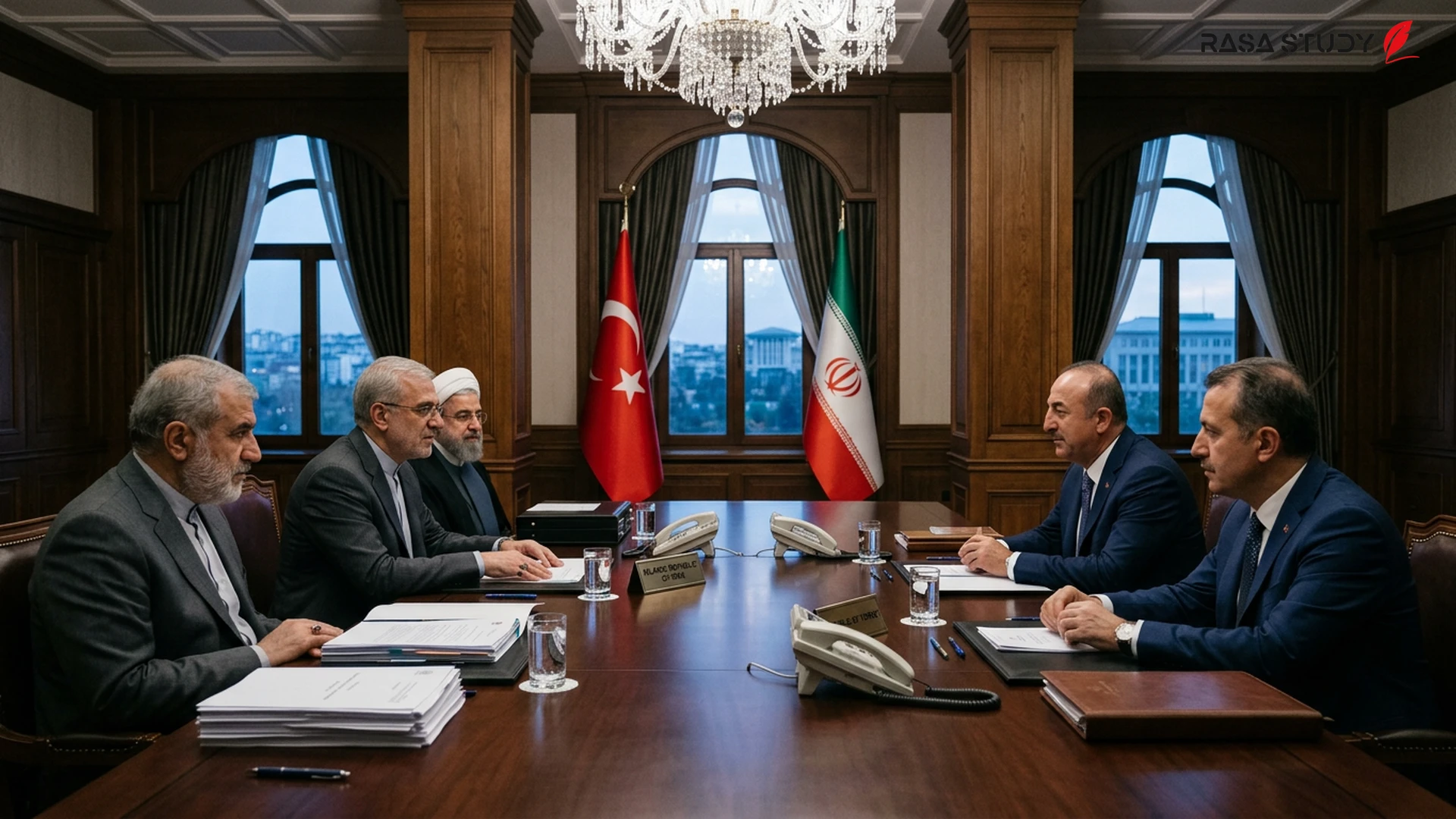
Following recent regional developments, Iran has officially proposed to Turkey the formation of a joint 'security alliance' to counter Israeli threats; a proposal that could shift the balance of power in the Middle East.
New Dimensions of Tehran's Defense Diplomacy
On July 3, 2026, diplomatic reports indicate that senior officials of the Islamic Republic of Iran presented a comprehensive plan to the Turkish government for the creation of a 'security alliance' during bilateral meetings in Ankara. This proposal, first reflected by media outlets such as 'Sol Haber,' emphasizes the necessity of intelligence and military cooperation between the two major regional powers to contain Israeli actions [1]. This move signifies a shift in Iran's strategy from ad-hoc cooperation toward a stable defense structure with its western neighbor.
Main Axes of the Iranian Proposal
According to published information, this security pact includes several key axes. First, the establishment of an intelligence exchange center to monitor Israeli military movements in the Eastern Mediterranean and the Caucasus. Second, coordination in air defense policies and countering cyber-attacks which, according to Tehran's claims, originate from Tel Aviv [2]. Iran believes that the Israeli military presence near the borders of both countries constitutes a common threat to the national security of Iran and Turkey, and only a united front can neutralize this threat.
Ankara's Reaction and Geopolitical Challenges
Although the Turkish government has always supported Palestinian rights and voiced sharp criticism against Israeli policies, accepting a formal 'security alliance' with Iran presents complex challenges for Ankara. As a key member of NATO, Turkey must balance its international obligations with this new proposal [3]. Analysts believe that Ankara is likely to move toward strengthening security cooperation at lower levels and increasing diplomatic coordination instead of a full military alliance to reduce sensitivities from the West.
Regional Consequences and the Balance of Power
If even part of this proposal is realized, the security structure of the Middle East will face a fundamental transformation. Convergence between Tehran and Ankara on security issues could severely limit Israeli influence in third countries in the region [1]. On the other hand, this matter could lead to a sharp reaction from the United States and its regional allies. However, Iran insists that this alliance is purely defensive and its goal is to ensure lasting stability in the region without the interference of trans-regional powers [2]. In the coming days, more details of the Turkish Ministry of Foreign Affairs' official response to this bold proposal are expected to be released.
Speculation regarding the formation of a new power block between Tehran and Ankara against Israel has intensified.
linkSources
- İran'dan Türkiye'ye İsrail'e karşı 'güvenlik ittifakı' çağrısı — soL Haber (2026-07-03)
- Iran proposes regional security pact to Turkey amid rising tensions — Al Jazeera (2026-07-04)
- تحلیل ابعاد پیشنهاد امنیتی تهران به آنکارا در قبال تلآویو — IRNA (2026-07-03)


