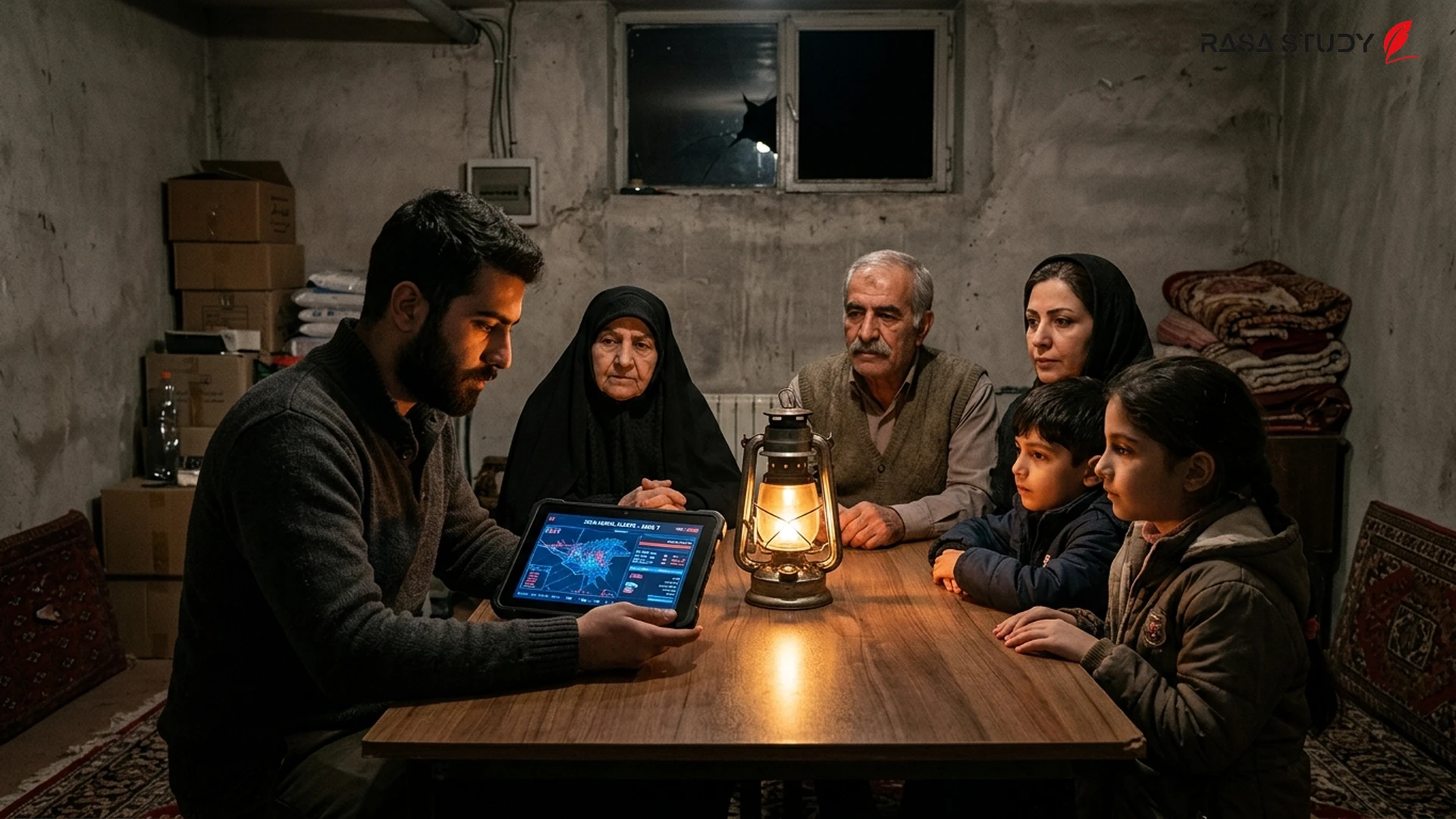
As the world awaits the potential signing of a peace agreement between Tehran and Washington today, June 14, 2026, analysts trace the roots of Iran's unexpected resilience to the collective memory of the eight-year war.
Today, June 14, 2026, the Middle East stands at one of its most critical historical junctures. While United States President Donald Trump has claimed that a peace agreement to end the bloody conflicts of recent months will be signed today [5], Tehran continues to view the matter with caution. But beyond the negotiating table, the question occupying the minds of international observers is: how did a society under the severest aerial attacks and economic blockade demonstrate such a level of resistance?
Historical Roots in the Shelters of Urmia Many analysts believe that the Iranian people's psychological readiness for the 2026 war is rooted in past decades. Field reports indicate that memories of the 1980s bombings and the "Red Alert" status in cities like Urmia and Tehran had vaccinated older generations for facing the current crisis [1]. This historical memory, from stories of shelters under the light of kerosene lamps to the funerals of martyrs, has transformed into a national survival strategy. For many Iranian families, the sirens of 2026 were not a sudden shock, but a bitter historical repetition they had already learned to confront [1].
From Sacred Defense to the 2026 Resistance Doctrine The recent war, which began in February 2026 with massive attacks on Iran's nuclear and military infrastructure [4], once again challenged Tehran's "preemptive defense" doctrine. However, contrary to initial Western predictions of a rapid collapse, Iran's military structure, relying on the "Axis of Resistance" network and the use of next-generation drones in the Persian Gulf, imposed heavy costs on the opposing side [2]. This level of persistence is directly inspired by the experiences of the Iran-Iraq war, where international isolation pushed Iran toward military self-sufficiency and asymmetric strategies [4].
Impact of the Leader's Passing on National Cohesion One of the turning points in the recent conflicts was the passing of Ayatollah Ali Khamenei in the midst of the crisis. While enemies expected this event to lead to a power vacuum and internal collapse, the farewell ceremonies and preparations for his historic funeral in June 2026 became a symbol of solidarity against external threats [3]. Reports indicate that even critical segments of society, when faced with foreign aggression, prioritized the preservation of territorial integrity [1].
Diplomacy in the Shadow of Missiles Currently, negotiations continue in Vienna and Muscat with the mediation of Oman. The draft Memorandum of Understanding (MoU) includes clauses for reopening the Strait of Hormuz and unfreezing Iranian assets [2]. However, media outlets close to the Islamic Revolutionary Guard Corps emphasize that any agreement is merely a "tactical pause" and the roots of the dispute with Washington will remain [2]. Historical experience has taught Iranians that diplomacy without the backing of military power will not endure in the Middle East.
The historical memory of war is the backbone of Iran's national resilience against the 2026 invasions.
linkSources
- İran Halkının Savaş Hafızası Direnişi Nasıl Besliyor? — GZT (2026-06-14)
- Iran Update Special Report, June 13, 2026 — ISW (2026-06-13)
- The Day After the Iran War: Five Scenarios — Palestine Chronicle (2026-06-14)
- 2026 Iran war | Explained — Britannica (2026-06-13)
- Middle East crisis live: Trump says Iran deal will be signed today — The Guardian (2026-06-14)


