As tensions escalate between Iran and the United States in July 2026, military officials in Tehran have sent explicit signals regarding the expansion of the war's scope to neighboring countries; a development that has now focused international attention on the sensitive Iran-Turkey borders.
On July 16, 2026, the Middle East faces one of its most serious security crises. After weeks of heavy fire exchange between United States forces and Iran, Tehran is now speaking with a sharper tone than ever about the possibility of the conflict spilling over into neighboring countries. According to reports published by local media, including "Sirnak Ajans," Iranian military officials have warned that if American attacks continue, they will target the infrastructure of regional countries [1]. These statements have caused international eyes to turn toward the shared border between Iran and Turkey, where Ankara has raised its security measures to the highest level.
Threat of Devastating Attacks; Tehran's New Strategy Senior Iranian military officials, including Army Spokesperson Mohammad Akrami Nia and Colonel Ebrahim Zolfaghari, have announced that Tehran is ready to unveil its "unused capabilities" if Washington's military pressure continues. Zolfaghari explicitly stated that Iran's response will not be a simple act of retaliation, but rather "broader and more destructive" attacks await the region's infrastructure [1]. These threats intensified particularly after CENTCOM (U.S. Central Command) announced it had struck more than 300 military targets on Iranian soil [3]. Tehran has also once again emphasized that the Strait of Hormuz is a "red line," claiming it will not allow any foreign intervention in this vital waterway [4].
Turkey's Borders in Focus; Ankara's Emergency Plans Turkey, which shares a long land border with Iran, now finds itself in the middle of a geopolitical crisis. Field reports indicate that Turkish security forces in border provinces, including Sirnak and Van, are on full alert [1]. The Ankara government had previously drafted a three-stage emergency plan for border management, which includes creating buffer zones within Iranian territory and constructing temporary camps to prevent a massive wave of refugees [5]. Given the history of regional tensions, Ankara is concerned that a potential collapse of stability in Iran could lead to a spillover of security crises and the activity of militant groups near its borders.
Diplomacy Amidst Fire and the Hormuz Deadlock While maritime clashes continue in the Persian Gulf and Iran claims to have blocked the Strait of Hormuz, Turkey is attempting to play the role of mediator. At a recent NATO meeting held in Ankara, the President of the United States emphasized the continuation of pressure, but simultaneously, Turkey insisted on the necessity of maintaining the territorial integrity of neighboring countries and returning to the negotiation table [3][4]. However, given the scale of destruction in southern Iran and the damage to vital ports, experts believe the region is heading toward a war of attrition that could severely threaten global energy security [4]. The current situation on Turkey's borders reflects the depth of concerns regarding a bilateral conflict turning into a full-scale regional war.
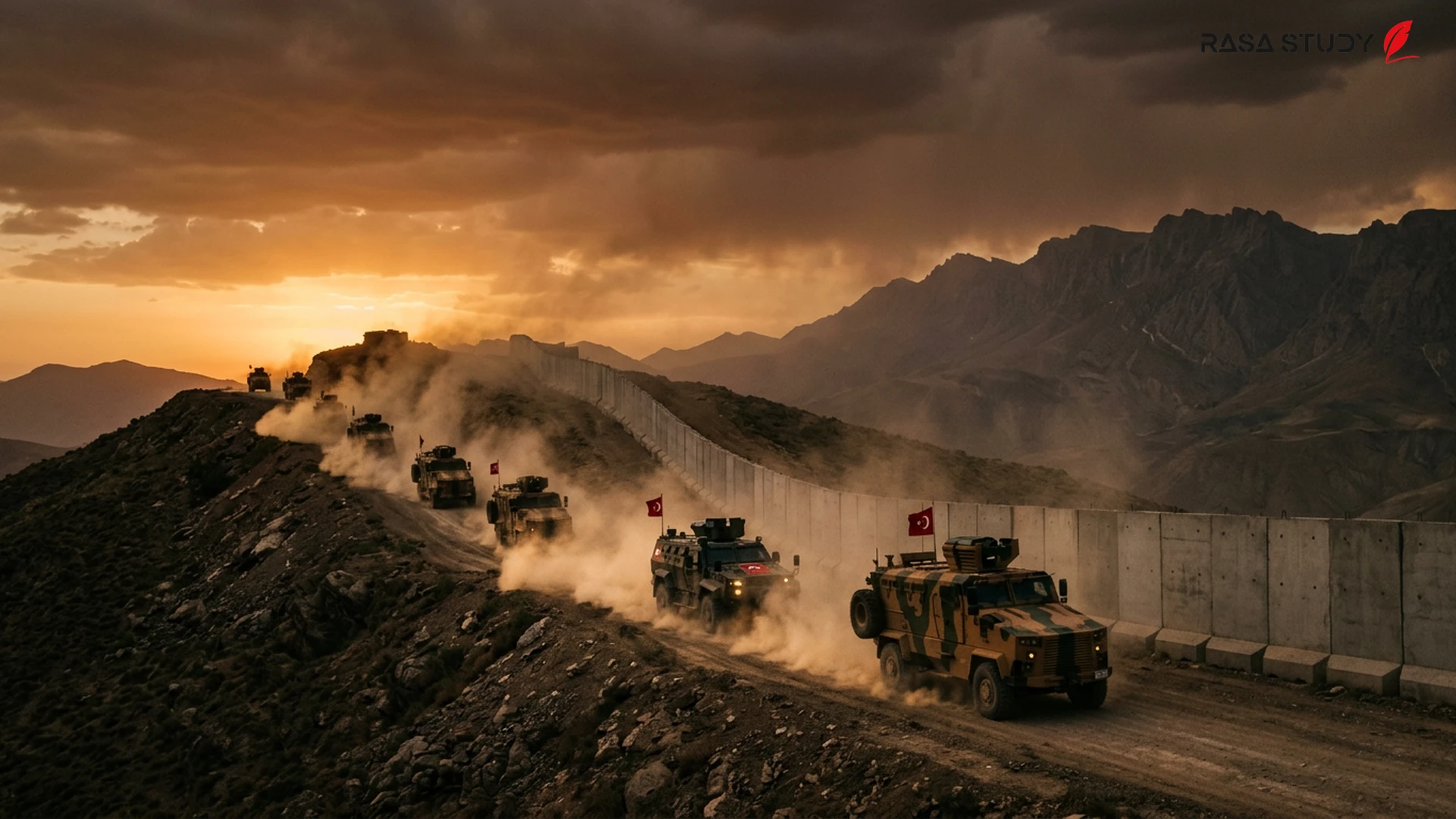
Increased Turkish military presence on eastern borders following recent threats from Tehran officials to expand the conflict.
linkSources
- İran Savaşı Yayma Sinyali Verdi, Gözler Türkiye Sınırında — Şırnak Ajans (2026-07-16)
- July 15, 10 years on: Turkiye's will, Turkiye's victory — Al Jazeera (2026-07-15)
- The 2026 Iran war — Britannica (2026-07-16)
- US-Iran conflict converges on Hormuz — Iran International (2026-07-15)
- Türkiye'den İran sınırı için üç aşamalı acil eylem planı — Kurdistan24 (2026-03-05)