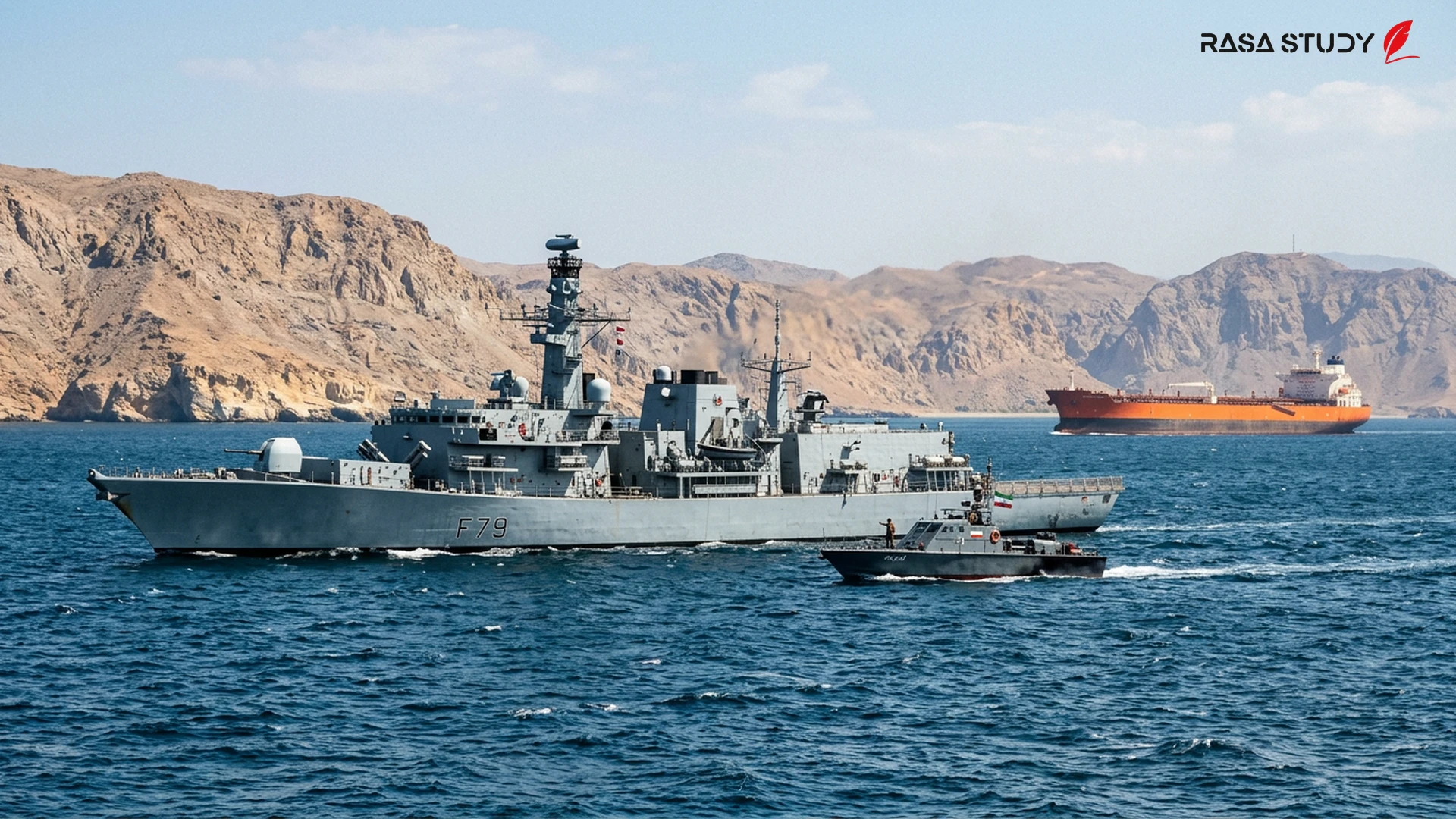
Following the announcement by Britain and France of their readiness to deploy a multinational military force in the Strait of Hormuz, Iran issued a serious warning, calling the move provocative and emphasizing the responsibility of coastal states in ensuring regional security.
London and Paris Announce Readiness for Military Presence in Hormuz In a new development that could affect the security equations of the Persian Gulf, British Prime Minister Keir Starmer and French President Emmanuel Macron announced in a joint statement that they are ready to form and deploy a "broader multinational military mission" in the Strait of Hormuz [2]. The two countries stated the goal of this action is to support freedom of navigation and ensure the safe passage of ships through this vital waterway, which they described as a "vital artery of the global economy" [4].
The statement also claimed that the Sultanate of Oman has agreed to cooperate with London and Paris to secure its territorial waters against shipping hazards [2]. This comes as France had previously deployed its mine-clearing capabilities and specialized frigates to the region [2].
Tehran's Sharp Reaction: 'Hormuz is Not a Power Display Field' The Islamic Republic of Iran immediately reacted to these movements. Kazem Gharibabadi, Deputy Foreign Minister for Legal and International Affairs, warned in a clear message on the X social network that "the Strait of Hormuz is not a military display field for extra-regional powers" [1]. Emphasizing that Iran is the main guarantor of the security of this sensitive waterway, he stated that Hormuz's security should only be provided by coastal states [3].
Gharibabadi, in this stance which state media described as a "serious warning," added: "Crisis-makers will be responsible for the consequences of their adventure" [5]. Iranian officials believe that the presence of foreign forces not only does not help stability but is the main cause of tension and the militarization of the region [4].
Strategic Importance and Legal Dimensions of Navigation The Strait of Hormuz, located between Iran and Oman, is the transit route for about 20% of the world's oil and liquefied natural gas (LNG) [4]. Britain and France claim that restoring full security to this route is a matter of global importance, but Iran emphasizes that under international law, as a coastal state, it has the right to exercise sovereignty and determine security arrangements [5].
These tensions have escalated while reports of sea mines and navigation risks in the region had been published earlier [4]. However, Tehran considers any foreign intervention in the demining process or military patrolling as interference in its sovereign affairs [1].
Tension in the Shadow of Fragile Agreements Notably, this diplomatic confrontation occurs only weeks after the implementation of the Memorandum of Understanding (MoU) between Iran and the United States on June 18, 2026 [4]. This agreement, signed between the government of Masoud Pezeshkian and Donald Trump with Pakistan's mediation, was intended to be a path for reducing tensions and the full reopening of the Strait of Hormuz [4].
Now, the direct military entry of the UK and France into this equation could face the implementation of these fragile agreements with a serious challenge. Analysts believe that Iran's recent warning sends a message to the West that Tehran, despite negotiations with Washington, will not back down regarding the European military presence near its maritime borders [3].
Iran has warned that the security of the Strait of Hormuz is only provided by the coastal states of the region.
linkSources
- هشدار غریبآبادی: هرگونه ماجراجویی نظامی در تنگه هرمز پیامد خواهد داشت — ایرنا (2026-07-04)
- اعلام آمادگی فرانسه و بریتانیا برای استقرار نیروی چند ملیتی در تنگه هرمز — ایسنا (2026-07-03)
- Iran rejects UK-France Hormuz statement, warns against foreign military presence — Middle East Monitor (2026-07-04)
- Iran warns 'crisis-makers' over Hormuz as UK, France propose mission — Egypt Today (2026-07-04)
- İran'dan İngiltere ve Fransa'ya Hürmüz Boğazı uyarısı — Anadolu Agency (2026-07-04)