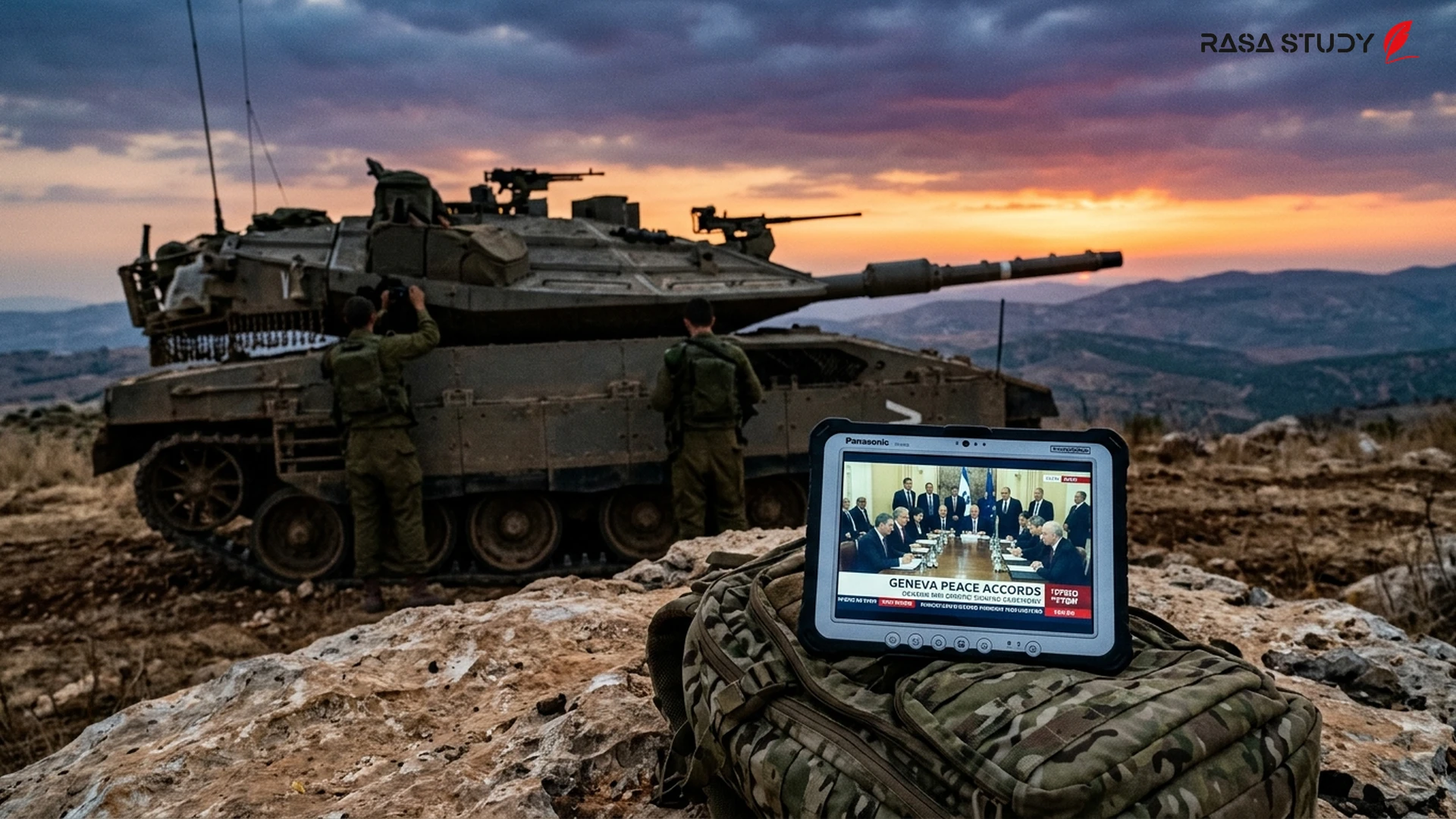
With the announcement of a historic memorandum of understanding between Washington and Tehran to end hostilities, the Israeli government declared in a sharp tone that it does not consider itself bound by this agreement, a move that has left the future of regional peace in a state of ambiguity.
The Geneva Agreement; A Shock to Tel Aviv's Equations In recent days, the world has witnessed a dramatic shift in relations between Tehran and Washington. After months of military conflict that intensified in early 2026, a Memorandum of Understanding (MoU) to end hostilities was finally announced through the mediation of Pakistan and several regional countries, including Turkey and Oman [1]. This agreement, which is scheduled to be officially signed on June 19, 2026, in Geneva, includes the reopening of the Strait of Hormuz, a prisoner exchange, and the start of a 60-day period of technical negotiations to resolve nuclear issues [5]. However, this news has been met with a wave of anger and fierce opposition in Israel.
Insistence on Continuing the War in Lebanon and Gaza One of the biggest challenges facing this agreement is the explicit and stubborn stance of Israeli military and political officials. Israel Katz, the Israeli Defense Minister, emphasized immediately after the announcement of the memorandum that the country's army will continue its presence in the "security zones" of southern Lebanon, Syria, and Gaza without a time limit [2]. This comes while Iran and international mediators consider the cessation of military operations in Lebanon an integral part of this agreement [4]. Itamar Ben-Gvir, the Israeli National Security Minister, also declared in a harsh tone that Israel is "not a US colony" and that this agreement creates no obligation for Tel Aviv [1].
Israel's Tools to Sabotage the Agreement Israel has several tools at its disposal to disrupt this diplomatic game. First is the continuation of targeted military attacks against the positions of Iranian-backed forces in the region, which could provoke Tehran into a counter-reaction and withdrawal from the ceasefire. Israeli intelligence officials have warned that Iran may use the 60-day negotiation window as a cover to accelerate its nuclear program and reach the breakout point [3]. Second is the political pressure on the Donald Trump administration in Washington. Inside Israel, the opposition led by Yair Lapid has accused Benjamin Netanyahu of a strategic failure, claiming that this agreement has left Israel alone against Iranian threats [1].
An Uncertain Future for Peace Under the Shadow of Threats Analysts believe that the sustainability of this memorandum depends heavily on Washington's ability to restrain its ally, Israel. If Israel continues its attacks in Lebanon or carries out new assassinations, Tehran will likely retreat from its commitments regarding the reopening of the Strait of Hormuz [4]. Currently, the region is in a fragile state between war and peace, and Tel Aviv's actions in the coming days will determine whether the new diplomacy can pass through the barrier of the Netanyahu cabinet's stubborn opposition. Many fear that Israel's insistence on maintaining its presence in Lebanon will destroy this "shaky ground" of diplomacy before the final signing [4].
Diplomatic tensions between Washington, Tehran, and Tel Aviv reached their peak in June 2026.
linkSources
- İsrail savaşa doymuyor: Anlaşma bizi bağlamaz! — CGTN Türk (2026-06-15)
- Can Washington force Israel to comply with a U.S.-Iranian deal it rejects? — CBC News (2026-06-15)
- Report: Israel fears Iran will use 60 days of US negotiations to fast-track nuclear program — The Times of Israel (2026-06-16)
- A Creaky Floor for U.S.-Iran Diplomacy — International Crisis Group (2026-06-15)
- The United States and Iran Announce a Deal to End the War — CSIS (2026-06-15)


