With the resumption of direct clashes between the US-Israel alliance and Iran in July 2026, speculation regarding the possibility of war between Israel and Turkey due to geopolitical and ideological conflicts has reached its peak.
Today, July 18, 2026, the Middle East is experiencing one of the most critical periods in its modern history. After months of conflict and violations of temporary ceasefires, the battle between the United States and Israel against Iran's military infrastructure has intensified once again. However, amidst this, new analyses from regional news sources, including the 'CUMHA' news agency, have been published claiming that the ultimate goal of these tensions lies beyond Iran and will target Turkey in the next stage [4].
Return to the Flames of War: Iran-Israel Confrontation The 2026 war, which began in February, entered an offensive phase again on July 8 after a brief ceasefire in April, following Donald Trump's official announcement of the termination of agreements [1]. Massive airstrikes on strategic centers and Iran's missile responses have completely destroyed regional stability. Reports indicate that with the weakening of Iran's offensive capabilities following months of sanctions and conflict, Israeli strategists are now turning their gaze toward the north and Ankara. Some analysts believe that Israel views Turkey as its most serious long-term strategic challenge in the region [2].
The 'Promised Land' Theory and Turkey's National Security Turkish President Recep Tayyip Erdoğan has strongly warned against Israel's expansionist goals in recent speeches. He explicitly stated that the illusion of the 'Promised Land' (Arz-ı Mev’ud) is not limited to Palestinian territories and will eventually target Anatolian soil [3]. From Ankara's perspective, the security of Damascus and Beirut is directly linked to Turkey's national security, and any change in the geopolitical map of these regions is considered an existential threat to Turkey [4].
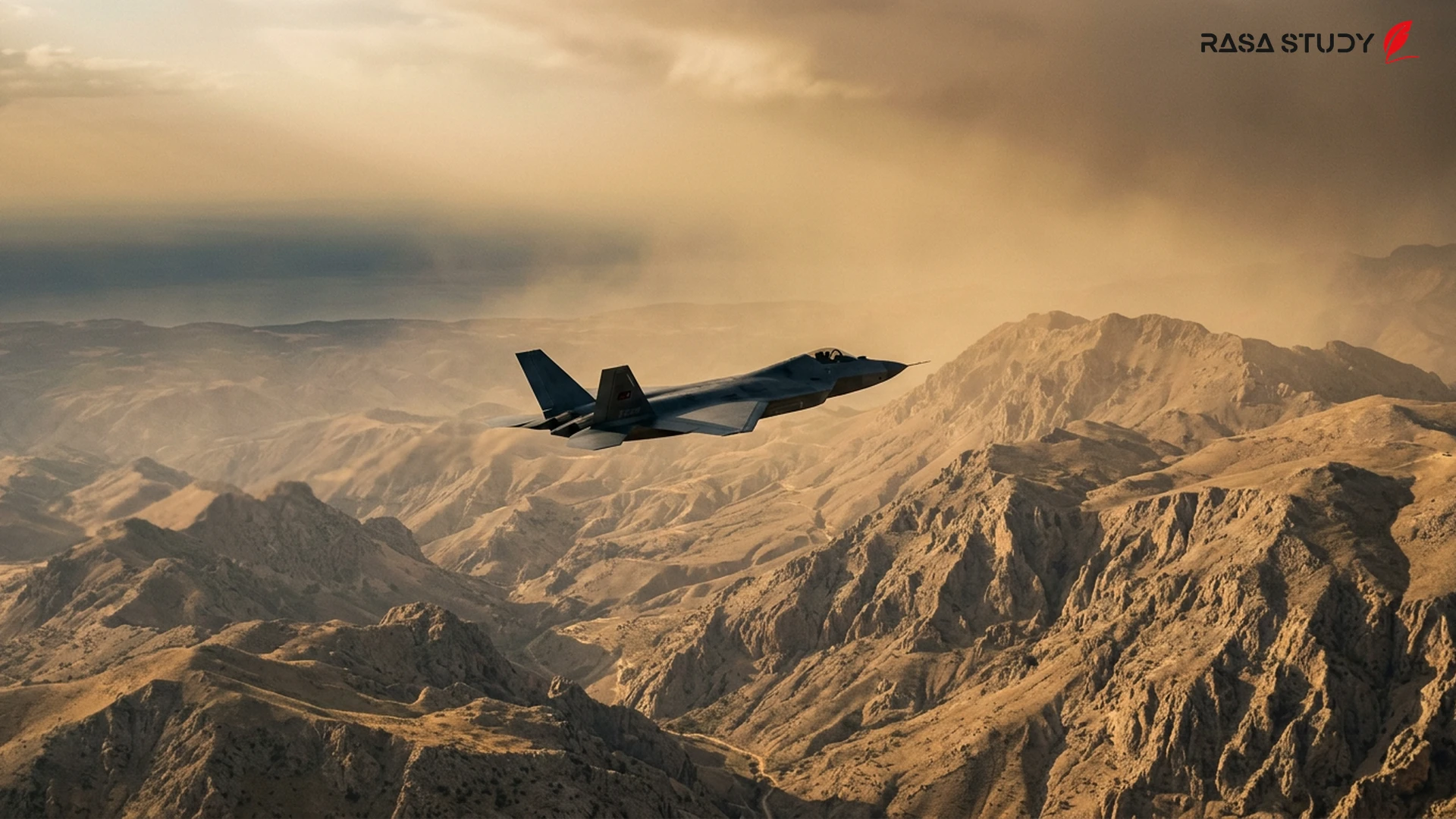
Military Preparations and a Potential New Front Intelligence reports show that the Israeli military is strengthening its amphibious and marine capabilities; a move that some have interpreted as preparation for a 'potential front in Turkey' [2]. In response, Turkey is also strengthening its deterrence by accelerating its defense projects, including the construction of new aircraft carriers and the fifth-generation 'KAAN' fighter jets. Tensions peaked when Israel opposed the sale of F-35 fighter jets to Turkey and identified Ankara as its primary rival in the post-Iran era [2].
Conclusion The Middle East is now in the midst of a major power realignment. While the battle with Iran continues, the shadow of war between the region's two other major powers, Turkey and Israel, looms larger than ever. Can international diplomacy prevent this great collision, or will the theory of 'chain wars' become a reality?
Regional tensions in July 2026 have reached their highest level.
linkSources
- 2026 Iran war: Conflict and Ceasefire Details — Britannica (2026-07-14)
- As Iran fades, Turkey emerges as Israel's biggest strategic threat — The Jerusalem Post (2026-07-10)
- Erdogan: We will never allow Israel to achieve its Promised Land plan — Daily Sabah (2026-06-10)
- Şimdi ABD/İsrail-İran Savaşı! Sırada İsrail-Türkiye Savaşı Var! — CUMHA Cumhur Haber Ajansı (2026-07-18)


