Following Ali Khamenei’s funeral in July 2026, Dr. Osman Gazi Kandemir analyzes the deep power rifts and the regime's efforts to reconstruct its image in the post-war era for Independent Turkish.
The funeral of Ali Khamenei, held with a four-month delay due to wartime conditions, has become more than a religious rite; it has turned into a stage for displaying the new balance of power in Iran. In an op-ed for the Turkish edition of the Independent, Dr. Osman Gazi Kandemir describes this ceremony as a turning point in contemporary Iranian political history [1]. He believes the ceremony is an attempt by the hard core of power to rebuild the regime's damaged legitimacy following the February 2026 airstrikes.
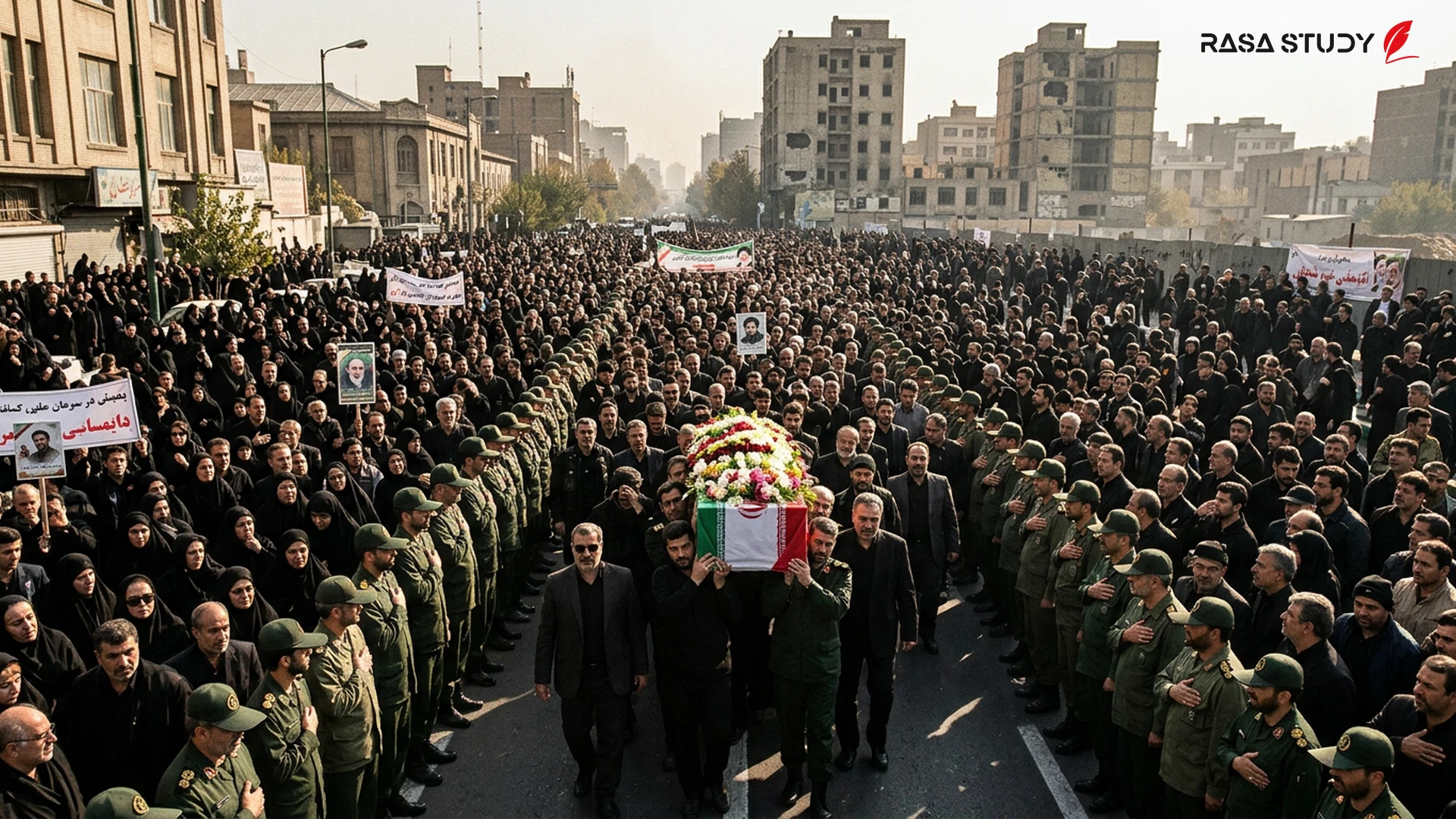
A Ceremony for Survival: Beyond a Simple Burial According to Kandemir, Khamenei’s funeral is not just a farewell to a leader, but a post-war political maneuver. The regime is attempting to use religious symbols and concepts such as "martyrdom" to transform military defeats and security breaches—which led to the former leader's death—into a tool for reunification [3]. The organized presence of millions on the streets of Tehran is a message to foreign enemies and internal opponents that the power structure is still capable of mobilizing the masses [2].
The New Balance of Power and the Succession Puzzle One of the main pillars of Kandemir’s analysis is the emergence of a new generation of more hardline leaders in the shadow of Khamenei’s passing. Although Mojtaba Khamenei has been proposed as his father's successor, his long absence from public view due to injuries sustained in the same airstrike has increased speculation about the stability of his leadership [4]. Kandemir notes that the balance of power has now shifted between networks of traditional clerics, security agencies, and economic cartels. This shift has placed the Assembly of Experts in a difficult position to finalize the selection of a new leader [2].
The Decisive Role of the Revolutionary Guard In this murky atmosphere, the Islamic Revolutionary Guard Corps (IRGC) has emerged as the primary actor in determining the country's future direction. Analysis suggests that senior IRGC commanders are seeking to consolidate their position within the political structure to protect their economic interests and regional influence [4]. Kandemir emphasizes that the new balance of power in Iran is shaped less by ideology and more by tactical coalitions among military and political elites to ensure the regime's survival against international pressure [1].
Legitimacy Challenges in Post-War Iran Ultimately, the op-ed warns that despite the display of power at the funeral, the regime faces a deep crisis of public trust. A society that has witnessed war and widespread destruction now looks with skepticism at promises of stability under the new leadership [3]. The new power balance in Iran must be able to find an equilibrium between internal suppression and regional diplomacy; otherwise, the existing rifts within the ruling body could lead to more serious crises [4].
High-ranking officials attending Ali Khamenei's funeral, held with a several-month delay in July 2026.
linkSources
- Hamaney'in cenazesi ve yeni güç dengesi — Independent Türkçe (2026-07-03)
- Iran stages a belated state funeral for Ayatollah Ali Khamenei — Washington Post (2026-07-04)
- Behind the funeral: Khamenei's coffin becomes stage for Iran's wounded power — Iran International (2026-07-04)
- Iran's elite locked in power struggle after Khamenei — Middle East Online (2026-07-05)