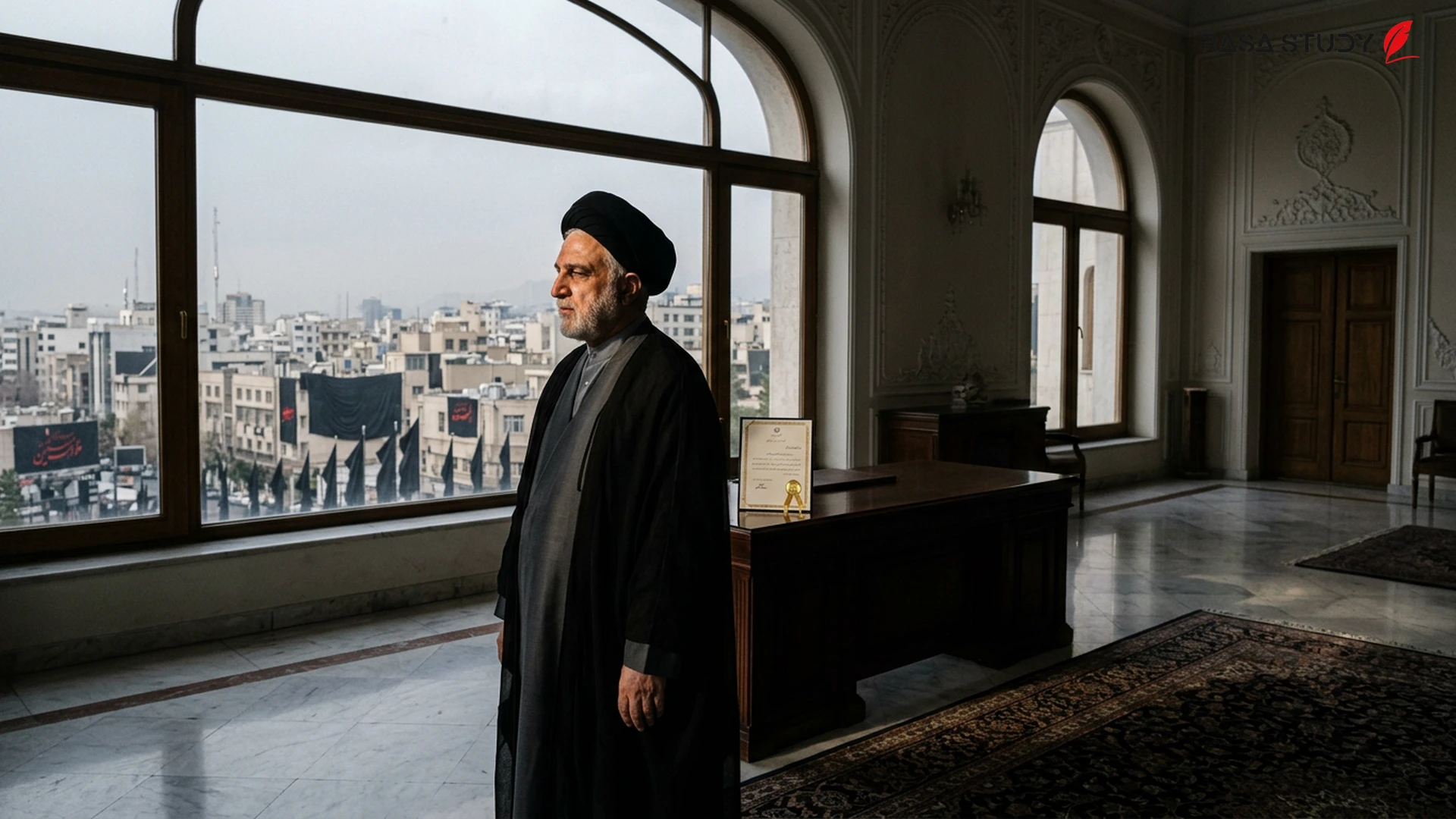
While Iran is in the midst of funeral ceremonies for its late leader, Ayatollah Sayyid Mojtaba Khamenei issued an important decree reappointing Gholam-Hossein Mohseni-Ejei as the Head of the Judiciary to ensure the continuity of the system's macro policies.
On July 6, 2026 (Tir 15, 1405), Iranian state media and regional news agencies reported the first major government appointment by the new leader of the Islamic Republic. Ayatollah Sayyid Mojtaba Khamenei, who took the helm of leadership after his father's death, officially reappointed Hojjat-ul-Islam wal-Muslimin Gholam-Hossein Mohseni-Ejei as the Head of the Judiciary for another five-year term [1]. This decision was made while the country is still dealing with the consequences of war and the long farewell ceremonies for the previous leader.
Decree Details and Legal Basis According to published reports, this decree was issued based on Article 157 of the Constitution. In the text of this decree, the new leader of Iran, while praising the "valuable and sincere efforts" of Mohseni-Ejei, held him responsible for advancing the transformation of the judicial system [2]. A notable point in this decree is the reference to the demands of the "Martyred Leader" (Ayatollah Ali Khamenei), which indicates the new leadership's commitment to continuing the path of his predecessor in the power structure. Media outlets such as "Türkiye Gazetesi" also covered this news extensively, evaluating it as a sign of rapid power consolidation in Tehran [1].
Political Significance of the Appointment During Transition Analysts believe that reappointing Mohseni-Ejei at this sensitive juncture sends a clear message to both inside and outside Iran regarding the structural stability of the system. Mohseni-Ejei, who has headed the Judiciary since 2021, is considered one of the key security-judicial figures with close ties to sovereign and military institutions [3]. His reappointment at a time when Iran is grappling with challenges from the February military conflicts and international pressures signifies a preference for "continuity" over "change" at the head of one of the three branches of government.
Regional and International Reflections This appointment immediately topped the news of regional media. Turkish news agencies, referring to this news, described it as a "high-level appointment" announced by the new leader [1]. Meanwhile, some news sources have noted that this action, along with new appointments in the IRGC Navy (such as the introduction of Admiral Ali Ozmai), indicates a rapid reconstruction of the leadership cadre after the losses from recent attacks [2]. This move took place while Tehran's airspace was closed for the late leader's funeral ceremonies and senior officials from various countries were present in the capital.
Outlook for the Judiciary in the New Era In his new term, Mohseni-Ejei faces numerous challenges, including handling sensitive security cases from the war period as well as implementing judicial transformation documents. The new leader of Iran emphasized in his decree that achieving the "ideal Judiciary" must be done with the doubled efforts of judges and the cooperation of all sectors [2]. This appointment shows that during the leadership of Sayyid Mojtaba Khamenei, the judicial apparatus will continue to act as one of the main arms for maintaining security and political stability [3].
Ayatollah Sayyid Mojtaba Khamenei emphasized the continuity of the system's judicial and security policies in the new era by reappointing Mohseni-Ejei.
linkSources
- İran'da üst düzey atama! Dini lider Hamaney duyurdu — Türkiye Gazetesi (2026-07-05)
- حکم جدید رهبری/ انتصاب مجدد حجتالاسلام اژهای به ریاست قوه قضائیه — Eghtesad Online (2026-07-04)
- انتصاب مجدد محسنی اژهای به ریاست قوه قضاییه؛ تداوم نگاه امنیتی — Iran International (2026-07-06)


