Ahmet Berke Karakuş, a 17-year-old student at Niğde Atatürk Anatolian High School, has successfully joined the presenters for the International Astronautical Congress (IAC) 2026 with a revolutionary project in fuel-less propulsion systems.
In today's world, where the race to conquer space has reached its peak, Turkey's young elites are changing the technological equations with steady steps. Ahmet Berke Karakuş, a senior high school student from Niğde province, has managed to attract the attention of international scientific circles by inventing a fuel-less space propulsion system. This success becomes even more significant knowing that his project has been accepted for presentation at the 77th International Astronautical Congress (IAC 2026), considered the world's most prestigious space event [1].
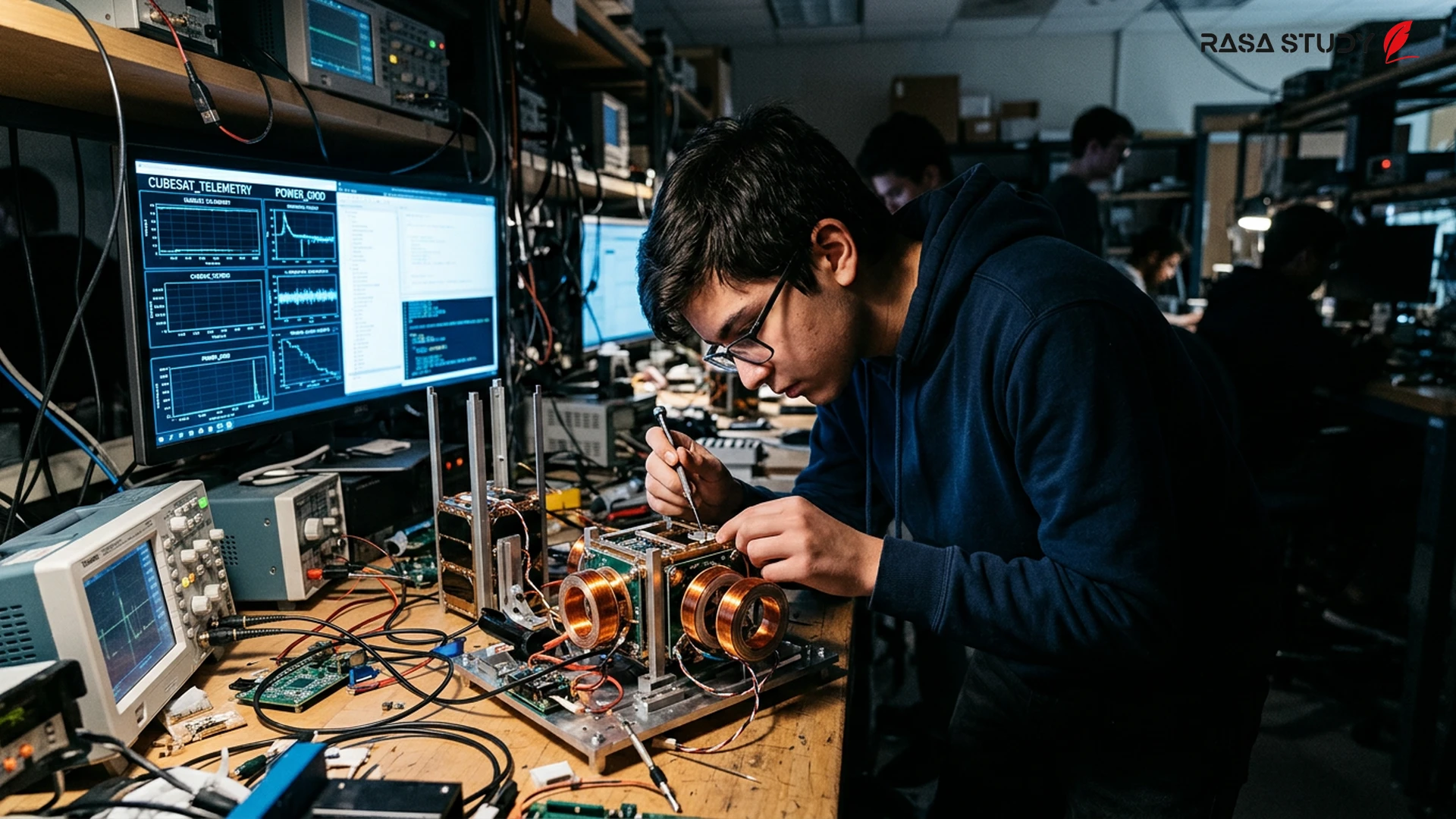
Protecting Satellites Using Tesla Coils Karakuş's project focuses on one of the most critical challenges of the space age: "space debris." This system, specifically designed for small satellites and "CubeSats," uses no chemical or physical fuel for trajectory changes. Instead, the device creates powerful electromagnetic and electrostatic fields by utilizing Tesla coils [1].
The primary goal of this technology is to create a protective shield around the satellite. When small pieces of space debris (ranging from millimeters to a few centimeters) approach the satellite at high speeds, these force fields deflect the particles from the satellite's path without the need for physical contact or fuel consumption. Karakuş noted in his explanations that this system is capable of repelling particles sized 2.5 to 12.5 cm in Low Earth Orbit (LEO), which significantly increases the lifespan of satellites [1].
IAC 2026: Antalya's Historic Hosting of Space Elites The 2026 International Astronautical Congress will be hosted by Turkey for the first time in history in the city of Antalya. Organized by the Turkish Space Agency (TUA) in cooperation with the International Astronautical Federation (IAF), the event will be held under the motto "The World Needs More Space" [2]. The acceptance of Karakuş's paper among more than 8,300 abstracts submitted from 108 countries demonstrates the high scientific level of this student's project [3].
In October 2026, he is set to present his findings in English at the "Space Debris Symposium" to scientists, astronauts, and senior managers of the world's major space agencies. This opportunity is not only a personal achievement for him but also showcases the scientific standing of Niğde province and the capabilities of the Turkish education system in nurturing aerospace talent [1].
A Giant Step for Orbital Security With the increasing number of satellites launched into Earth's orbit, the risk of collision with space debris has become a serious threat to communication and navigation infrastructure. Projects like Karakuş's fuel-less propulsion system can significantly reduce space mission costs due to reduced satellite weight (removal of fuel tanks) and high efficiency in hazard mitigation [1].
This 17-year-old student, with national support and personal effort, has now become a symbol of the new generation of Turkish scientists ready to register the country's name among the pioneers of the space industry in the "Century of Türkiye." His presence at IAC 2026 Antalya will be a turning point in his professional path and an inspiration for many students who dream of traveling to the stars [1][2].
Ahmet Berke Karakuş, 17, will present his fuel-less propulsion project in October 2026 in Antalya.
linkSources
- Niğdeli lise öğrencisi IAC 2026'da yakıtsız itki projesini sunacak — Aksiyon.com.TR (2026-07-09)
- IAC 2026 Antalya - Turkish Space Agency — TUA (2026-04-03)
- Record numbers for IAC 2026: 8,325 abstracts submissions — IAF (2026-04-03)