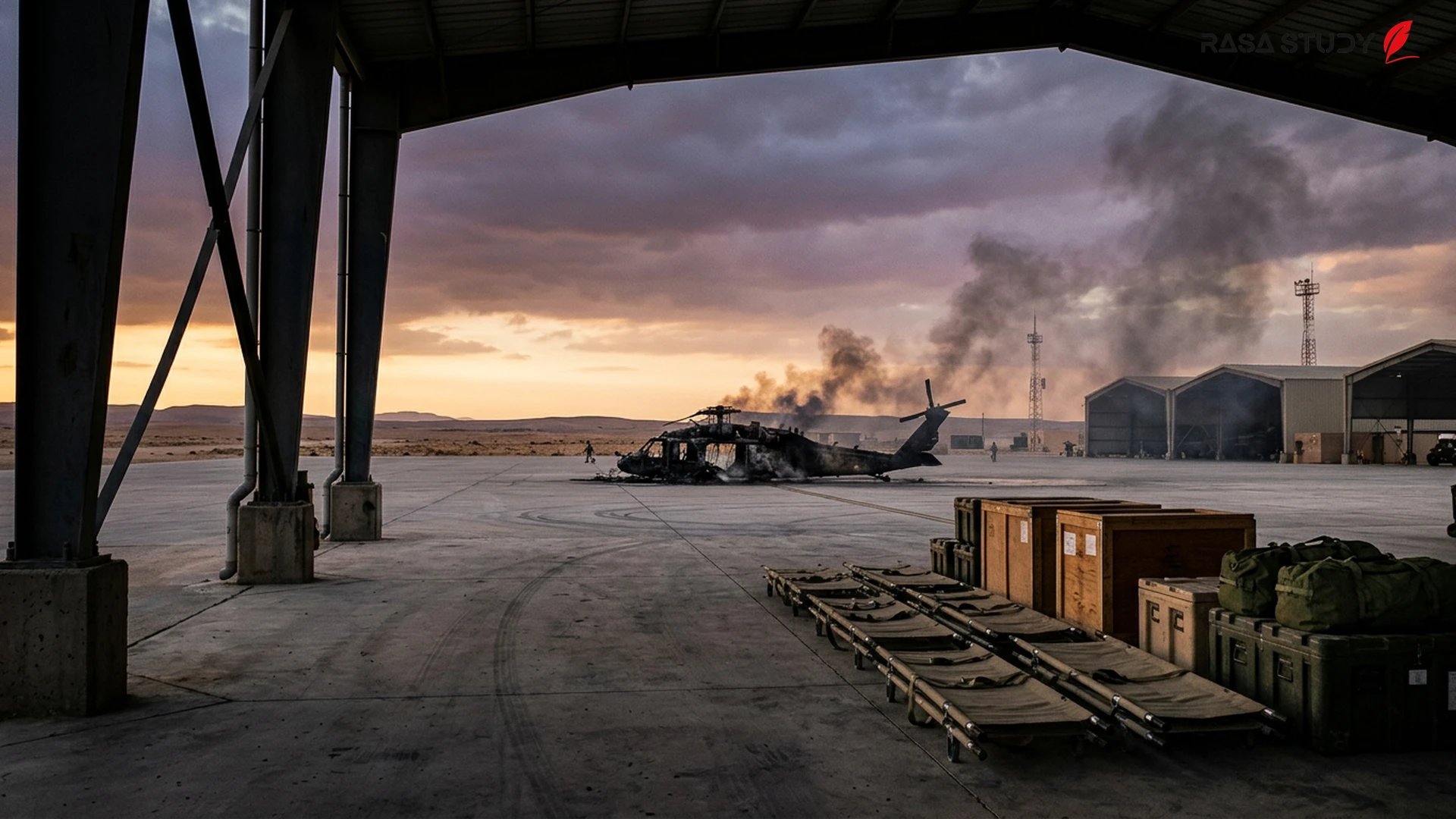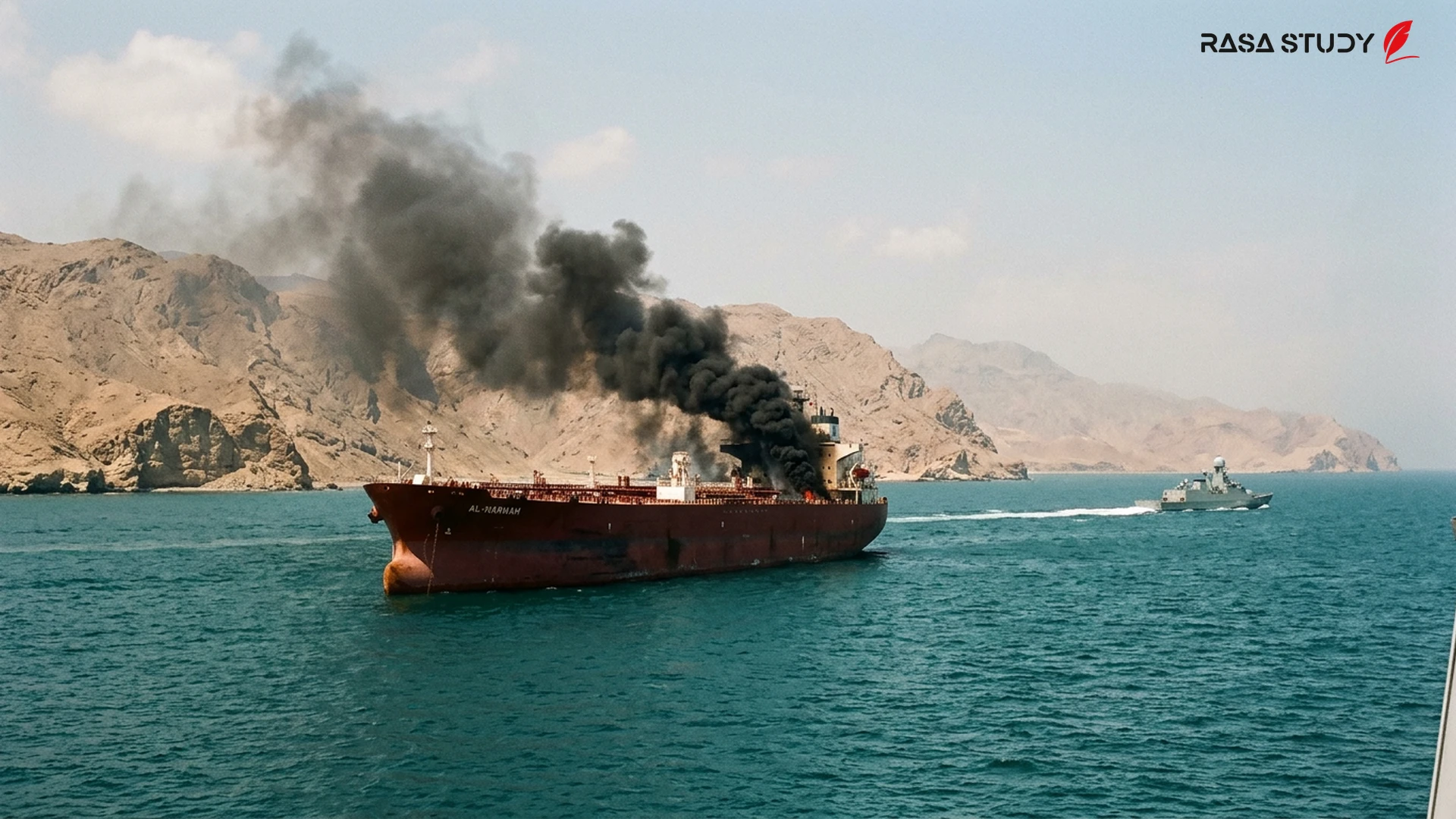
The fragile agreement between Washington and Tehran is on the brink of collapse after missile attacks on two commercial vessels and a tanker fire off the Omani coast. Donald Trump has warned he will "finish the job" if disruptions persist.
Today, July 7, 2026, reports from the Persian Gulf region indicate an unprecedented escalation of tensions in the Strait of Hormuz. According to maritime security agency data, the Iranian Revolutionary Guard Corps (IRGC) fired at least two missiles at commercial ships passing through this strategic waterway last night [1]. These incidents occur as Iran holds funeral ceremonies for its late leader, while the temporary agreement known as the "June Memorandum," signed to reopen shipping lanes, has effectively collapsed.
Missile Attacks and Ceasefire Violations According to reports published by international media, including Axios, Monday night's missile attacks caused serious damage to two commercial vessels, though no casualties have been reported [1]. Additionally, the United Kingdom Maritime Trade Operations (UKMTO) confirmed that a tanker caught fire off the coast of Lima, Oman, this morning after being struck by an unidentified projectile [3]. These attacks come just weeks after the signing of a memorandum intended to end months of maritime blockade and military conflict, but Tehran now appears to have reclaimed full control over the strait by designating mandatory routes and threatening military responses [1].
Washington's Sharp Warning and New Military Posture In response to these developments, U.S. President Donald Trump issued a stern warning that Washington's patience has run out. He stated that Iran must choose between a lasting agreement or facing the full military might of the United States, adding: "We can disable their energy infrastructure in an hour" [2]. Simultaneously, reports indicate that Britain and France are preparing a multinational fleet for mine-clearing operations and escorting commercial ships along southern routes near the Omani coast to break Iran's monopoly over the northern passages [3].
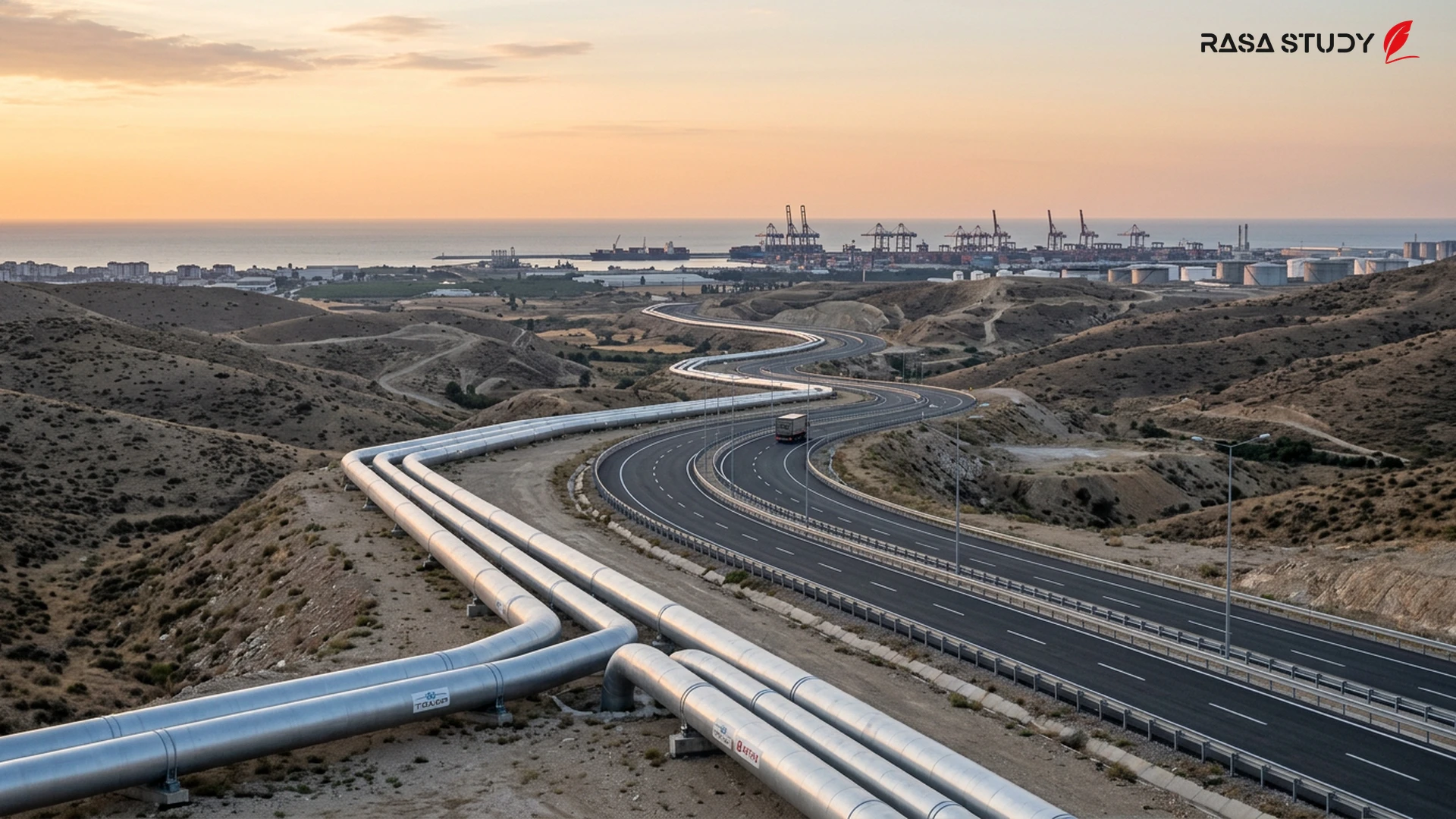
Economic Consequences and Regional Port Status Global energy markets reacted immediately to the news. Brent crude prices saw a significant increase, nearing the $73 mark, though this rise was partially tempered by OPEC+'s decision to increase production [4]. Meanwhile, Abdulkadir Uraloğlu, Turkey's Minister of Transport, announced that despite the geopolitical crisis in the Strait of Hormuz, Turkish ports saw growth in the first half of 2026, with cargo volume exceeding 279 million tons, indicating a shift in some logistical flows toward Mediterranean ports [5].
Uncertain Outlook for Maritime Security Analysts believe the current situation in the Strait of Hormuz goes beyond a simple border conflict. Iran is using the waterway as a tool for diplomatic leverage in nuclear negotiations and to mitigate the impact of sanctions [1]. Given the suspension of indirect talks in Doha and Tehran's insistence on charging transit fees from ships, the coming weeks are predicted to be critical and high-risk for global energy security. The presence of suicide drones and advanced sea mines in the region has pushed ship insurance risks to their highest levels since World War II.
In July 2026, the Strait of Hormuz has once again become a flashpoint for military conflict and threats against maritime security.
linkSources
- Iran's Revolutionary Guards fired at least two missiles at commercial ships — Arab News (2026-07-07)
- Trump warns Iran: 'Make a deal or we're going to finish the job' — NPR / Associated Press (2026-07-07)
- UK and France to launch mission to secure Strait of Hormuz — The National (2026-07-07)
- Hürmüz gerilimi piyasaları baskılıyor — Habertürk (2026-07-07)
- Hürmüz Boğazı krizine rağmen Türk limanları büyüdü — Deniz Haber (2026-07-07)