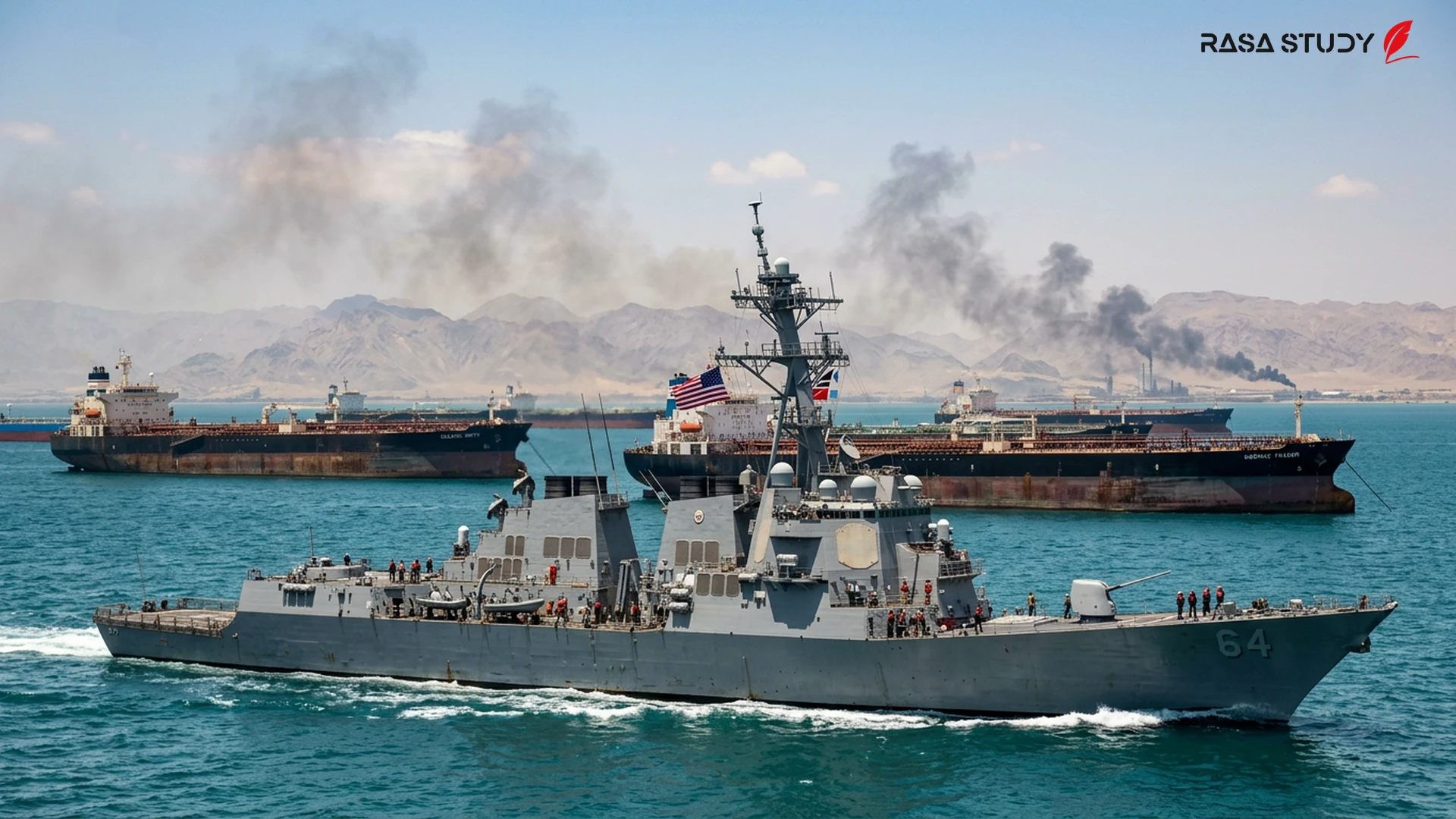
U.S. President Donald Trump officially announced today, July 13, 2026, that the United States has resumed the naval blockade against Iran and is imposing a security tariff for ships passing through the Strait of Hormuz.
Return of the Blockade and Emergency Declaration in the Persian Gulf In a move that has shaken global energy markets, U.S. President Donald Trump announced on Monday, July 13, 2026, that the naval blockade of Iranian ports has been fully reinstated. In a post on the social media network 'Truth Social', Trump emphasized that this blockade specifically targets Iranian vessels and the country's oil customers, while the route will remain open for the rest of the world [1][4]. This decision follows a peak in intense drone and missile clashes between U.S. and Iranian forces in recent days.
The United States: 'Guardian of the Strait of Hormuz' In controversial remarks, Trump named the United States the 'Guardian of the Strait of Hormuz' from now on. In a telephone interview with Fox News, he stated that the U.S. would take responsibility for managing and securing this strategic waterway [3]. A significant point in this new strategy is the imposition of a 20% tariff on the value of all commercial cargo passing through the Strait of Hormuz. Trump claims this amount will be collected to offset heavy U.S. military costs for securing this 'highly unstable' region [2][5]. He noted that wealthy countries in the region must pay their share to protect this vital route.
Collapse of the June Memorandum of Understanding These developments mark the official end of the Memorandum of Understanding (MoU) signed on June 17, 2026, between Washington and Tehran to establish a 60-day ceasefire [5]. Calling the deal 'dead,' Trump claimed that Iran violated the terms by attacking commercial ships in recent days. In response, Iranian officials and the Islamic Revolutionary Guard Corps (IRGC) rejected these claims, stating that the Strait of Hormuz is under their full control and describing U.S. actions as 'maritime piracy' and a violation of international law [2][4].
Escalation of Military Clashes and Market Reaction U.S. Central Command (CENTCOM) confirmed that in the past 48 hours, it has struck dozens of targets including radar sites, air defense systems, and drone bases inside Iranian territory, including Qeshm Island and Bandar Abbas [2]. These strikes were carried out in response to Iranian attempts to block the Strait of Hormuz. Concurrent with these tensions, crude oil prices on global markets jumped by 5%, and concerns over a full-scale war in the region have increased [3]. Analysts believe Trump's move to collect transit fees in an international waterway could face serious legal opposition globally.
U.S. President Donald Trump announced the reinstatement of the blockade against Iran on July 13, 2026.
linkSources
- Trump: İran'a ablukayı yeniden başlatıyoruz — Entekhab (2026-07-13)
- Trump announces return of naval blockade on Iran, demands 20% tariff in Strait of Hormuz — The Guardian (2026-07-13)
- Trump says US will charge 20% fee for Strait of Hormuz passage, reinstate Iran blockade — Fox News (2026-07-13)
- پرزیدنت ترامپ: تنگه هرمز باز است؛ بازگشت محاصره دریایی جمهوری اسلامی — VOA News (2026-07-13)
- Trump says US to resume naval blockade of Iran's ports — Al-Monitor (2026-07-13)


