Despite global Brent oil prices falling to levels seen before the recent Middle East conflicts, fuel prices at Turkish stations remain high, sparking protests from consumers and economic analysts.
Brent Oil Returns to the $70 Range According to the latest global market data as of June 29, 2026, the price of Brent crude oil has significantly dropped to approximately $72.30 per barrel [3]. This figure represents a return to price levels observed before the recent military tensions and the temporary closure of the Strait of Hormuz. With the establishment of a ceasefire and the relative normalization of tanker traffic, the price bubble caused by geopolitical risks has deflated, yet this global price reduction has not yet found its way into the pockets of end consumers.
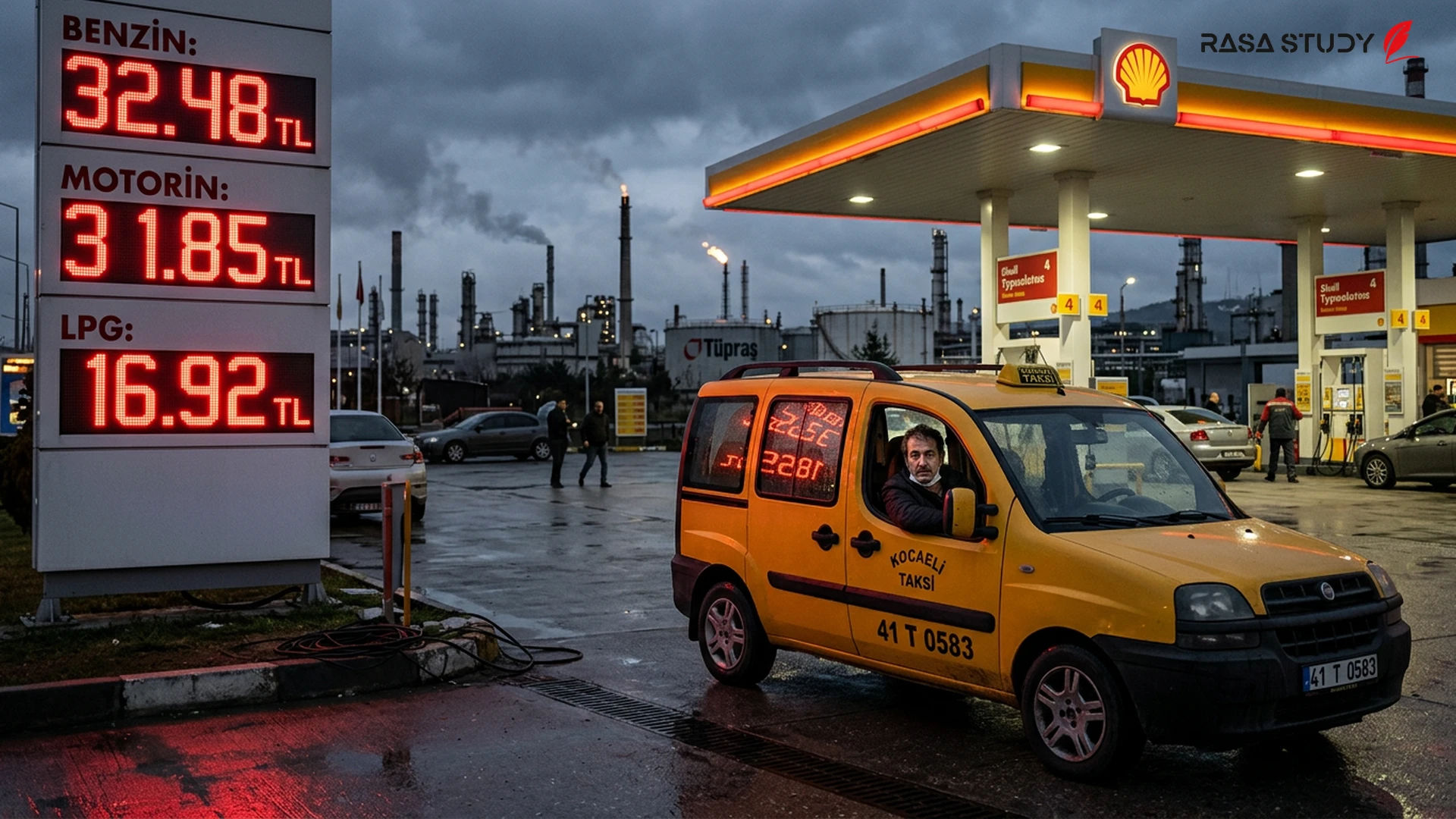
The Puzzle at Turkish Gas Stations Local reports from Kocaeli and other major Turkish cities indicate that gasoline and diesel prices remain at very high levels. According to the newspaper "İşte Kocaeli," while global oil prices have returned to pre-war levels, the price per liter of diesel at fuel stations in this province is about 4 Lira more expensive than the same period before the conflict [1]. In late June 2026, gasoline in Istanbul is trading at approximately 62.19 Lira and diesel at 64.45 Lira, showing no significant change from the peak of the crisis despite the drop in oil prices [4].
The Key Role of Exchange Rates and Taxes Alparslan Bayraktar, Turkey's Minister of Energy and Natural Resources, stated in response to parliamentary criticism that fuel prices at the pump are not solely dependent on crude oil prices [2]. He emphasized that factors such as exchange rates, freight costs, distributor profit margins, and most importantly, heavy taxes (including the Special Consumption Tax or ÖTV) play a decisive role in the final price.
Economic analysts point out that the value of the Turkish Lira against the US Dollar has declined in recent months, reaching the 46.50 Lira range [4]. This depreciation of the national currency ensures that even with falling global oil prices, the cost of importing fuel for Turkey remains high. In effect, the reduction in global oil prices has been neutralized by the rise in the Dollar exchange rate.
The Situation in Kocaeli and Pressure on Consumers In the industrial province of Kocaeli, drivers and industrial owners are complaining about the price disparity. At the height of the crisis, diesel prices in this region had crossed the 85 Lira mark, but now that oil has returned to normal prices, it was expected that fuel prices would fall below 60 Lira, which has not happened [1]. This situation has imposed additional inflationary pressure on the transportation sector and the cost of living for citizens. Experts believe that until exchange rate stability is achieved and reforms are made to the fuel tax structure, Turkish citizens will not experience the benefit of cheap global oil at the pump [2][4].
The contrast between falling global oil prices and stable high prices at Turkish gas stations.
linkSources
- Petrol savaş öncesine döndü: Pompa fiyatları dönmedi — İşte Kocaeli Gazetesi (2026-06-29)
- Bakan Bayraktar yanıtladı: Akaryakıt fiyatları neden düşmüyor? — BirGün (2026-06-24)
- Brent Crude Oil Price Analysis June 2026 — Trading Economics (2026-06-29)
- Petrol savaş öncesine döndü, pompa dönmedi — Yeni Asya (2026-06-25)