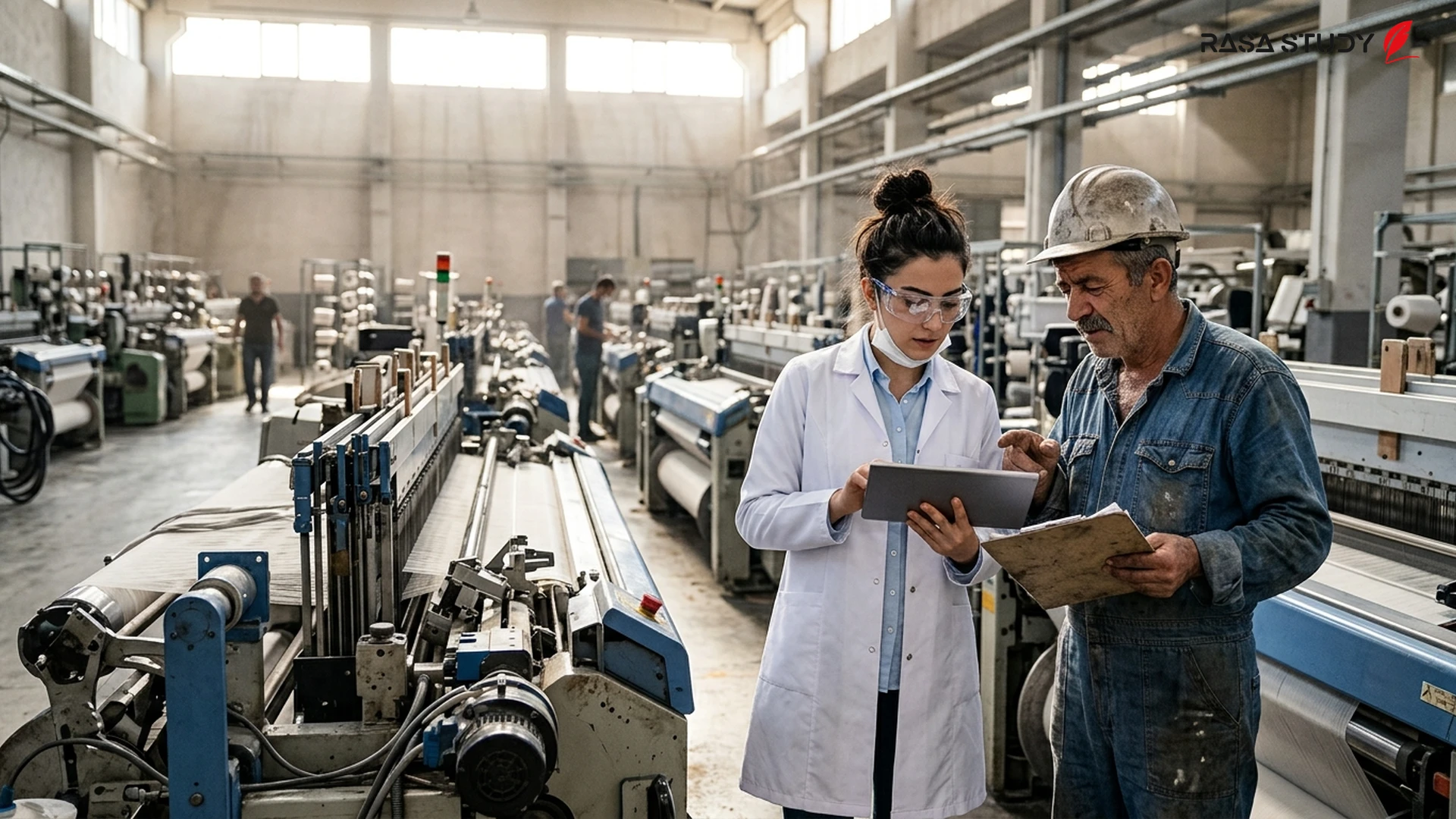
The President of the Council of Higher Education of Turkey (YÖK) announced the start of a major transformation process, emphasizing the unbreakable link between university and industry to ensure graduates are hired directly based on real labor market needs.
Erol Özvar, President of the Council of Higher Education of Turkey (YÖK), announced during his recent visit to Gaziantep that the institution is implementing a new and extensive transformation process focused on job creation. This program, introduced as the 'Workplace Vocational Education Model' (İME), aims to bridge the gap between theoretical academic knowledge and the practical skills required by industry [1].
End of Short-Term Internships In his speech, Özvar emphasized that traditional internship models no longer meet the dynamic needs of today's economy. According to the new plan, educational systems have been revised so that students spend a significant portion of their studies directly in industrial and commercial environments. In vocational schools, '3+1' and '2+2' models will be implemented, while in undergraduate programs, '7+1' and '6+2' models will be used, meaning students spend at least one or two full semesters in the heart of the workplace [2][3].
This plan has initially started as a pilot phase in 7 key Turkish provinces, including Istanbul, Ankara, Izmir, Bursa, Konya, Kocaeli, and Gaziantep. This pilot phase covers 185 different educational programs and more than 120,000 students [3].
Inviting Industrialists to Manage Universities One of the revolutionary aspects of this transformation is the YÖK President's invitation to industry owners and chambers of commerce to participate in the management and development of educational curricula. Addressing industrialists, Özvar said: 'Let us manage vocational schools and develop curricula together.' He emphasized that university-industry cooperation is no longer an option but a structural necessity to guarantee the country's economic future [1][2].
In this regard, cooperation protocols were signed between YÖK, the Gaziantep Chamber of Industry (GSO), and the Metropolitan Municipality to provide the necessary infrastructure for students to be present in factories and production units [2].
New Departments and Capacity Review In addition to changes in teaching methods, the Council of Higher Education of Turkey is conducting a general review of university departments. Özvar previously noted that departments with low employment rates will be gradually phased out or modified. In contrast, more than 20 new departments in fields such as artificial intelligence, data mining, cybersecurity, and new agricultural technologies have entered the university academic calendar since 2026 [4][1].
The ultimate goal of this transformation is to increase the 'employability' of graduates. Preliminary data shows that students who participated in practical education models are absorbed into the labor market much faster than others, forming the core of Turkey's 2030 Higher Education Strategy [3].
Erol Özvar, President of YÖK, at the cooperation protocol signing ceremony with the industrial sector in Gaziantep, June 2026.
linkSources
- YÖK Başkanı Özvar: İstihdam odaklı yeni bir dönüşüm süreci yürütüyoruz — DHA (2026-06-12)
- YÖK Başkanı Prof. Dr. Erol Özvar'ın Katılımıyla, “İşletmede Mesleki Eğitim (İme) Protokolü” GSO'da İmzalandı — Memo Haber (2026-06-13)
- Klasik Staj Dönemi Bitiyor: Öğrenciler Kampüsten İşletmeye Geçecek — Memurlar.Net (2026-06-12)
- YÖK Başkanı Duyurdu: Üniversitelere Yeni Programlar Açılacak — Memurlar.Net (2026-04-06)


