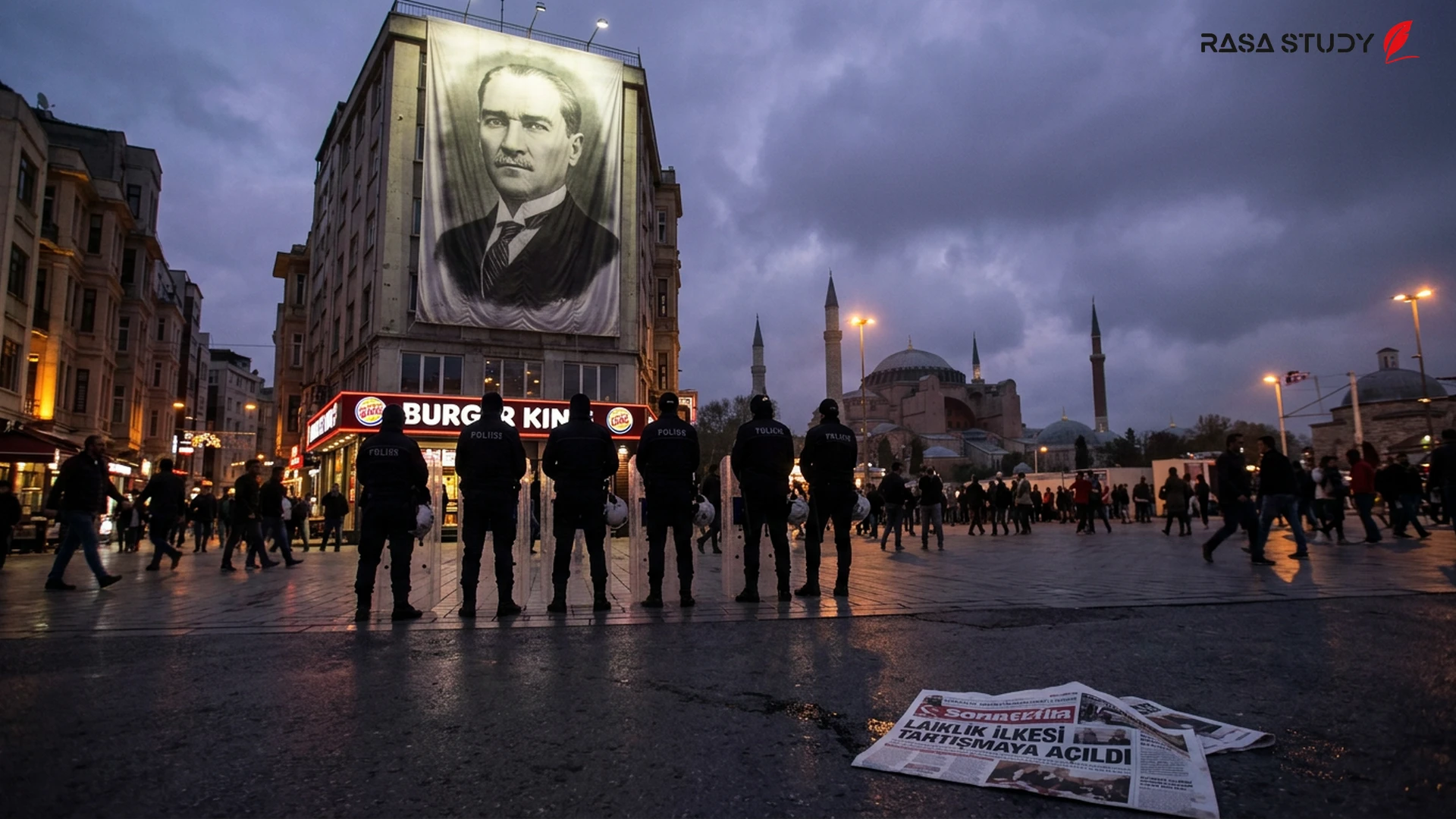
With the publication of Yasemin Asadi's controversial article in Medyascope, the question that has occupied analysts for 25 years has returned to the center of Turkish political debate: Is the country on the path to "Iranization"?
An Old Question with New Answers in 2026 As Turkey prepares to host the NATO summit in Ankara in recent days, the country's internal atmosphere has been dominated by heated debates over secular identity and the future of democracy. In an article published on July 5, 2026, on the Medyascope website, Yasemin Asadi examines why the answer many Turks gave with confidence for years to the question "Will Turkey become Iran?" is now accompanied by doubt [1].
According to Asadi, for decades the standard answer was "No, Turkey will never become the Iranian model due to its economic ties with the West and its democratic institutions." However, many observers now believe that this transformation is occurring not suddenly, but gradually through the erosion of institutions [1].
Concerning Indicators: The Numbers Speak One of the most shocking parts of the Medyascope analysis is the comparison of the international standing of the two countries in key indicators. According to 2026 statistics, the gap between Turkey and Iran in the areas of freedom of expression and the rule of law has reached a minimum. In the Reporters Without Borders (RSF) World Press Freedom Index, Turkey has dropped to 163rd place, while Iran stands at 177th [1].
Additionally, in the World Justice Project (WJP) Rule of Law Index, Turkey ranked 118th out of 143 countries in 2025, only a few steps away from Iran (ranked 128th). These data show that beyond ideological debates, Turkey's legal and civil structures are under severe pressure [1].
Education and Religion; The New Front of Confrontation Tensions are not limited to international statistics. In recent months, the Erdogan government's educational policies, including the promotion of religious activities in schools and changes to textbooks, have sparked widespread protests. The Turkish Minister of Education's complaint against 168 prominent figures who signed the "Secularism Defense Statement" is an example of this confrontation [3]. Critics believe that the effort to raise a "pious generation" bears many similarities to the ideological approaches in the Iranian educational system [1][3].
Fundamental Differences: NATO and Geopolitical Realities Despite these similarities, many international analysts still believe that Turkey has deep structural differences from Iran. As a key member of NATO and a country where 40% of exports go to the European Union, Turkey cannot easily become an isolated and revolutionary system [2].
Analysts in media outlets such as Ynetnews point out that although Ankara's tone regarding regional issues has sharpened, Turkey remains a pragmatic actor seeking economic interests and regional influence, not the export of religious revolution [2]. However, the arrest of opposition figures such as Ekrem İmamoğlu, the Mayor of Istanbul, indicates a continuation of the authoritarian trend that could further blur these differences [1].
Debates about structural similarities between Turkey and Iran reached their peak in July 2026.
linkSources
- Türkiye İran olur mu? — Medyascope (2026-07-05)
- Turkey is not Iran — Ynetnews (2026-07-04)
- Turkey's education minister sues 168 signatories of secularism manifesto — Turkish Minute (2026-02-25)


