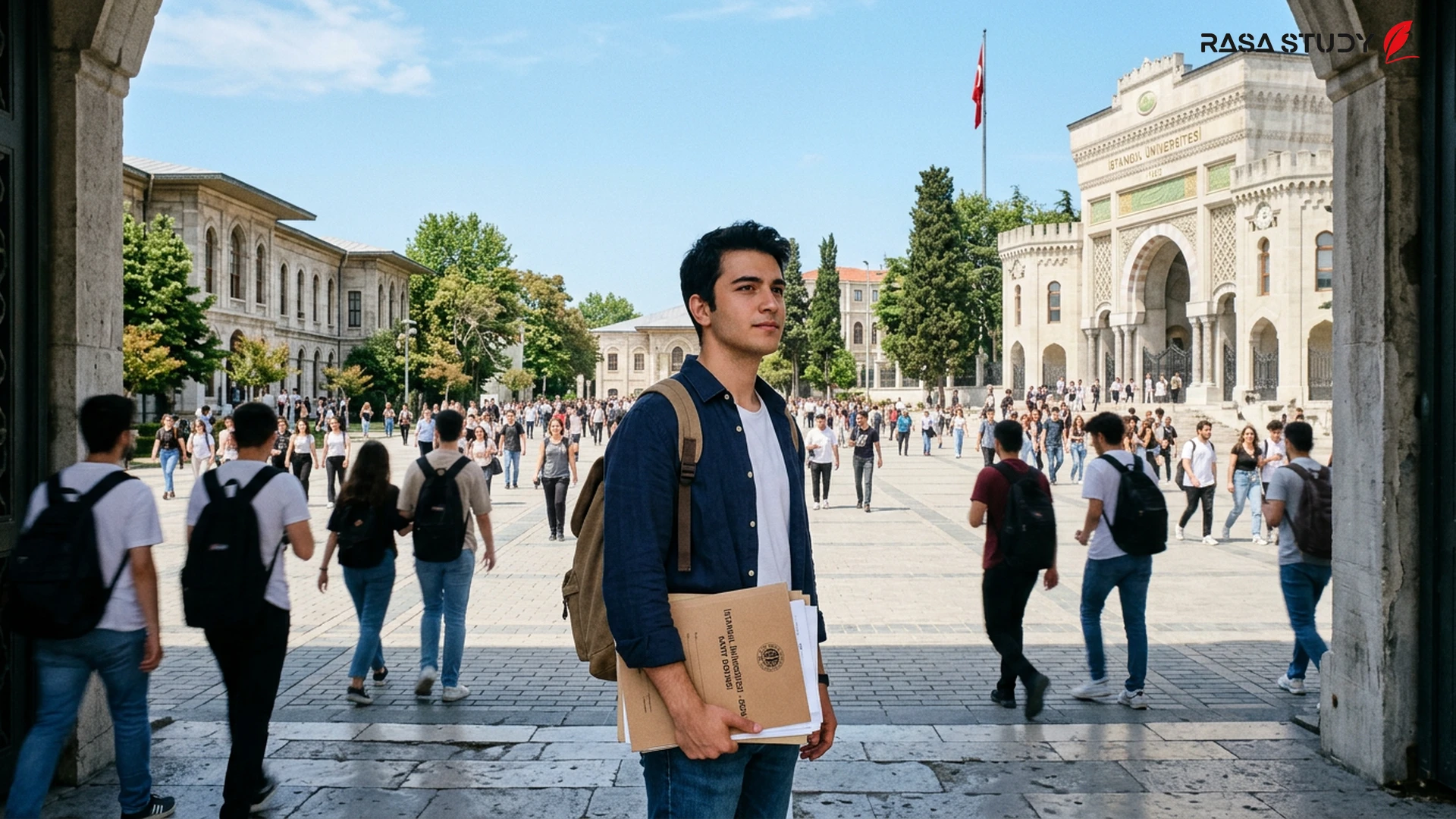
The Education Commission of the Turkish Parliament has approved the comprehensive 2026 Student Amnesty plan. This law provides thousands of students who discontinued their education with the opportunity to return to university seats starting from the new academic year, subject to specific conditions.
After months of waiting, the proposal by Justice and Development Party (AKP) representatives regarding student amnesty and higher education reforms was finally approved on July 15, 2026, in the Education, Culture, Youth, and Sports Commission of the Grand National Assembly of Turkey (TBMM) [1]. This plan, known as the "2026 Student Amnesty," paves the way for a return to education for students who have left university for any reason.
Who is Covered by the 2026 Student Amnesty? According to the new resolution, all students in associate, undergraduate, graduate, and doctoral programs who were previously expelled or voluntarily withdrew are covered by this law [2]. Importantly, even individuals who were accepted through university entrance exams but did not register within the designated deadline can utilize this opportunity. This amnesty also includes preparatory (Hazırlık) courses [1].
The primary condition for benefiting from this plan is not having utilized previous student amnesties (especially the 2022 amnesty). In essence, this law is a second chance for those who missed the education train and intend to restart their studies in the 2026-2027 academic year [3].
Excluded Groups and Legal Restrictions To maintain security and ethical standards, the Turkish government has excluded certain groups from this amnesty. Individuals convicted of terrorist crimes, intentional homicide, torture, sexual abuse of children, and drug trafficking will not have the right to return to university [1]. Additionally, those expelled for providing forged documents at the time of registration or for connections with organizations disrupting national security are deprived of this plan [2].
Furthermore, students of military and security institutions such as the National Defense University (MSÜ), Police Academy, and Gendarmerie Academy are not within the scope of this amnesty and are subject to their own specific regulations [1].
Registration Deadline and Application Process Applicants must submit their written request to their former university or the university where they were accepted within a maximum of 4 months after the official publication of the law in the Official Gazette (Resmi Gazete) [3]. For individuals currently performing military service, this deadline is extended to 2 months after the completion of their service [1]. Students whose applications are approved can continue their education starting from the first semester of the 2026-2027 academic year.
Other Educational Facilities in the New Plan This resolution is not limited solely to the return of students. According to the additional articles, final-year students whose authorized study period has expired are granted two additional exam opportunities for remaining courses [2]. Additionally, the possibility of transferring to distance education programs (AÖF) at reputable universities such as Anadolu University and Istanbul University is provided for those covered by the amnesty [1]. Regarding faculty, the possibility of extending the contracts of retired faculty members until the age of 75 is foreseen if required by the university [2].
With the approval of the new amnesty plan in the Turkish Parliament, the path to return to university has been paved for thousands of students.
linkSources
- Madde madde öğrenci affı — Hürriyet (2026-07-16)
- Öğrenci affı ve yükseköğretime ilişkin kanun teklifi TBMM komisyonunda kabul edildi — Gazete Oksijen (2026-07-16)
- Öğrenci affı komisyondan geçti! Kimler yararlanabilecek? — CNN Türk (2026-07-16)