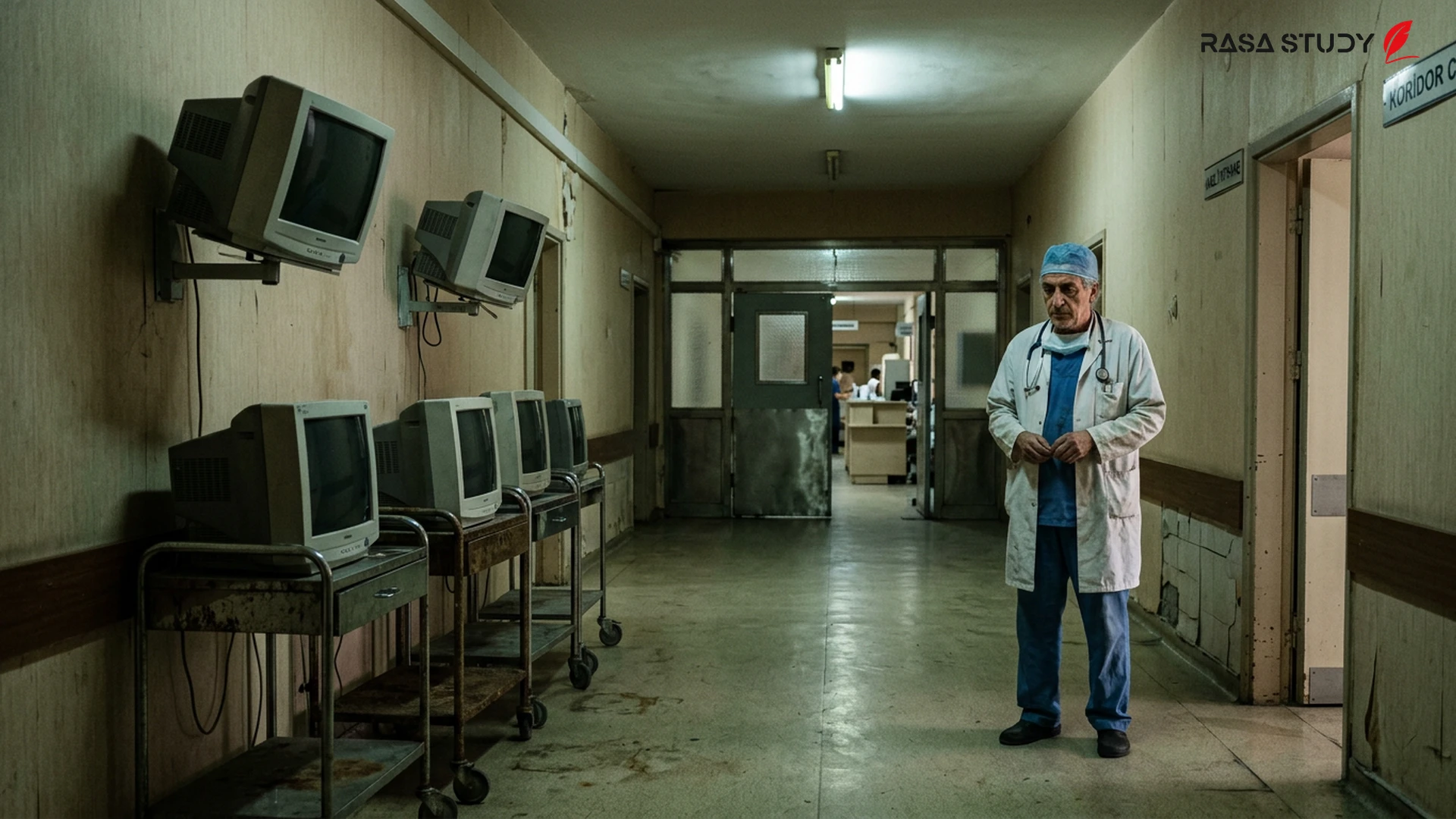
Turkish university hospitals are facing a severe financial crisis and a shortage of specialized personnel. Officials from the ruling party and relevant ministries discussed a plan in an emergency meeting to transfer costs to the central budget and address salary discrimination.
University hospitals in Turkey, which were once considered the backbone of medical education and advanced healthcare services in the country, are now struggling with one of their most difficult financial periods. According to reports published on July 17, 2026, officials from the Justice and Development Party (AKP), along with representatives from the Ministry of Health and the Ministry of Treasury and Finance, have begun intensive meetings to examine solutions to exit this deadlock [1].
Financial Crisis and Management Deadlock in University Hospitals Reports indicate that the inability to provide funding has led to severe deterioration of hospital buildings and technological lag in medical equipment. In recent meetings, the issue of renovating hospital buildings and replacing old devices has been raised as main priorities [1]. This situation has not only reduced the quality of healthcare services but has also caused many medical equipment suppliers to refuse cooperation with these hospitals due to unpaid receivables [4].
130,000 Lira Salary Gap; Why Are Professors Leaving Universities? One of the most shocking issues raised in these sessions is the glaring salary difference among medical staff. Investigations show that the salary of a specialist doctor in a university hospital sometimes differs by up to 130,000 Liras from their counterpart in a "City Hospital" in the same region [1]. This salary discrimination has caused experienced professors and specialist doctors to leave universities for private or state hospitals. This "brain drain" has now become a serious crisis in medical faculties, making it difficult to find professors for teaching and complex surgeries [1].
Details of the Government Reform Plan; Formation of the High Supervisory Council The Turkish government is drafting a law to be presented to the Grand National Assembly of Turkey (TBMM) in October. One of the key clauses of this plan is the transfer of subcontracted personnel costs from the hospitals' internal budgets to the government's central budget to lift the financial burden off the universities [1]. Additionally, it has been proposed that a "High Supervisory Council," consisting of representatives from university management, the Council of Higher Education (YÖK), the Ministry of Health, and the Ministry of Finance, be formed to closely supervise expenditures [1].
Widespread Protests of Medical Staff in Adana and Çanakkale While officials in Ankara are engaged in consultations, the situation in other cities is critical. At the Balcalı Hospital in Adana, staff protested against the non-payment of performance bonuses and poor working conditions with the slogan "We are evacuated, we are finished" [2]. A similar situation has been observed at 18 Mart University in Çanakkale, where assistant doctors and health workers have stopped working due to long delays in the payment of salaries and bonuses [3]. These protests indicate the depth of dissatisfaction in a system that, according to experts, is at risk of complete collapse without immediate structural reforms [4].
The budget crisis in Turkish university hospitals has led to widespread protests by medical staff and the departure of professors from universities.
linkSources
- Üniversite hastanelerinde bütçe ve personel krizi: AKP'li ve bakanlık yetkililerinin görüşmesinde masada hangi konu başlıkları vardı? — T24 (2026-07-17)
- Çukurova Üniversitesi Balcalı Hastanesi Çalışanlarından Ortak Tepki: “Tükendik” — Sağlık Haberi (2026-07-10)
- Sağlıkçılar lütuf değil hakkını talep ediyor — BirGün (2026-07-08)
- Üniversite Hastanelerinde Teşvik Krizi Derinleşiyor — Türk Sağlık-Sen (2026-05-05)


