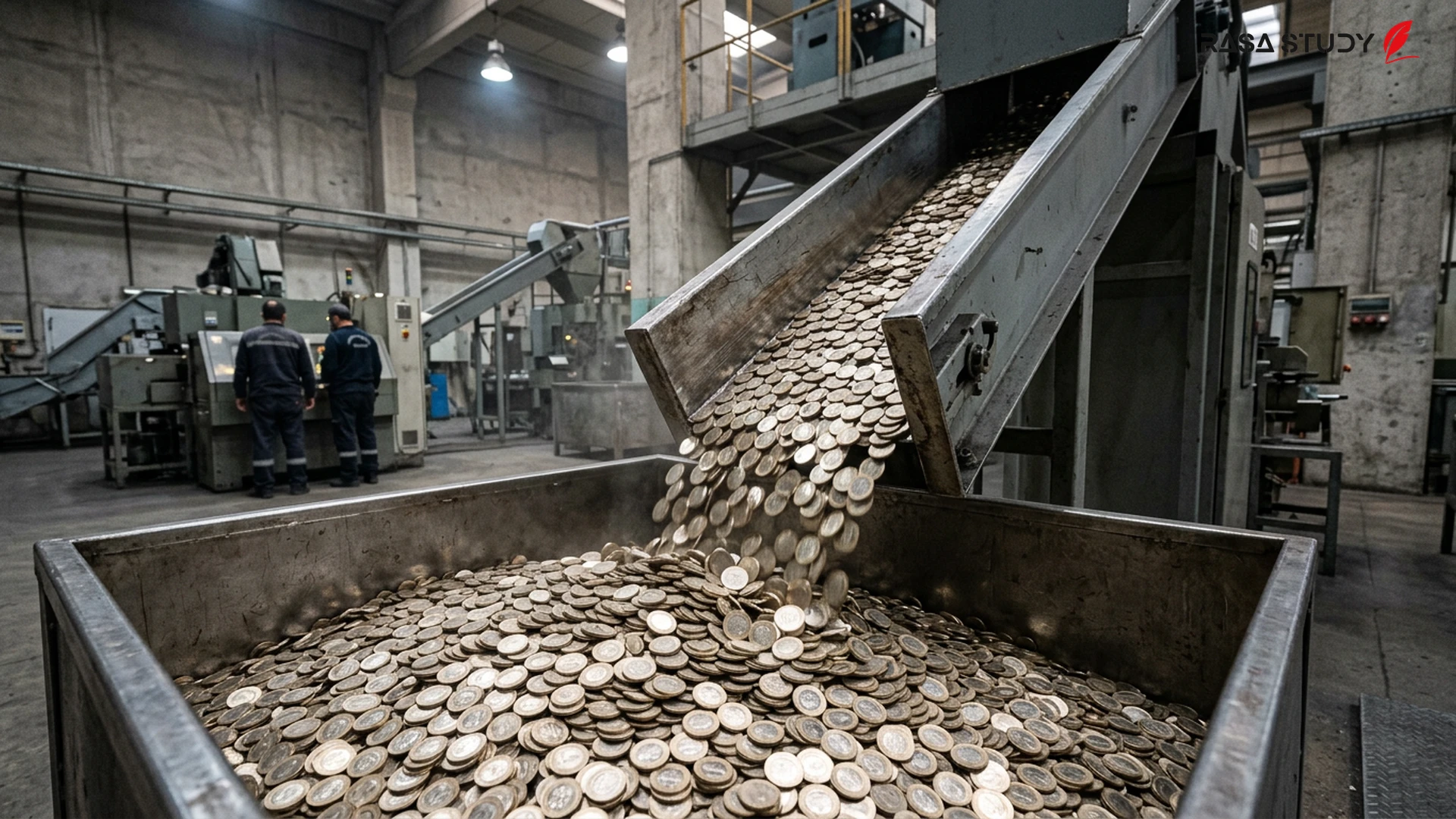
According to official statistics released by the Turkish State Mint and Printing House, over 434 million Lira in coins entered the market in the first half of 2026, reflecting changes in micro-liquidity patterns.
Significant Increase in Coin Minting in Turkey
According to newly released data from the Turkish State Mint and Printing House (Darphane), the volume of coins introduced to the market in the first six months of 2026 reached a significant 434 million Lira [1]. This statistic, which includes all denominations from 1 kurus to larger coins, demonstrates the government's effort to meet the growing market demand for small change in daily transactions. Experts believe this volume of minting is a response to transactional needs in the retail sector, which remains dependent on cash.
Breakdown of Minted Coins and Market Priorities
Detailed reports from the Mint reveal that a large portion of this 434 million Lira consists of 1 Lira and 5 Lira coins [2]. The 5 Lira coin, added to the monetary cycle in recent years, now plays a crucial role in facilitating small exchanges. Given inflation rates and changes in commodity prices, demand for higher-value coins has increased, and the Mint has adjusted its production capacity accordingly. Official statistics show that the number of pieces minted has experienced double-digit growth compared to the same period last year [1].
Economic Analysis: Inflation and the Need for Micro-Liquidity
Economic analysts believe the increased supply of coins in the first half of 2026 is linked to Turkey's inflationary status and the purchasing power of the Lira in the domestic market [3]. As the prices of basic goods rise, the need for small change for transaction balances in shops and public transport increases. This situation has led the Mint to increase its work shifts to prevent a shortage of small change in the market, bringing minting volumes to unprecedented levels [2].
The Mint's Role in Daily Transaction Stability
The Turkish Mint, as the institution responsible for printing banknotes and minting coins, stated that planning for the second half of 2026 is also based on market demand forecasts. The entry of 434 million Lira in coins into citizens' pockets in just six months indicates the dynamism of the micro-economy in Turkey [1]. The institution also emphasized that it has employed new technologies to increase the lifespan of coins and reduce production costs to lower the financial burden of minting on the state budget [3].
The Turkish Mint increased its activity in the first half of 2026 to meet market demand for small change.
linkSources
- Yılın İlk Yarısında 434 Milyon Liralık Madeni Para Cebe Girdi — N Gazete (2026-07-11)
- Darphane ve Damga Matbaası Genel Müdürlüğü Madeni Para İstatistikleri — Darphane (2026-07-10)
- Türkiye'de Madeni Para Arzı ve Enflasyon Etkisi — Bloomberg HT (2026-07-11)