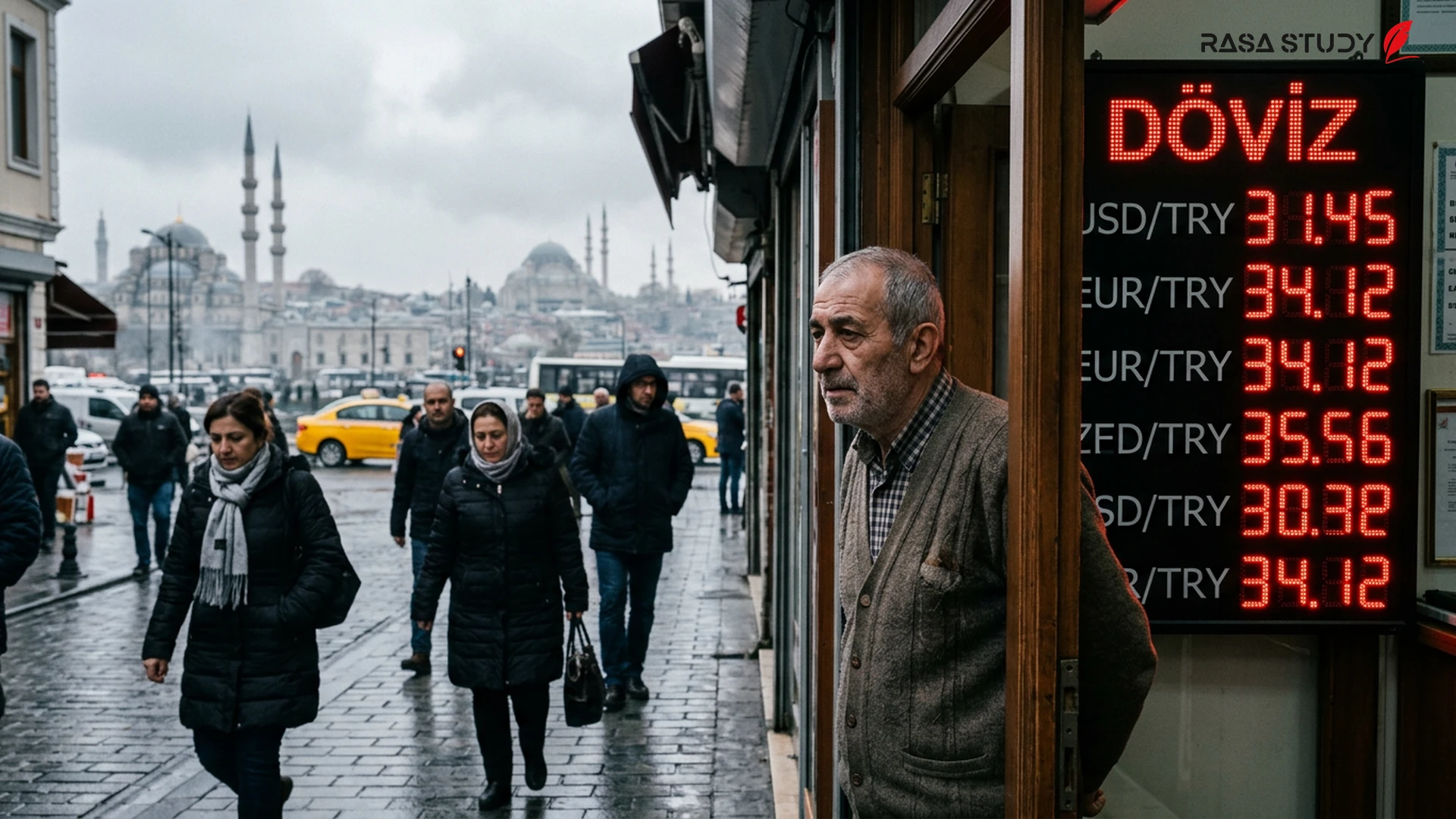
As of today, July 13, 2026, the Turkish currency market witnessed severe fluctuations. The Turkish Lira once again broke its record for depreciation, reaching unprecedented levels against the Dollar and Euro, doubling economic concerns.
Continued Freefall of the Lira Against Global Currencies
Today, July 13, 2026, the Turkish currency market was once again hit by severe economic pressures, with the Lira's value reaching its lowest point in history. According to reports published by local sources, including "Alanya Gazetesi," Dollar and Euro prices have set new records, indicating the critical state of the national currency [1]. In morning trading, the Dollar-to-Lira exchange rate (USD/TRY) crossed the 46.90 mark, while the Euro traded at levels exceeding 53.60 Lira [2][4]. These fluctuations have led economic experts to describe the Lira's current situation as a "fall to the bottom of the abyss."
Economic Roots and Geopolitical Tensions
Analysts believe that the Lira's depreciation is not solely due to domestic policies; recent tensions in the Middle East and energy shocks resulting from border conflicts have placed additional pressure on the Turkish economy. The Central Bank of the Republic of Turkey (TCMB) kept the interest rate steady at 37% in its last meeting to combat inflation, but these measures seem insufficient to curb the Lira's fall [2]. Annual inflation, reported at approximately 32.11% in June 2026, remains one of the primary drivers of market instability [3]. Furthermore, Deutsche Bank reports suggest that due to potential interest rate cuts in the second half of 2026, pressure on the Lira may continue until the end of the year, with the Dollar potentially approaching the 51 Lira threshold [3].
Widespread Impact on Livelihoods and the Housing Market
This currency crisis has had a direct impact on the cost of living in tourist cities such as Alanya and Antalya. The increase in exchange rates has caused import costs and, consequently, the prices of basic goods to rise sharply. Field reports indicate that even foreign investors who were previously active in the Turkish real estate sector are exiting the market due to economic instability and high inflation [5]. The high cost of living has led many foreign residents to put their homes up for sale or rent and leave Turkey [5].
Future Outlook and Market Reaction
While the Turkish government attempts to stabilize the situation by adopting contractionary policies and attracting tourism revenue, economic forecasts remain bleak. Econometric models show that the Turkish Lira may continue its downward trend in the coming months [2]. Market participants are now closely following Central Bank statements and political developments for any sign of a shift in support policies. Currently, uncertainty regarding the economic future has made long-term planning nearly impossible for small and medium-sized enterprises in Turkey [3].
Severe fluctuations in the Turkish currency market and the unprecedented decline in the Lira's value against major global currencies, July 13, 2026.
linkSources
- Dolar ve Euro'da Yeni Zirveler Görüldü: Türk Lirası dibin dibinde! — Alanya Gazetesi (2026-07-13)
- Turkish Lira - Data, Forecasts, Historical Chart — Trading Economics (2026-07-12)
- Deutsche Bank's New Forecast for Turkey's Economy: Interest Rates and Dollar in 2026 — RasaStudy (2026-07-07)
- CBA currency exchange rates (13.07.2026) — Report News Agency (2026-07-13)
- Alanya'da devir değişti: Valizini toplayan gidiyor — Gazete Alanya (2026-02-21)