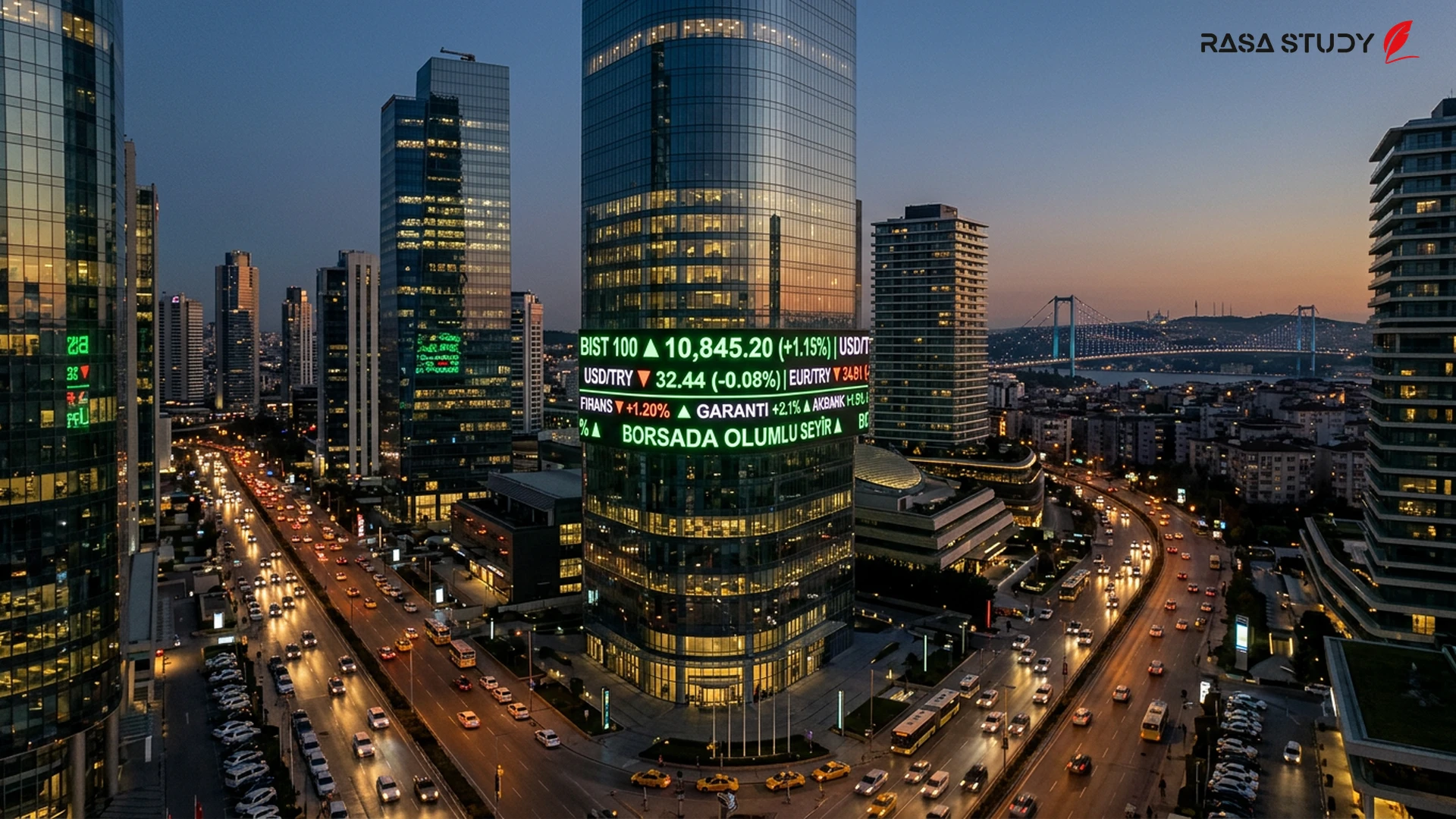
Following the announcement of a ceasefire and the easing of geopolitical tensions in the Middle East in late June 2026, Turkish financial markets are witnessing a wave of optimism. This regional stability has not only bolstered Borsa Istanbul but also heightened expectations for interest rate cuts.
Today, June 27, 2026, Turkish financial markets are experiencing a significant upward trend influenced by positive news from diplomatic developments in the Middle East. The reduction of tensions between regional powers and the announcement of a ceasefire have led to a drop in global oil prices and a decrease in systemic risks for emerging economies, particularly Türkiye [1]. This relative calm has provided new breathing room for monetary policymakers in Ankara to take steps with a greater focus on curbing inflation and managing interest rates.
Impact of Regional Peace on Borsa Istanbul The Borsa Istanbul index (BIST 100), which experienced high volatility in the early months of 2026, is now on a path toward a new record as foreign investor confidence returns [2]. Analysts believe that lower energy costs resulting from stability in Middle Eastern transit routes have improved the profit margins of Turkish industrial and manufacturing companies. Furthermore, the decline in Türkiye's Credit Default Swaps (CDS) has doubled the attractiveness of Lira assets for international investment portfolios.
The Central Bank and the Interest Rate Puzzle The Central Bank of the Republic of Türkiye (TCMB) kept the interest rate steady at 37% in its last meeting on June 11, 2026 [3]. However, the statement accompanying this decision showed that the central bank is closely monitoring the disinflation process. Given the reduction in inflationary pressures from energy prices following regional peace, markets now expect the central bank to shift from a defensive stance toward expansionary policies. Reports indicate that if the current trend of stability continues, the first spark of an interest rate cut will be struck in the September or October meetings [4].
International Institutional Forecast: JPMorgan Report In this regard, the banking giant JPMorgan, in its latest analysis published on June 26, lowered its year-end 2026 interest rate forecast for Türkiye from 37% to 35% [4]. The international institution believes that the drop in oil prices below $80 and positive signals from Turkish monetary authorities have paved the way for a 200 basis point interest rate cut in the second half of the year [2]. This downward revision in interest rates has been the primary driver of the recent growth in Turkish equity and bond markets.
Outlook for the Second Half of 2026 Although optimism is at its peak, experts warn that the sustainability of this growth depends on continued political stability in the region and the realization of inflation targets. Nevertheless, on June 27, 2026, the Turkish capital market is experiencing one of its best days, and eyes are fixed more than ever on the Central Bank building in Ankara to determine the exact timing of the start of the monetary easing cycle [1].
Borsa Istanbul reached new records in June 2026 influenced by the reduction of regional tensions.
linkSources
- ANALİZ: Orta Doğu'da tansiyonun düşmesi Türkiye piyasalarını destekliyor — ParaAnaliz (2026-06-26)
- Dev bankadan Türkiye için faiz tahmini: İndirim bekleniyor — BirGün (2026-06-27)
- TCMB, Haziran 2026 PPK Toplantısı Kararı — Vakıfbank (2026-06-11)
- JPMorgan lowers Türkiye year-end rate forecast to 35% — Türkiye Today (2026-06-26)