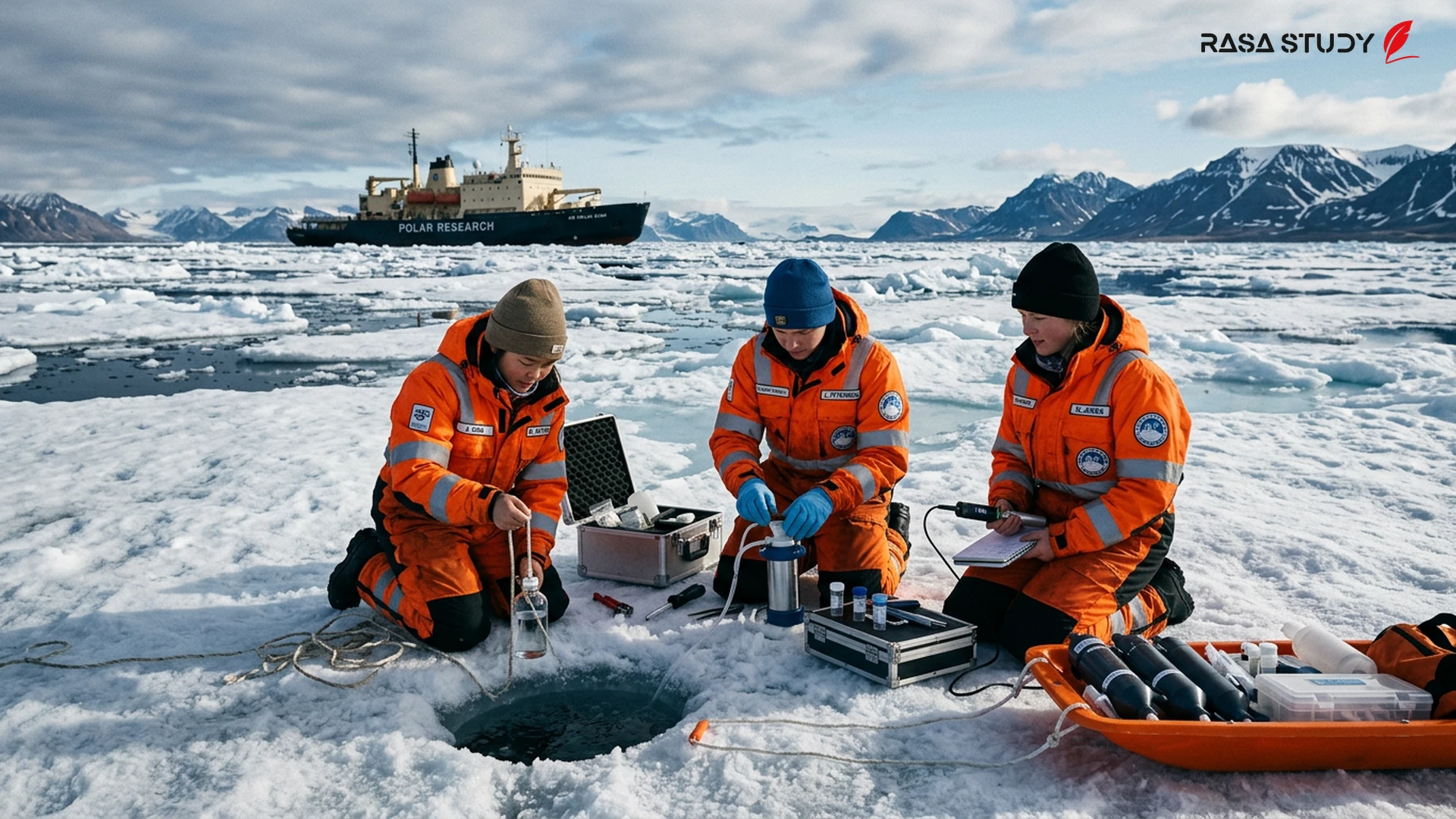
Today, June 24, 2026, a group of student researchers began their mission as part of the sixth national scientific expedition to the North Pole. This trip aims to directly study environmental crises in one of the Earth's most sensitive regions.
Start of the Sixth Scientific Expedition to the Heart of the Ice Today, June 24, 2026, coinciding with the peak of international scientific activities in the Arctic region, a team of selected students along with prominent scientists began their exploratory journey to the North Pole. This mission, organized under the supervision of the TÜBİTAK MAM KARE Polar Research Institute, is part of a national strategy to strengthen scientific presence in polar regions and train the next generation of scientists [1]. This expedition, planned following the successes of previous years, focuses on areas around the Svalbard archipelago and latitudes above 78 degrees north.
The Role of Students in Climate Change Research The students participating in this trip are winners of climate change research project competitions who earned their place on this challenging journey with their innovative designs. This year's projects include investigating the level of microplastics in Arctic waters, analyzing atmospheric data using artificial intelligence, and studying biodegradable bioplastics under extreme cold conditions [2]. These young researchers have the opportunity to collect field data alongside scientific teams from other countries and publish their results in prestigious scientific journals.
The Importance of Science Diplomacy in the Arctic This exploratory trip is not just an educational mission, but part of a broader science diplomacy to better understand global phenomena such as the melting of polar ice and its impact on marine ecosystems. Given the scientific calls of 2026, these missions help countries play a more active role in international environmental decision-making and polar treaties [3]. The presence of students at this level of research demonstrates a long-term investment in specialized human resources in the fields of Earth sciences and sustainability.
Expected Achievements of the 2026 Mission The dispatched team is expected to return to the country after about a month of activity in harsh polar conditions with valuable samples of marine sediments and new meteorological data. This data will not only help complete climate models but also pave the way for establishing more permanent research stations in the future. Scientific officials have emphasized that the experience of being in the Arctic will change these students' perspectives on global issues and turn them into environmental ambassadors in their communities.
The student team sent to the North Pole examining equipment for measuring atmospheric parameters
linkSources
- Kuzey Kutbu'na öğrenci keşif gezisi — Haberler (2026-06-24)
- Kutup Araştırmaları 2026 Yılı Çağrıları Açıldı — TÜBİTAK (2025-07-10)
- Türkiye launches 5th Arctic science expedition — Anadolu Agency (2025-07-13)